
Before deciding to undergo double eyelid surgery, it helps to understand how an eyelid crease forms. Why are some people born with a clearly defined crease, while others have multiple folds or no visible crease at all?
Upper Eyelid Anatomy
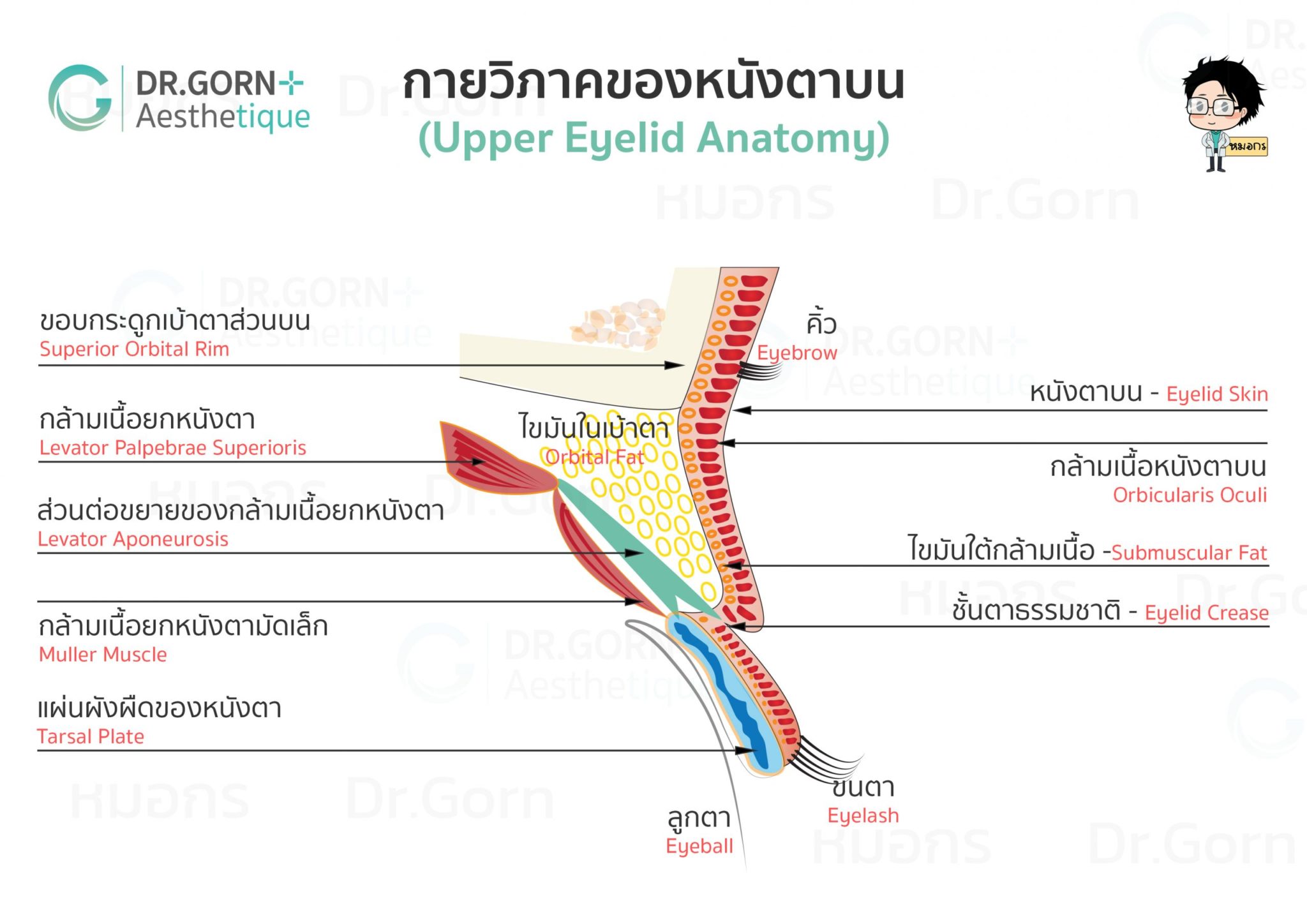
The Natural Eyelid Crease
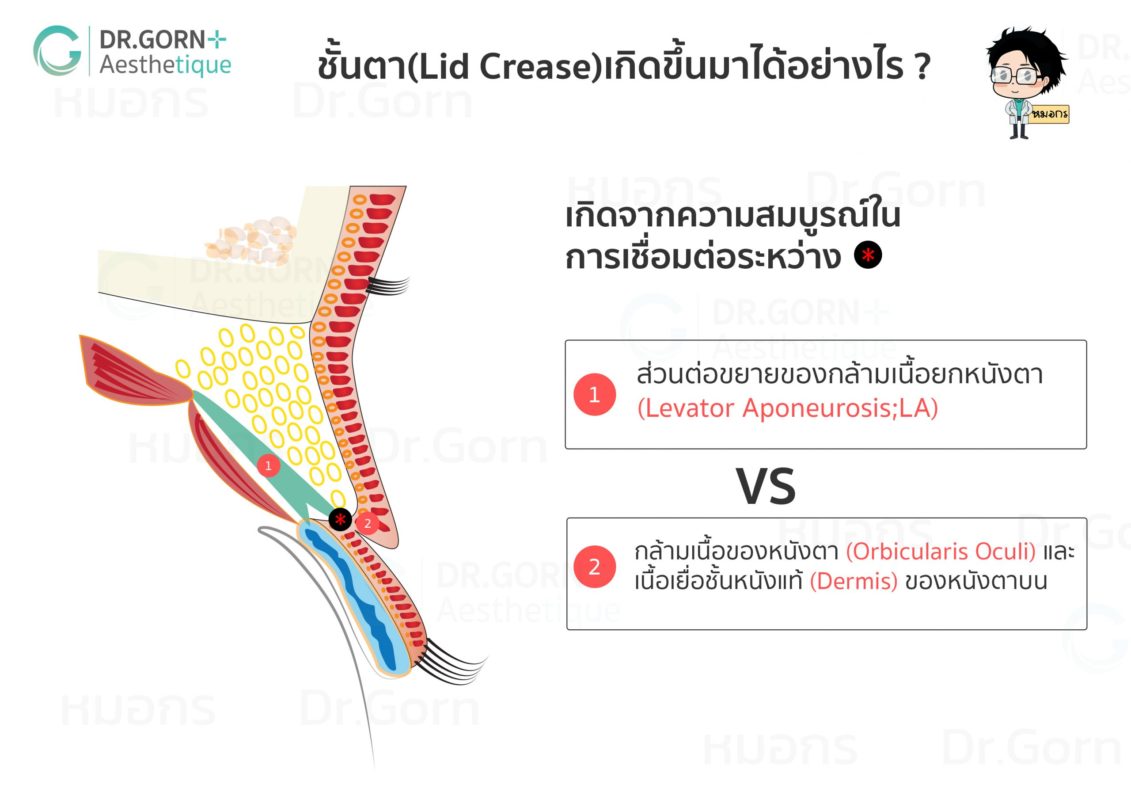
An eyelid crease forms through connections between the levator aponeurosis, the fibrous extension of the muscle that raises the upper eyelid, and the orbicularis oculi muscle and dermis of the upper eyelid. When these connections are well developed along the eyelid, the crease appears clearly defined.
If these connections are incomplete, disrupted, or affected by intervening tissue such as excess fat, the crease may be less distinct or appear as multiple folds. When these connections are absent or poorly developed, there may be no visible crease, resulting in a single eyelid.
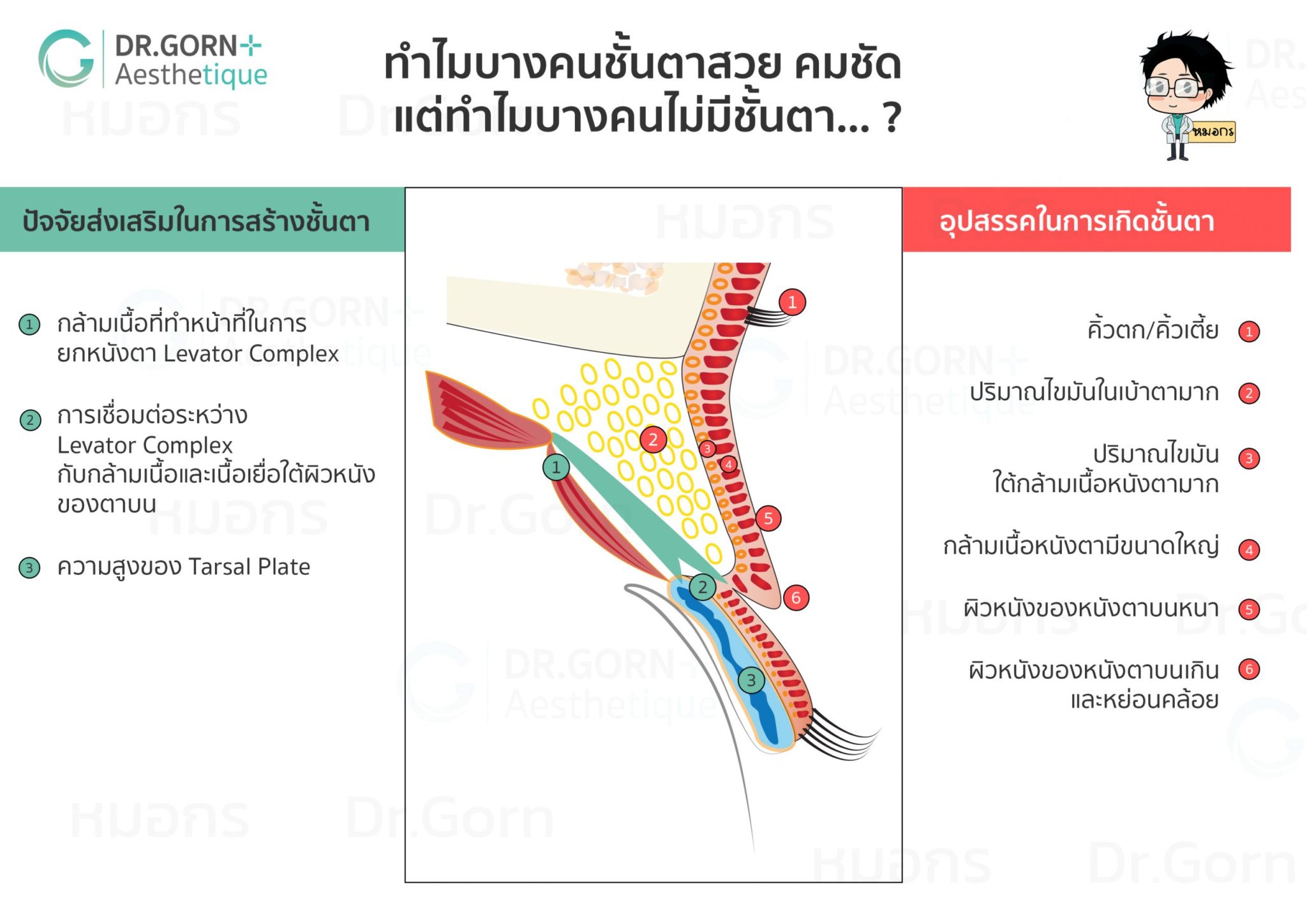
What Determines How Clearly an Eyelid Crease Appears?
Factors That Support a Clearly Defined Eyelid Crease
- The strength and function of the muscles responsible for raising the upper eyelid, known as the levator complex.
- Well developed connections between the levator aponeurosis and the muscle and skin tissues of the upper eyelid.
- The height of the tarsal plate, the firm supporting structure within the eyelid.
Factors That Can Make an Eyelid Crease Less Visible
- Drooping eyebrows, known as brow ptosis, or a naturally low eyebrow position.
- A large amount of orbital fat.
- A large amount of fat beneath the eyelid muscle, which may be more noticeable in some people with a higher body weight.
- The condition of the upper eyelid skin:
- Thick eyelid skin, which may occur in people with oily skin or skin prone to acne.
- Excess skin that sags and covers the natural eyelid crease, known as dermatochalasis. This is more common with increasing age.
These Factors Help Explain Why
- Some people are born with clearly defined eyelid creases.
- Some people have creases that are visible at certain times but less distinct at others.
- Some people are born without a visible eyelid crease.
A Doctor’s Advice Before Double Eyelid Surgery
If you are considering double eyelid surgery, careful assessment and appropriate planning for the first procedure are important. Revision surgery can involve several additional challenges, including:
- Higher costs.
- Swelling and bruising that may last longer than after the initial procedure.
- Less predictable results, depending on the extent and severity of complications from the previous surgery. A completely satisfactory outcome cannot be guaranteed.


