
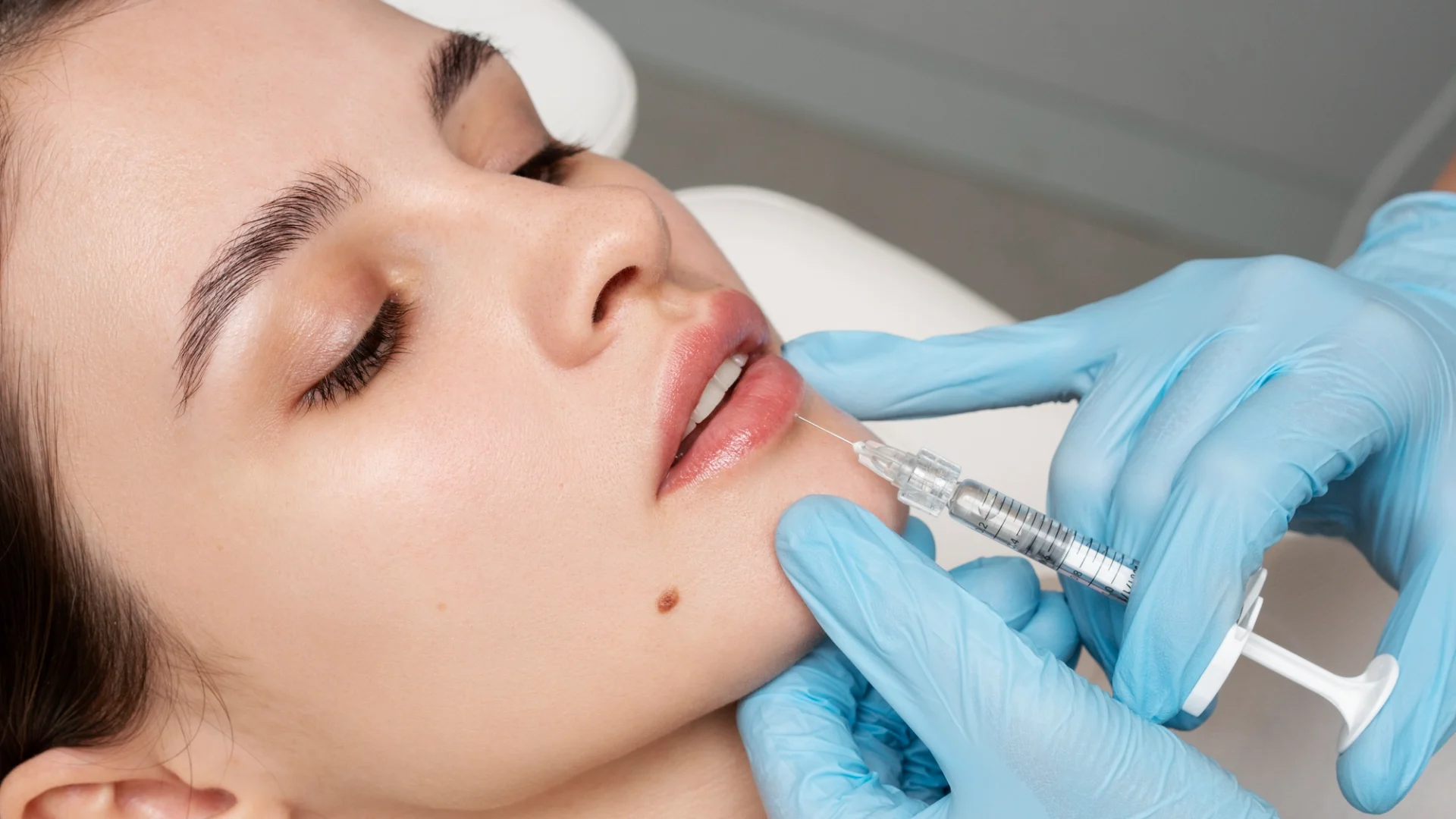
Dermal Fillers are injectable treatments used to restore volume, enhance facial contours, and address areas of facial volume loss. Various types of fillers are available for aesthetic use, with Hyaluronic Acid (HA) Fillers being among the most widely used.
Fillers may be used in areas such as the under-eyes, temples, cheeks, nasolabial folds, marionette lines, lips, and chin. Suitable injection sites, product types, and amounts vary according to each individual's anatomy and treatment goals.
At Dr. Gorn Aesthetique, filler treatments emphasize a detailed assessment of facial anatomy, volume distribution, facial proportions, and tissue characteristics to develop an appropriate plan for volume restoration and facial contour enhancement.
What Are Dermal Fillers?
Dermal fillers are injectable substances used to add or restore volume in selected tissues. Different filler products have different physical and biological properties.
Hyaluronic Acid (HA) is a substance naturally found in the human body and has been developed into dermal filler products for medical and aesthetic applications.
HA filler products differ in elasticity, structural support, and other physical characteristics. Physicians must therefore select products appropriate for the treatment area and intended tissue depth.
What Concerns Can Dermal Fillers Address?
Depending on facial anatomy and the product used, dermal fillers may be considered for:
- Restoring areas of volume loss
- Enhancing facial contours
- Addressing hollow temples
- Improving certain types of under-eye hollows
- Restoring volume in the midface and cheeks
- Improving nasolabial folds
- Addressing marionette lines around the corners of the mouth
- Enhancing lip volume or shape
- Adjusting chin contours in selected cases
- Improving the balance of facial proportions
Not every facial area requires filler injections. Treatment should focus only on areas with appropriate indications.
Under-Eye Fillers
Under-Eye Fillers may be considered for certain types of tear trough hollows or volume deficiencies to improve the transition between the lower eyelids and cheeks.
However, under-eye hollows or dark circles are not always caused by volume loss alone. Other contributing factors may include:
- Under-eye bags
- Lower eyelid laxity
- Pigmentation
- Visible blood vessels beneath the skin
- Orbital bone anatomy
- Skin quality and thickness
Therefore, under-eye fillers are not the appropriate solution for every type of under-eye concern.
Temple Fillers
Volume loss in the temples can create a hollow appearance and alter the contours of the upper face.
Temple Fillers may be used to restore volume in suitable areas. However, careful anatomical assessment is essential because the temples contain blood vessels, nerves, muscles, and multiple tissue layers.
Cheek and Midface Fillers
The midface is an important region for facial volume and overall facial proportions.
Volume loss in this area can make the cheeks appear flatter or sunken and may contribute to the prominence of nearby facial folds.
Physicians may therefore assess the need for cheek or midface volume restoration before deciding whether direct injection into the nasolabial folds is also necessary.
Nasolabial Fold Fillers
Nasolabial folds develop due to several contributing factors and are not caused solely by volume loss within the folds themselves.
For some patients, direct filler treatment of the folds may form part of the treatment plan. Others may require assessment of the midface and surrounding facial structures.
The goal should not be to completely eliminate natural facial folds, but to improve tissue relationships and facial harmony appropriately.
Lip Fillers
Lip Fillers may be used to enhance or adjust lip volume and shape, including:
- Defining the lip borders
- Adding appropriate lip volume
- Balancing upper and lower lip proportions
- Correcting selected types of lip asymmetry
- Improving lip shape and definition
Lip enhancement should consider the relationship between the lips, nose, chin, and overall facial profile.
Chin Fillers
Chin Fillers may be used to increase or adjust chin volume in selected cases, helping improve the contour and proportions of the lower face.
However, if the primary concern involves significant skeletal abnormalities, dental occlusion, or jaw structure, fillers may not address the underlying cause.
An assessment of the facial profile and underlying structures is therefore recommended before treatment.
What Is the Difference Between Fillers and Botox?
Fillers and Botox work through different mechanisms.
Botulinum toxin reduces muscle activity in targeted areas and is commonly used to address muscle-related concerns, such as dynamic wrinkles.
Fillers, in contrast, are used to restore volume and enhance facial contours.
Therefore, fillers may be considered for volume-related changes, while Botox may be more appropriate for concerns caused by muscle movement.
In selected cases, both approaches may be combined according to the patient's indications.
What Is the Difference Between Fillers and Autologous Fat Grafting?
Both dermal fillers and autologous fat grafting can restore volume, but they differ in technique and product characteristics.
Dermal fillers involve injecting a manufactured product into the targeted area without collecting tissue from another part of the body.
Fat grafting uses the patient's own fat, which must be harvested, processed, and transferred to the intended treatment area.
The choice depends on the amount of volume required, treatment area, anatomy, desired outcomes, and the advantages and limitations of each method.
How Long Do Dermal Fillers Last?
The duration of dermal fillers depends on several factors, including:
- Type and properties of the filler product
- Injection site
- Amount injected
- Movement in the treated area
- Metabolism and individual factors
- History of previous filler injections
Many filler products have a limited duration of effect and gradually change over time. The same duration should not be guaranteed for every patient.
Are Dermal Filler Results Immediate?
Changes in facial volume may be visible immediately after injection. However, initial swelling can temporarily affect the appearance, so the immediate result may not reflect the eventual outcome.
As swelling subsides, the tissues and filler gradually settle following treatment.
The appropriate time to assess results varies depending on the treatment area, product, and individual response.
Will Fillers Make My Face Look Puffy or Overfilled?
Results depend on injection placement, product volume, technique, and treatment planning.
Excessive volume restoration may alter facial proportions. Treatment should therefore involve more than simply filling every area that appears hollow.
A comprehensive full-face assessment helps the physician identify which areas may benefit from volume restoration and which do not require additional filler.
Who May Be Suitable for Dermal Fillers?
Individuals may consider an assessment for dermal fillers if they have concerns such as:
- Hollow temples
- Certain types of under-eye volume deficiency
- Volume loss in the cheeks or midface
- Selected types of facial folds
- A desire to enhance lip shape
- A desire to improve chin contours
- Age-related facial volume loss
- Interest in non-surgical facial proportion enhancement when appropriate
Are Dermal Fillers Safe? What Are the Risks?
Dermal fillers are non-surgical treatments, but they are still medical procedures with potential risks.
Possible side effects include swelling, bruising, tenderness, lumps, uneven texture, or asymmetry.
A rare but serious complication is vascular compromise caused by filler entering or compressing a blood vessel. This may lead to reduced blood supply and tissue damage. In certain anatomical areas, severe vision-related complications may also occur.
Therefore, filler injections should be performed by physicians with a thorough understanding of facial anatomy and the ability to recognize and manage complications.
How Should You Care for Your Skin After Dermal Filler Injections?
Mild swelling, bruising, or tenderness may occur after treatment. Avoid pressing, massaging, or attempting to reshape the treated area yourself unless instructed by your physician.
If you experience unusual pain, pale skin or abnormal skin discoloration, changes in vision, or other concerning symptoms after filler injections, seek urgent medical assessment. Sudden vision changes require emergency medical care.



