
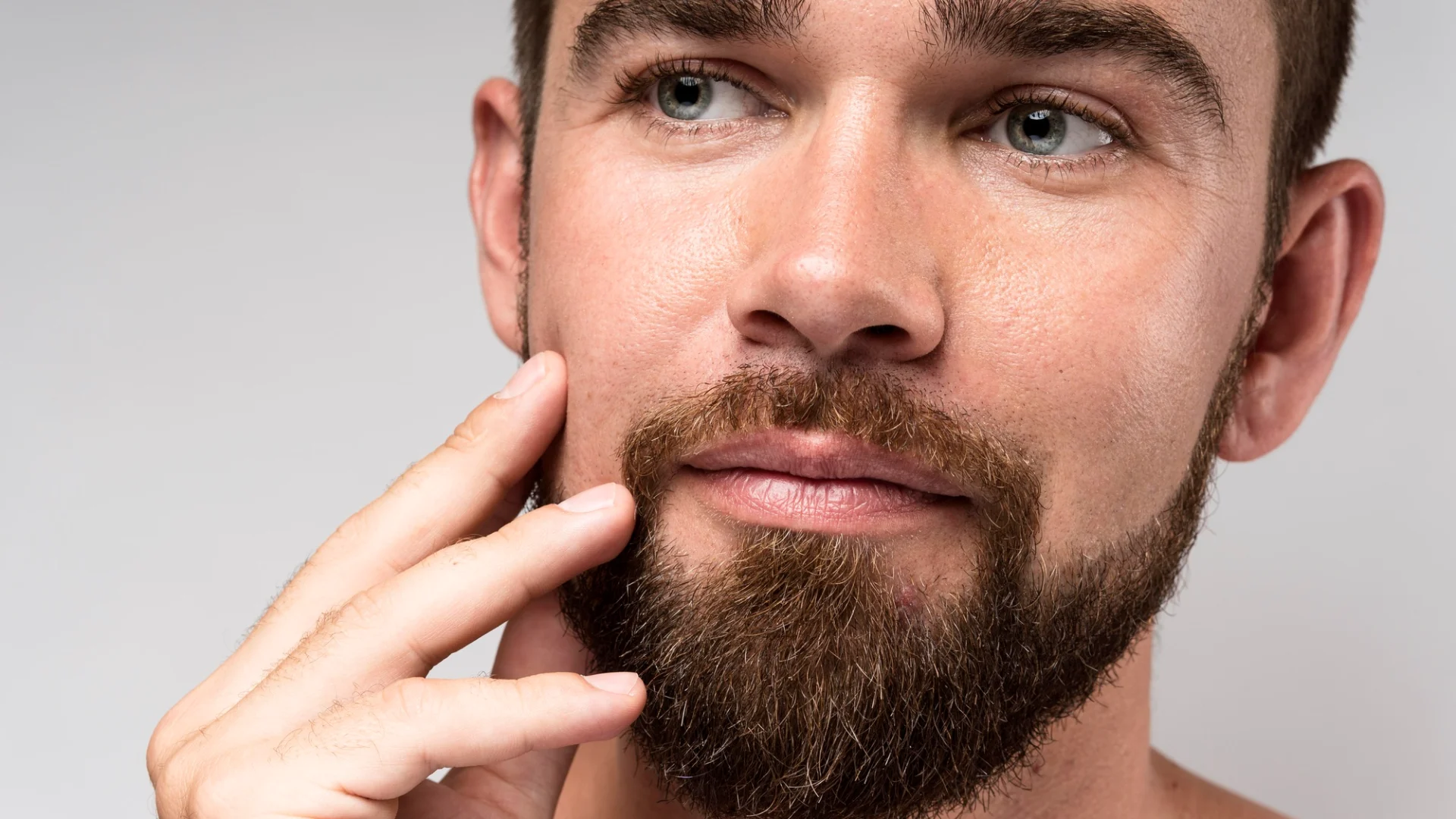
Beard & Mustache Transplantation is a procedure that involves transferring hair follicles from a suitable donor area on the patient's own body to the mustache, beard, chin, jawline, or sideburns. The procedure aims to increase facial hair density, fill patchy areas, or create a beard and mustache shape that complements the individual's facial structure.
Beard and mustache transplantation involves more than simply determining the number of hairs. Careful consideration must be given to beard design, hair direction, hair angle, and density, as facial hair grows in different directions and patterns across different regions.
At Dr. Gorn Aesthetique, physicians evaluate facial anatomy, jawline, chin, existing facial hair, and donor hair to plan appropriate graft placement and the number of grafts required for each individual.
What Is Beard & Mustache Transplantation?
Beard and mustache transplantation involves transferring hair follicles or follicular units from a donor area to facial regions where additional hair growth or density is desired.
The procedure may be designed for several areas, including:
- Mustache above the upper lip
- Goatee or chin beard
- Cheek beard
- Jawline beard
- Sideburns
- Areas connecting the mustache and beard
- Patchy or uneven facial hair areas
Who May Benefit from Beard & Mustache Transplantation?
Individuals may consider an assessment if they have concerns such as:
- Naturally sparse mustache or beard growth
- Patchy beard growth
- Gaps between the mustache and beard
- Sparse facial hair along the cheeks or jawline
- Thin or partially missing sideburns
- A desire to increase beard and mustache density
- A desire to refine the beard line
- Certain scars where facial hair no longer grows
If facial hair loss is unusual or occurs in patches due to a dermatological condition, the underlying cause should be evaluated before transplantation is considered.
Why Is Beard Design Important?
Beard design can significantly influence facial appearance because the shape of a beard may change how the jawline, chin, and overall facial contours are perceived.
The physician will consider:
- Facial shape
- Chin width and length
- Jawline structure
- Shape and thickness of existing facial hair
- Position of the beard line
- Existing facial hair density
- Direction of hair growth
- Number of available donor grafts
The goal is to design a beard that complements the individual's anatomy and existing facial hair rather than simply maximizing the number of grafts.
Why Is Hair Direction Important in Beard Transplantation?
Facial hair does not grow in a single direction.
Hair on the cheeks, sideburns, jawline, chin, and mustache grows at different angles and in different directions. Graft placement must therefore be planned according to each facial region.
Along the beard line in particular, selecting appropriate follicular units and controlling the hair angle are important for achieving a smooth transition and natural continuity as the transplanted hair grows.
Where Does the Donor Hair for Beard and Mustache Transplantation Come From?
The physician selects a donor area with suitable hair characteristics. Hair from the scalp is commonly considered, but the actual donor location depends on the individual's hair properties and anatomy.
Factors considered include:
- Hair thickness
- Hair texture
- Hair color
- Donor density
- Number of grafts required
- Similarity to the existing beard and mustache hair
Can Beard and Mustache Transplantation Be Performed Using FUE?
Yes. FUE (Follicular Unit Excision) may be used to harvest individual follicular units from a suitable donor area before transplanting them into the desired facial regions.
FUE involves extracting grafts individually, so it does not create the long linear incision associated with strip harvesting using FUT. However, small marks or scars may still develop in the donor area.
Graft harvesting technique is only one factor influencing the outcome. Careful planning of hair angle, direction, and distribution across the facial treatment areas is equally important.
Can Beard Transplantation Fill Patchy Areas?
Beard transplantation may be considered for patchy areas when the skin condition and local anatomy are suitable for hair transplantation.
The physician evaluates existing facial hair and plans graft distribution to increase density and create continuity with surrounding hair.
However, if patchy hair loss results from an active underlying condition, the cause should be diagnosed and managed before transplantation.
Can Beard or Mustache Hair Be Transplanted onto Scars?
Transplantation may be considered for certain types of scars. However, scar tissue can have different characteristics and blood circulation compared with normal skin.
The physician must therefore evaluate scar condition, tissue thickness, and blood supply before determining the appropriate number and density of grafts.
Will Transplanted Beard Hair Grow as Long as Scalp Hair?
When scalp hair follicles are used, the transplanted facial hair may retain some of the growth characteristics of the donor area.
Therefore, regular trimming, shaving, or grooming may be needed to maintain the desired beard or mustache length and shape.
The characteristics of transplanted hair may differ from the individual's natural facial hair.
Can You Shave After Beard and Mustache Transplantation?
Once the grafts have passed the initial healing period and the physician confirms that it is appropriate, the beard and mustache may be trimmed or shaved according to medical advice.
During the early recovery period, shaving, friction, and physical pressure on the grafts should be avoided to allow the transplanted area to heal.
Will a Beard and Mustache Transplant Produce Immediate Hair Growth?
Hair shafts attached to the transplanted grafts will be visible immediately after the procedure. However, these hairs may undergo shedding during the post-transplant period.
Surviving follicles will then gradually enter the hair growth cycle and produce new hair over time.
Therefore, the final hair density and overall outcome should not be judged during the early period after transplantation.
Is Beard and Mustache Transplantation Permanent?
The term permanent beard transplantation generally refers to transferring the patient's own living hair follicles to the facial area, where surviving grafts may continue producing hair.
However, survival of every transplanted graft cannot be guaranteed, and hair characteristics may change with age, health, and individual factors.
Who May Be Suitable for Beard & Mustache Transplantation?
Individuals with the following concerns may consider an assessment:
- Sparse mustache hair
- Sparse beard growth
- Patchy beard
- Gaps between the mustache and beard
- Poorly defined jawline beard growth
- Thin sideburns
- A desire to increase facial hair density
- A desire to design or refine the beard line
- Availability of a suitable donor area
How Should You Care for the Area After Beard and Mustache Transplantation?
During the initial healing period, temporary swelling, redness, or small scabs may appear in the transplanted area, along with temporary symptoms in the donor area.
Avoid scratching, picking scabs, shaving, or rubbing the transplanted area until your physician advises that these activities are safe. Follow the recommended cleansing and aftercare instructions.



