
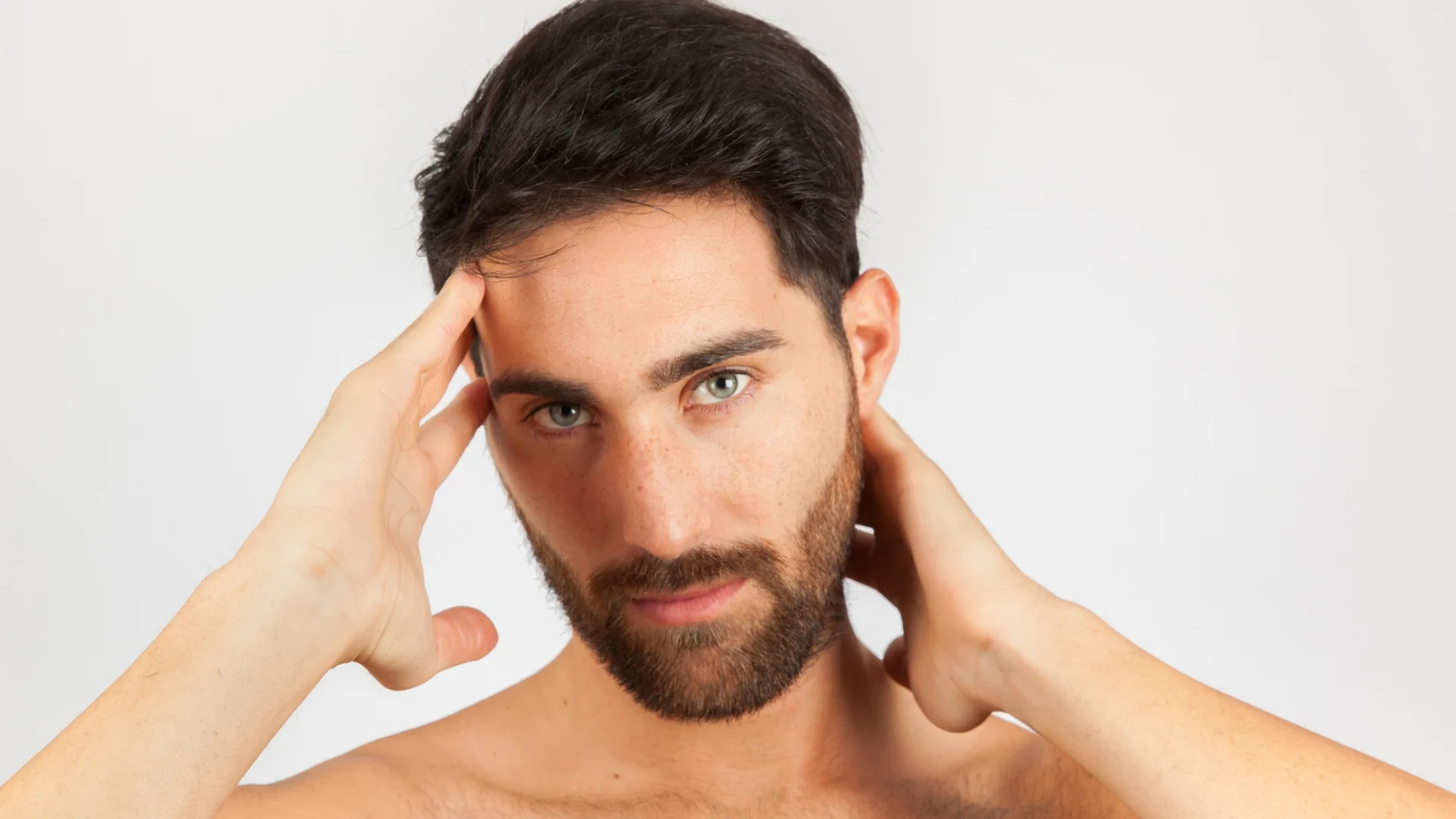
Men FUE Hair Transplant (Follicular Unit Excision) is a hair transplantation procedure in which individual follicular units are extracted from a suitable donor area, typically at the back or sides of the scalp, and transplanted into areas affected by hair thinning, a receding hairline, a broad forehead, or baldness.
The FUE technique does not create the long linear incision associated with strip harvesting. However, small marks may remain where follicular units are extracted. Their appearance and visibility depend on individual anatomy, surgical technique, and wound healing.
At Dr. Gorn Aesthetique, male hair transplantation is planned with careful consideration of hairline design, hair density, hair direction, donor area characteristics, and male pattern hair loss to determine an appropriate hairline and number of grafts for each individual.
What Is Men FUE Hair Transplantation?
FUE (Follicular Unit Excision) is a technique that uses small instruments to extract individual follicular units from the donor area before transplanting the harvested grafts into the desired recipient area.
The general procedure includes:
- Assessing the pattern and severity of hair thinning
- Evaluating donor area density
- Designing the hairline
- Calculating the appropriate number of grafts
- Extracting follicular units using FUE
- Preparing the recipient area
- Implanting grafts according to the planned angles, directions, and density
What Types of Male Hair Loss Can FUE Address?
Hair thinning in men can follow different patterns. One common condition is androgenetic alopecia, also known as male pattern hair loss, which may begin at the hairline and temples before progressing to other areas.
Men FUE may be considered for concerns such as:
- Receding hairline
- Frontal hair thinning
- Deep temporal recession
- A broad-looking forehead caused by hairline recession
- Midscalp thinning
- Crown thinning
- A desire to increase hair density in suitable areas
- A previous hair transplant with a need to assess additional density
Hairline Design for Men
Hairline design is an important part of Men FUE because the hairline affects facial proportions and how natural the final result appears.
The physician considers:
- Patient's age
- Forehead and facial shape
- Existing hairline
- Degree of temporal recession
- Male pattern hair loss
- Donor hair density and quality
- Number of available grafts
- Potential future hair loss
The goal is not to create the lowest possible hairline, but to design one that complements the face and accommodates potential changes in hair loss over time.
What Is a Hair Graft?
A graft or follicular unit is a unit of hair follicles used for transplantation. One graft may contain a single hair or multiple hairs.
Therefore, 2,000 grafts do not necessarily mean 2,000 individual hairs.
The number of grafts required is determined by the treatment area, desired density, hair characteristics, and the amount of donor hair that can be appropriately harvested.
Why Is the Donor Area Important in FUE Hair Transplantation?
The donor area is one of the most important factors in hair transplantation because the number of follicular units available for harvesting is limited.
The physician evaluates:
- Donor density
- Hair shaft thickness
- Number of follicular units
- Hair quality
- Available graft harvesting area
- Balance between donor supply and recipient area requirements
Excessive graft harvesting may reduce donor area density. Careful planning is therefore essential to preserve donor hair resources.
How Is Men FUE Different from FUT?
FUE involves extracting individual follicular units from the donor area and does not create the long linear incision associated with removing a strip of scalp.
FUT (Follicular Unit Transplantation), on the other hand, involves removing a strip of tissue from the donor area and subsequently dissecting it into follicular units for transplantation.
Both techniques have different advantages, limitations, and indications. The choice should be based on donor area characteristics, hair loss patterns, and long-term transplantation planning.
Is FUE Really Scarless?
FUE should not be described as a scarless procedure.
Extracting follicular units creates small wounds in the donor area, which may leave visible marks after healing.
Unlike strip harvesting, FUE does not produce a long linear scar. However, the appearance of FUE marks depends on instrument size, number and distribution of harvested grafts, and individual healing.
When Will Hair Grow After FUE?
After transplantation, hair shafts attached to the grafts may shed during the initial recovery period. This is part of the post-transplant hair cycle.
The transplanted follicles then enter their growth cycle, and new hair gradually becomes visible over time.
Therefore, the final result is not immediate, and the rate of hair growth varies between individuals.
Can FUE Be Used for Crown Hair Transplantation?
FUE may be considered for the crown or vertex. However, this area has a distinctive hair whorl pattern and may require a substantial number of grafts depending on the size of the treatment area.
The physician must therefore balance priorities between the hairline, midscalp, and crown while considering available donor supply to plan graft distribution appropriately.
Will FUE Stop My Existing Hair from Falling Out?
No.
Hair transplantation relocates hair follicles to new areas but does not stop androgenetic alopecia affecting existing, non-transplanted hair.
Individuals with ongoing hair loss should therefore undergo an assessment of disease progression and appropriate management of their existing hair to support long-term hairline and donor supply planning.
Who May Be Suitable for Men FUE?
Men may consider an assessment for FUE if they have concerns such as:
- A receding hairline
- Temporal recession or an M-shaped hairline
- Frontal hair thinning
- Midscalp thinning
- Crown thinning
- A desire to reshape the hairline
- A suitable donor area
- A hair loss pattern appropriate for hair transplantation
Individuals experiencing rapid hair loss, patchy hair loss, or suspected scalp disorders should undergo an assessment of the underlying cause before considering hair transplantation.
How Should You Care for Your Scalp After FUE Hair Transplantation?
During the initial recovery period, temporary swelling, redness, scabbing, or changes in sensation may occur in the donor and recipient areas.
Avoid scratching, picking, or traumatizing the transplanted area. Carefully follow your physician's instructions regarding hair washing, sleeping positions, exercise, and scalp care.



