
An epicanthal fold (Epicanthic Fold / Mongolian Fold) is a fold of skin that covers part of the inner corner of the eye, including the area near the lacrimal lake. When prominent, this fold can partially conceal the medial canthus, making the inner corner of the eye appear less exposed.

Epicanthal folds are common among people of East Asian ancestry. The original article mentions a prevalence of approximately 70% among people of Chinese descent, although the actual prevalence varies by population and the criteria used for assessment. A prominent epicanthal fold may affect the appearance of the eyes in several ways:
- Appearance of Smaller Eyes: A prominent epicanthal fold may make the visible eye opening appear shorter horizontally (Horizontal Palpebral Fissure) and influence the apparent shape of the eye. In patients who already have relatively small eye openings, the fold may make the eyes appear even smaller or less open.
- Effect on Double Eyelid Surgery Results: For individuals with prominent epicanthal folds, the inner portion of the double eyelid crease may remain partially concealed after double eyelid surgery. Patients who prefer a clearly visible eyelid crease extending toward the inner corner may therefore consider medial epicanthoplasty alongside eyelid surgery. However, a concealed or infold eyelid crease is also a normal and aesthetically preferred feature for many individuals.
- Combination with Single Eyelids or Eyelid Ptosis: A prominent epicanthal fold may coexist with a single eyelid (Monolid) or upper eyelid ptosis, potentially making the eye opening appear more restricted. Conversely, a mild epicanthal fold can be a distinctive natural facial characteristic and may complement an infold-type double eyelid crease. The presence of a fold does not necessarily indicate a need for surgery.
The 4 Types of Epicanthal Folds

What Is Medial Epicanthoplasty?
Medial epicanthoplasty is a surgical procedure that reshapes or releases the skin fold covering the inner corner of the eye. The goal is to expose more of the medial canthus, increase the visible horizontal length of the eye opening, and create a more defined inner eye contour. The appropriate degree of correction depends on the patient's anatomy and aesthetic preferences.
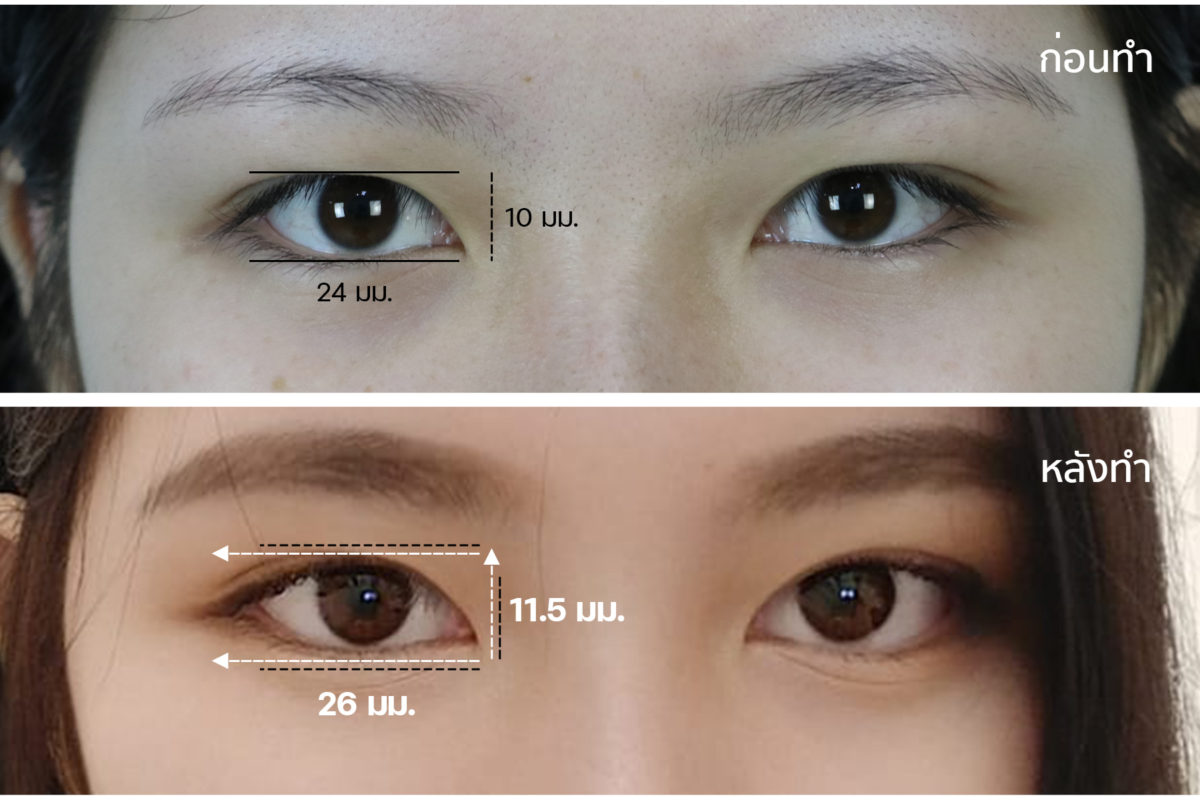
Medial epicanthoplasty can be performed together with double eyelid surgery (Blepharoplasty). Patients who have previously undergone double eyelid surgery may also consider medial epicanthoplasty as a separate procedure if their anatomy and treatment goals are appropriate.
Medial Epicanthoplasty Procedure
- Eye and Eyelid Assessment: The surgeon examines the inner corners of the eyes, eyelid anatomy, and surrounding structures.
- Individualized Surgical Planning: An appropriate epicanthoplasty technique is selected according to the patient's anatomy and desired result.
- Local Anesthesia: The procedure is commonly performed under local anesthesia without general anesthesia. Patients may experience brief discomfort during the injection, while the anesthetic is intended to minimize pain during surgery. Anesthesia requirements vary between individuals.
- Wound Closure: After adjusting the epicanthal fold, the surgeon closes the small incisions using fine sutures.
Who Is a Suitable Candidate for Medial Epicanthoplasty?
- Individuals with relatively small-looking eyes and prominent epicanthal folds that conceal the inner eye corners.
- Patients with noticeable asymmetry between the epicanthal folds of the left and right eyes.
- Individuals with an apparently wide distance between the inner eye corners (Telecanthus), where the surgeon determines that correction of the epicanthal folds may improve the appearance. True telecanthus requires separate anatomical evaluation and may not be corrected by epicanthoplasty alone.
- Patients who have previously undergone double eyelid surgery but still have prominent epicanthal folds and wish to achieve greater visibility of the inner eye corners.
Medial Epicanthoplasty Cost
According to the original clinic information, the price of medial epicanthoplasty ranges from THB 20,000 to THB 30,000, depending on the surgical technique required for each patient. Patients should contact the clinic to confirm current pricing and receive an individualized quotation.
Frequently Asked Questions About Medial Epicanthoplasty
Q: Does everyone have an epicanthal fold?
A: No. Epicanthal folds vary among individuals and are particularly common in certain East Asian populations, including people of Chinese ancestry. Their presence is a normal anatomical variation.
Q: Should I undergo medial epicanthoplasty or rhinoplasty first?
A: The original article recommends considering rhinoplasty first for patients who are also planning nasal bridge augmentation, because changes to the nasal root and surrounding soft-tissue contours may influence the appearance of the inner eye region. Some patients may decide that additional epicanthoplasty is unnecessary after reassessment. However, rhinoplasty does not reliably eliminate an epicanthal fold, and the best treatment sequence should be determined through an individualized surgical consultation.
Q: Does medial epicanthoplasty always have to be performed together with double eyelid surgery?
A: No. Patients may undergo medial epicanthoplasty alone, double eyelid surgery alone, or a combination of both procedures, depending on their anatomy and treatment objectives. If there is no significant epicanthal fold or no specific reason for correction, medial epicanthoplasty may not be necessary. A detailed consultation with a qualified surgeon is recommended before making a decision.
Q: Is there a risk of keloids or raised scars after medial epicanthoplasty?
A: Raised or hypertrophic scars can occur after medial epicanthoplasty, although the level of risk varies between patients. Factors such as individual scarring tendency, wound tension, inflammation, infection, and delayed healing may influence scar formation. Some scars gradually soften and become less visible over several months, while others may persist. If a scar remains raised, the surgeon may consider treatments such as corticosteroid injections or other scar-management approaches when appropriate. Complete scar disappearance cannot be guaranteed.