

As we age, our bodies naturally change. Skin that once looked firm and radiant may develop wrinkles and become looser, particularly around the face and neck. How should these changes be addressed? Should you consider facelift surgery, HIFU, or muscle relaxing injections? This article explains the different approaches.
Understanding Sagging of the Face and Neck
Before exploring treatment options, it is helpful to understand how ageing affects the face and neck. Changes commonly involve the following seven areas.
Watch the video about facial ageing
Watch the video about facial rejuvenation
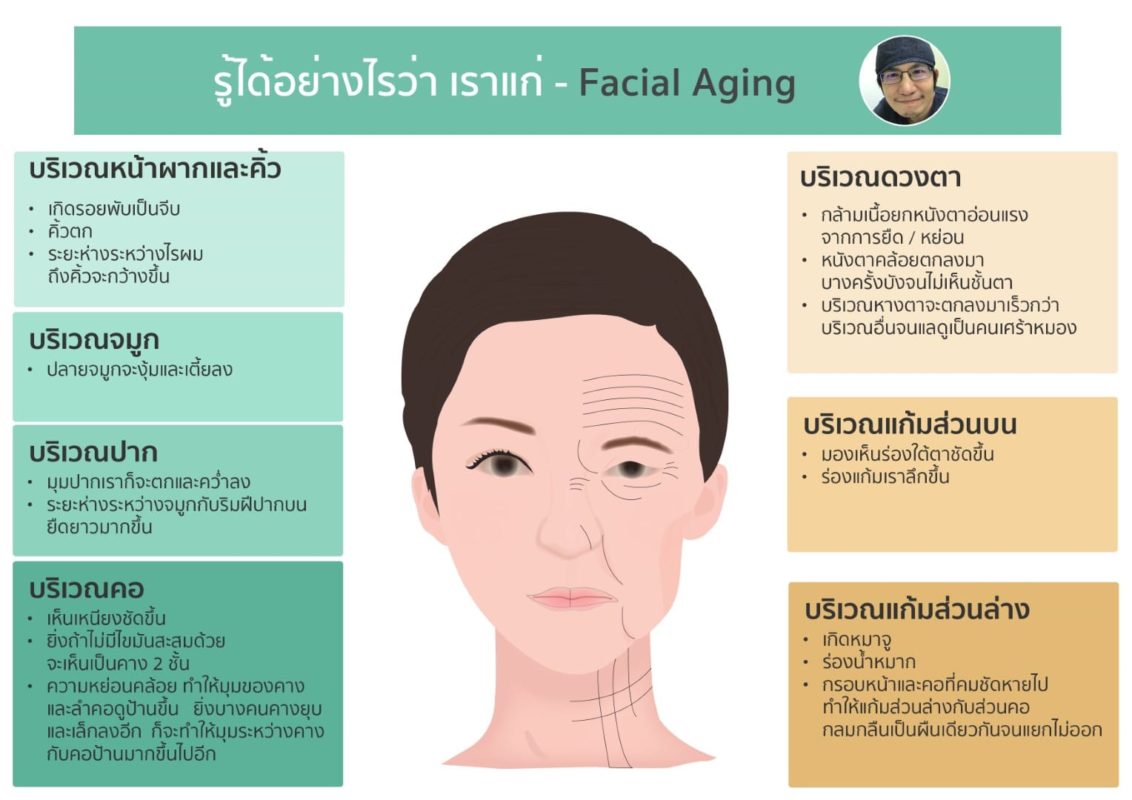
1. Forehead and Eyebrows
- Deep horizontal forehead lines may develop.
- The eyebrows may descend, a condition known as brow ptosis.
- The distance between the hairline and eyebrows may increase, making the forehead appear longer.
2. Eye Area
- Stretching or weakening of the levator aponeurosis may cause upper eyelid ptosis.
- Loose upper eyelid skin, known as dermatochalasis, may cover the eyelid crease.
- Skin over the outer upper eyelid may descend and create lateral hooding, contributing to a tired or sad appearance.
3. Nose
- The nasal tip may droop and lose some of its projection.
4. Upper Cheeks
- The tear troughs beneath the eyes may become more noticeable.
- The nasolabial folds may deepen.
5. Mouth
- The corners of the mouth may turn downward.
- The distance between the nose and upper lip may lengthen.
6. Lower Cheeks
- Jowls may develop.
- Marionette folds may become more pronounced.
- The jawline and neck contours may lose definition, making the lower face and neck appear to blend together.
7. Neck
- Loose skin beneath the chin may become more visible.
- Additional fat accumulation may create a double chin.
- The angle between the chin and neck may become wider. The original article describes approximately 105 to 120 degrees as an aesthetic reference, although suitable proportions vary with individual anatomy. Reduced chin projection can make this angle appear wider.
- Horizontal neck wrinkles may develop.
- Vertical platysma bands may become visible between the chin and the collarbone.
- Laxity of the platysma and surrounding tissues, together with changes in fat and the position of the salivary glands, may contribute to a fuller, sagging neck appearance.
What Causes Sagging of the Face and Neck?
The causes of facial and neck sagging can be considered in three main groups.
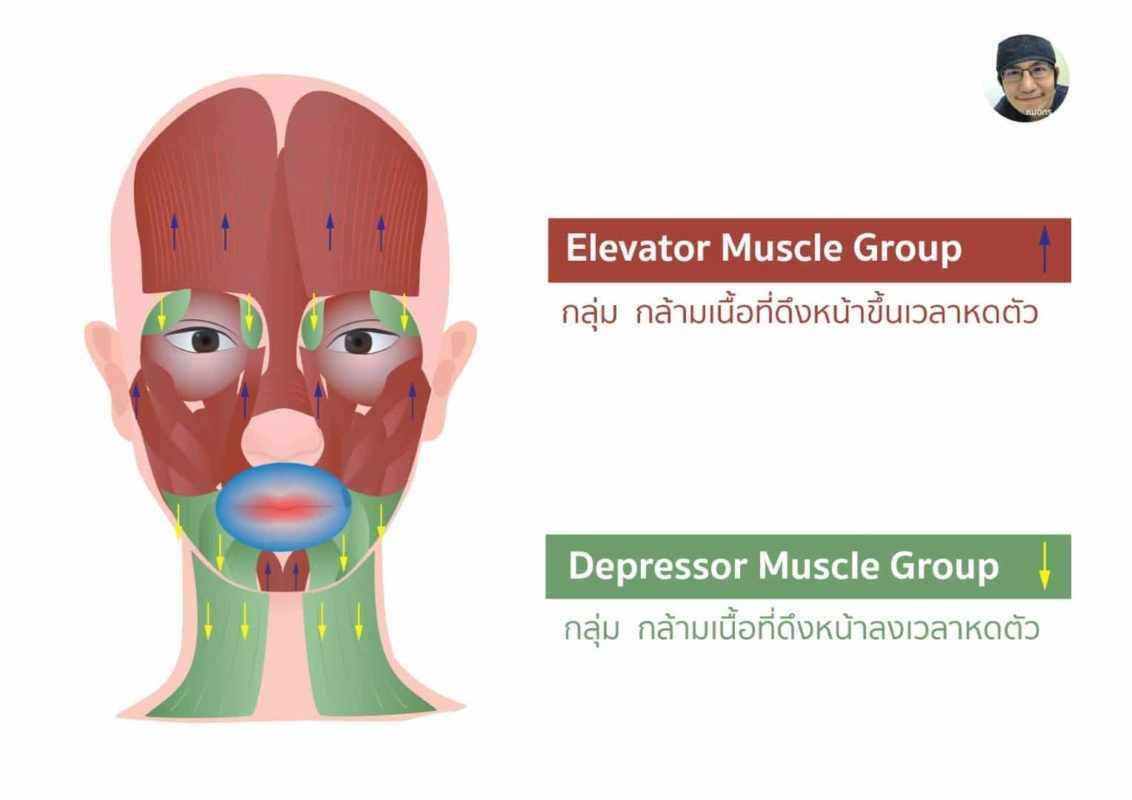
1. The Balance Between Lifting and Depressor Muscles
The face and neck contain muscles that lift tissues and muscles that pull them downward. The balance between these muscle groups influences facial expression and contour. When downward muscle activity is particularly strong, it may contribute to a downward appearance in certain areas.
2. Changes in the Facial Bones
Ageing involves changes in the shape and volume of the facial skeleton. Bone remodelling and resorption can reduce support for the overlying tissues. Bone health is particularly relevant in older adults, women after menopause, and people who smoke.
- Reduced skeletal support can make the face appear more hollow and alter the support provided to the surrounding tissues and retaining ligaments.
- Changes in supporting areas such as the cheekbones may contribute to changes beneath the eyes and in the cheeks.
Changes in facial bone contours and angles may also affect the appearance of the eye area, cheeks, nose, and chin.
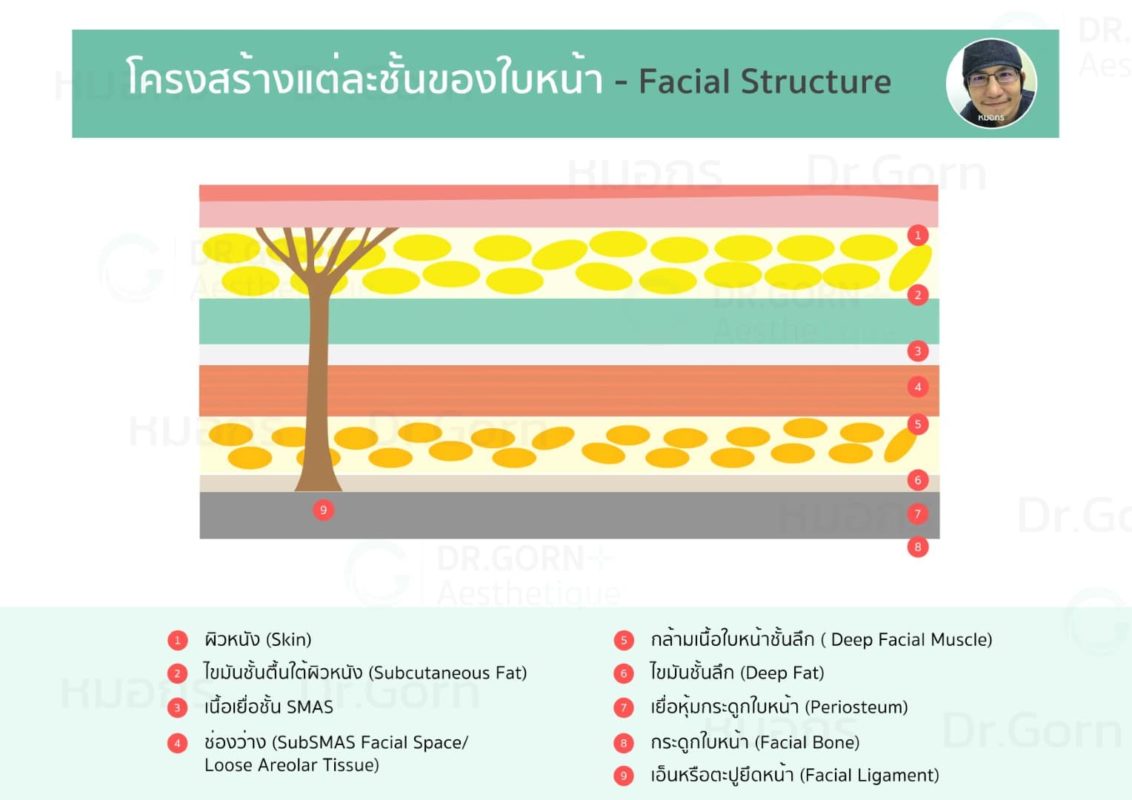

3. Laxity of the Facial Retaining Ligaments
Facial retaining ligaments anchor the skin and underlying soft tissues to deeper structures. They act like supporting points that help hold the facial tissues in position. Some attachment points are stronger than others, as illustrated in the image.
As these supporting structures become more lax with age, the skin and soft tissues may descend under gravity, contributing to an older appearance.
How Do You Choose Between Muscle Relaxing Injections, HIFU, and Facelift Surgery?
Facial and neck sagging does not always require surgery. Choosing treatment according to the underlying concern can improve the relevance of the treatment plan. The following three situations illustrate different approaches.
1. Predominant Activity of the Depressor Muscles
When strong downward muscle activity contributes to the concern, muscle relaxing injections may temporarily reduce that activity and allow the lifting muscles to have a greater relative effect. This may create a modest lifting appearance in suitable patients.
This approach is most relevant when excessive activity of the depressor muscles is a major factor. The original article describes effects lasting approximately four to six months, although duration varies between patients.
2. Reduced Facial Volume and Skeletal Support
When loss of volume and support contributes to the appearance, facial volumisation may be considered. Three main options include:
- Facial implants: Materials such as silicone, expanded polytetrafluoroethylene, or porous polyethylene can provide lasting structural augmentation. Suitability and possible future revision should be discussed with the surgeon.
- Dermal fillers: Hyaluronic acid fillers are commonly used to restore volume. They gradually break down, with duration depending on the product, treatment area, and individual factors. The original article describes approximately one to two years.
- Autologous fat grafting: Fat is harvested from another part of the body, such as the lower abdomen or thighs, processed, and injected into the face. The surviving portion of the transferred fat may provide lasting volume, although retention and subsequent ageing vary. View facial fat grafting patient reviews.

3. Laxity of the Facial Supporting Structures
When laxity of the retaining structures is a major concern, treatment is selected according to its severity.
3.1. Mild Laxity
The original article discusses this group as commonly including people around 30 to 40 years old. However, the degree of laxity and individual anatomy are more important than age alone. Two main options may be considered:
- Thread lifting: Threads may provide a degree of tissue repositioning and stimulate a local collagen response. The extent and duration of improvement vary.
- Energy treatments: Devices may promote tissue contraction and collagen remodelling in the dermis or deeper layers, depending on the technology. Examples include plasma, radiofrequency, laser, and high intensity focused ultrasound, known as HIFU.
3.2. More Pronounced Laxity
More pronounced laxity may involve deep nasolabial folds, clearly downturned mouth corners, visible jowls, and marionette folds. The original article discusses these changes as more common after age 40, although they can occur at different ages.
Thread lifting and energy treatments may provide limited improvement when substantial tissue repositioning is needed. Surgical lifting may be considered for a more noticeable correction. The areas treated depend on the individual concerns and may include the eyebrows, area beneath the eyes, face, or different parts of the neck.
Different facial and neck regions require different lifting directions. Planning each area individually can help preserve a natural appearance rather than pulling every region in the same direction.
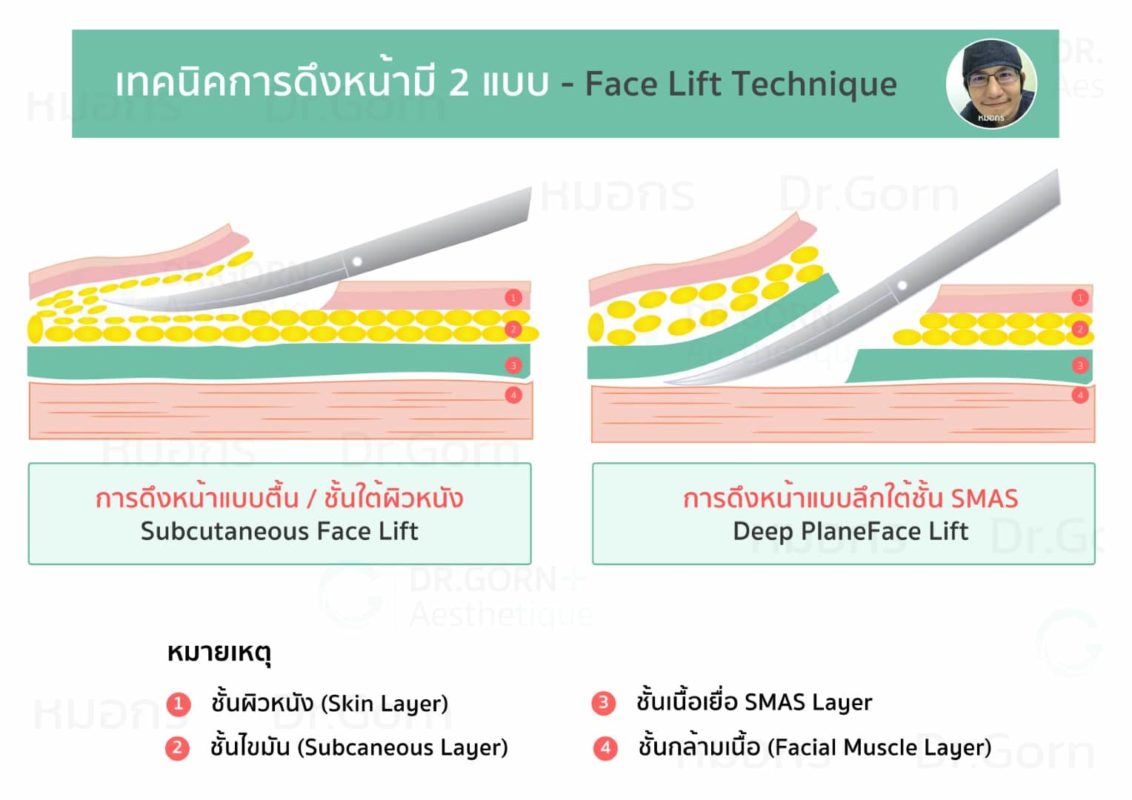
Facelift Techniques
1. Subcutaneous Facelift
This approach separates and lifts the skin at the level of the underlying subcutaneous tissue. It is generally less extensive than approaches that also reposition deeper structures, but it has different benefits and limitations.
Potential Advantages
- May improve laxity along the lateral cheeks and neck, depending on the procedure.
- May involve a shorter operating time.
- May allow a shorter recovery in selected patients.
- May be considered for certain revision procedures.
- May cost less than more extensive techniques.
Limitations
- It does not directly address deeper retaining structures, so improvement in the nasolabial folds, mouth corners, and jowls may be limited, particularly with substantial laxity or heavier facial tissues.
- Results may be less durable when the deeper causes of tissue descent remain unaddressed.
- Greater tension on the skin closure may contribute to widened or raised scars in susceptible patients.
- Excessive skin tension can produce an overly pulled appearance.
2. Deeper Facelift Approaches, Including Deep Plane Surgery
These approaches address the superficial musculoaponeurotic system, known as the SMAS, and may involve releasing retaining ligaments and repositioning deeper tissues. The exact surgical plane and technique depend on the chosen procedure.
Potential Advantages
- Direct treatment of deeper supporting structures may provide more substantial and lasting correction in suitable patients.
- Supporting the lift through deeper tissues may reduce tension on the skin closure.
- Repositioning deeper tissues can help create a natural appearance.
- These approaches may improve concerns such as jowls and tissues around the mouth when more superficial or nonsurgical treatments provide insufficient correction.
Limitations
- The surgery is more complex and may take longer. It requires detailed anatomical knowledge and surgical experience because facial nerves, blood vessels, and other important structures lie near the operative areas.
- Costs may be higher because of the operating time, anaesthesia requirements, and other medical resources involved.
Facelift Approaches Described at Dr. Gorn Aesthetique Clinic
The clinic describes adapting different techniques to the patient’s anatomy and treatment goals.
1. Dual Plane Facelift (Extended SMAS Technique)
The skin flap and SMAS flap are separated and repositioned individually. The SMAS is lifted in a more vertical direction than the skin, aiming to improve tissue position while maintaining a natural appearance.
2. Foundation Facelift
The skin and SMAS are elevated together as a composite flap, with dissection beneath the SMAS. This approach may be considered in selected patients, including some revision cases. Smoking and previous surgery require careful risk assessment and do not automatically make a patient suitable for this technique.
3. Lateral SMASectomy
A portion of the lateral SMAS is removed before the remaining tissues are repositioned and secured. This may be considered for broader faces with thicker tissues and may be less suitable for very thin faces.
4. Subperiosteal Facelift
Dissection takes place beneath the periosteum, the tissue covering the bone. Secure fixation is required to maintain the repositioned tissues. Endoscopic equipment and fixation devices may be used. This approach may be considered for selected forehead, brow, and midface procedures, sometimes alongside facial implants.
5. High SMAS Technique
The SMAS dissection extends to a higher level around the cheekbone region. Dr. Gorn describes this as an approach for addressing the upper cheeks, tissues around the mouth, lower cheeks, and jowls. Suitability depends on the patient’s anatomy and the surgeon’s assessment.
Possible Risks and Complications After Facelift Surgery
- Parotid gland or duct injury: Injury may occur during dissection near the salivary gland or its duct.
- Facial nerve injury: Injury to branches of the seventh cranial nerve may affect facial movement. The degree and duration depend on the nature of the injury.
- Sensory nerve injury: The great auricular nerve is one of the nerves at risk, and injury may alter sensation around the ear and upper lateral neck.
- Bleeding or haematoma: A collection of blood may develop, often within the first 24 hours. Contributing factors may include high blood pressure, vomiting, coughing, or severe pain. Unusual pain, rapidly increasing swelling, or a suspected blood collection requires immediate contact with the surgical team.
- Seroma: Fluid may collect beneath the skin, sometimes around five to seven days after surgery. Treatment may involve aspiration and a temporary pressure dressing.
- Infection: Infection is a possible complication. Its likelihood depends on the procedure, wound condition, and patient factors.
- Hair loss: Injury from surgical instruments or excessive tension may cause hair loss near the incision. Temporary shedding may improve over four to six months. Persistent loss beyond 12 months may require assessment for treatments such as hair transplantation.
- Irregular hairline behind the ear: A stepped appearance may occur, particularly when substantial neck skin repositioning is needed.
- Raised scars or keloids: Genetic susceptibility and wound tension can influence scar formation.
- Surface irregularities: Local bleeding, fluid collections, or tissue healing can create uneven contours. Management may include observation or treatments selected by the surgeon, such as directed massage, injections, fillers, or fat grafting.
- Deep vein thrombosis and pulmonary embolism: Blood clots are potential surgical complications. Risk assessment considers the patient’s health, procedure duration, mobility, and anaesthesia plan.
Choosing an Approach to Facial and Neck Sagging
Dr. Gorn recommends considering the following factors when planning treatment:
- Match the treatment to the concern and its cause. This helps establish appropriate expectations and assess the value of the proposed treatment.
- Consider your readiness. Allow time for treatment and recovery, prepare for care before and after the procedure, and consider your budget.
- Keep expectations realistic. Thread lifting or HIFU should not be expected to reproduce the results of facelift surgery when there is substantial laxity or pronounced jowling.
- Understand the benefits and limitations. Choose an approach whose tradeoffs you are comfortable accepting.
- Consider whether combined treatments are needed. The doctor and patient can plan the sequence together. For example, after a face and neck lift, fat grafting may be considered for hollow temples or cheeks.
- Define your own goals. Some people seek a noticeable correction, while others prefer modest improvement or ongoing maintenance. The plan should reflect those individual goals.
General Care and Maintenance
- Support overall health through a balanced diet, regular exercise, adequate rest, stress management, and avoidance of smoking.
- The original article suggests considering sleeping position and facial support garments. These should not be presented as proven ways to prevent facial sagging. After surgery, follow the surgeon’s specific instructions about positioning and garment use.
- The original article also discusses facial massage and treatments using HIFU, radiofrequency, laser, electroporation, and plasma. These methods have different purposes and limitations and should not be assumed to provide equivalent lifting effects. Suitability and treatment frequency require individual assessment.
Dr. Gorn also highlights weight management. Additional fat around the jowls, beneath the chin, or in the neck can contribute to a heavier contour and make sagging more noticeable.
Face, Forehead, and Neck Lift Patient Reviews at Dr. Gorn Aesthetique Clinic
View more patient reviews: Facelift, brow and temple lift, and neck lift reviews at Dr. Gorn Aesthetique Clinic
Do You Have Questions About Facelift Surgery?
For further information, contact the clinic’s aesthetic consultation team on LINE at @dr.gornaesthetique. The supplied article describes complimentary online assessment by a doctor, services at branches in Bangkok, Nan, and Phitsanulok, and care by a team with more than 20 years of experience in facial plastic surgery.



