
Factors That Contribute to a Double Chin and Fullness Beneath the Chin

-
Excess Fat Beneath the Chin (Submental Fat)
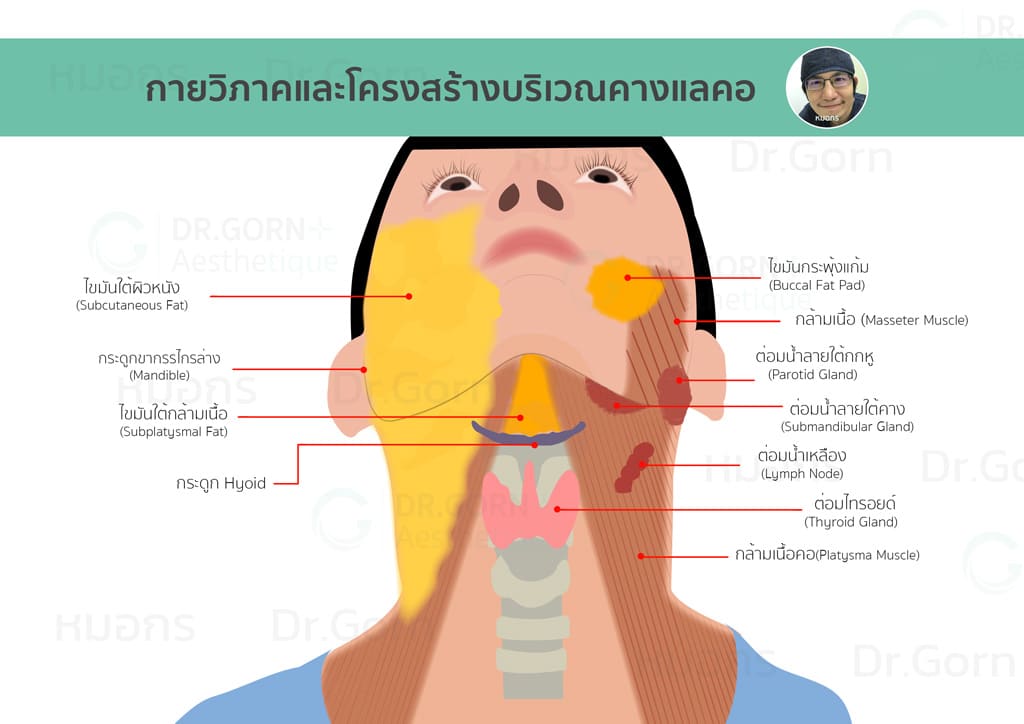
Fat beneath the chin is found in two main layers:
- Superficial fat: Subcutaneous or preplatysmal fat lies beneath the skin and above the platysma muscle of the neck. Its volume often varies with body weight and eating habits.
- Deep fat: Subplatysmal fat lies beneath the platysma muscle.
-
Loose Skin Beneath the Chin
Changes in the size and support of the mandible, together with loosening of the facial retaining ligaments along the jawline, can contribute to sagging beneath the chin.
-
Prominent Platysma Muscles and Bands
Contraction and increased prominence of the platysma muscle can create visible bands in the neck, known as platysmal banding.
-
A Small or Receding Chin and Lower Jaw
A small or receding chin or lower jaw, including retrognathia, may be present from birth or develop later in association with aging, bone loss, or injury.
-
The Position of the Hyoid Bone
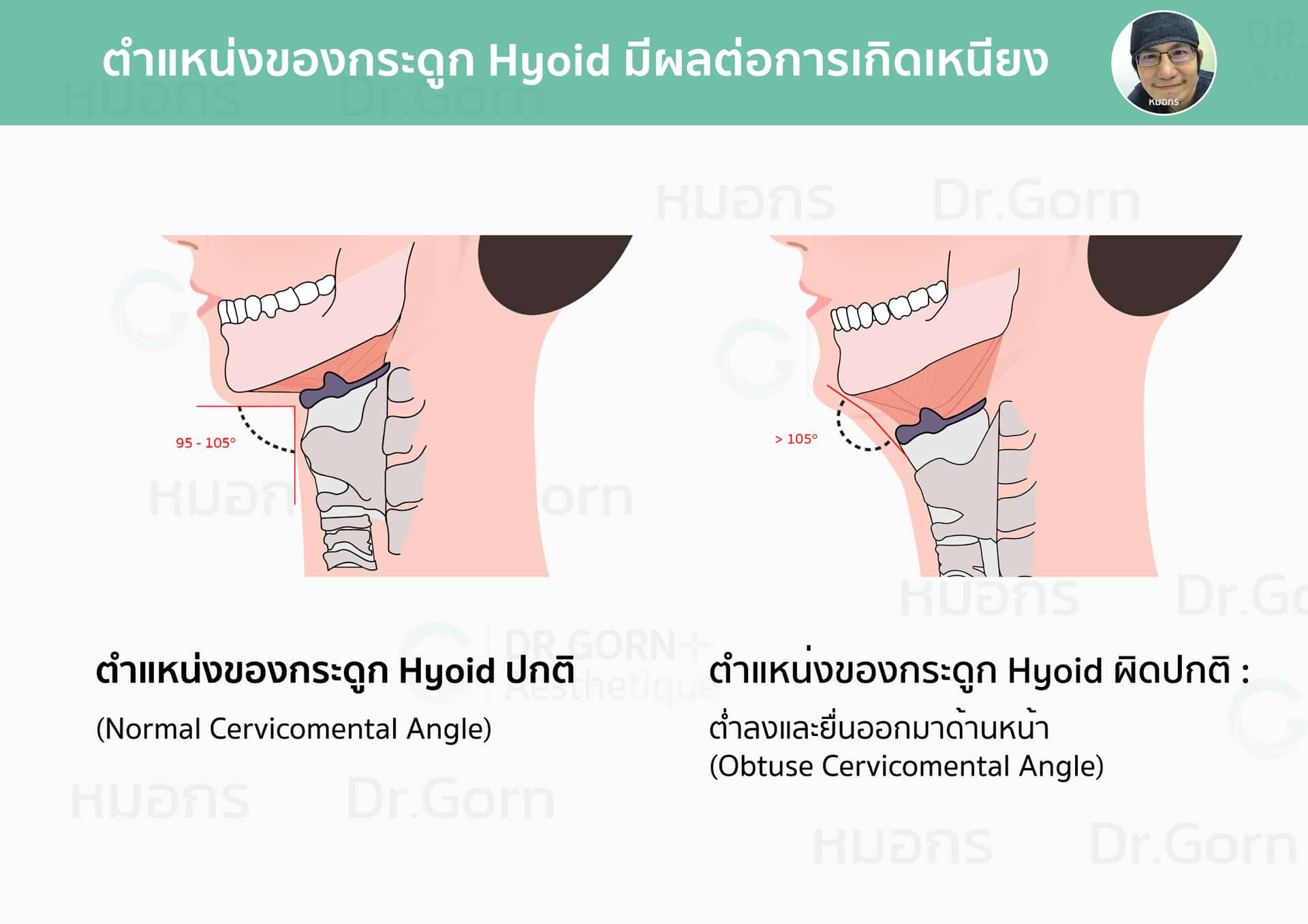
A hyoid bone positioned farther forward and lower in the neck can contribute to a wider angle between the chin and neck, known as an obtuse cervicomental angle. An angle greater than 120° may make fullness beneath the chin more noticeable.
A relatively higher and more posterior hyoid position can support a sharper angle between the chin and neck, creating a more defined contour and a more youthful appearance. The exact position varies between individuals.
How Can a Double Chin and Fullness Beneath the Chin Be Treated?
Some people have a single contributing factor, so one treatment may be sufficient and involve a lower overall cost. Others have several contributing factors and may need a combination of treatments to achieve a noticeable improvement.
1. Excess Fat Accumulation
-
Superficial Fat
Options may include neck liposuction, liposculpture, or injections intended to reduce fat. The doctor will assess which treatment and injectable product, if any, are appropriate for the individual.
-
Deep Fat Beneath the Platysma
Deep fat generally requires direct surgical assessment and removal rather than routine superficial liposuction or fat reduction injections. Surgical approaches may include:
- Direct removal through an incision beneath the chin. In suitable cases, this may be performed through the same incision used for chin augmentation.
- Direct removal during neck lift surgery.
2. Loose Skin
Treatment depends on the severity of skin laxity. Options may include thread lifting, high intensity focused ultrasound (HIFU), radiofrequency (RF), or neck lift surgery. Several surgical techniques are available, and a neck lift may sometimes be combined with a facelift. The approach is selected according to each person’s anatomy and needs.
3. Platysma Muscle Contraction
Botulinum toxin injections may help reduce the prominence of platysma bands, particularly vertical bands caused by muscle contraction.
4. A Small or Receding Chin
Chin augmentation or sliding genioplasty may be considered to improve chin projection and the contour beneath the chin. Sliding genioplasty repositions the chin bone without using an implant. The degree of improvement depends on the underlying anatomy and any other contributing factors.
5. Hyoid Bone Position
The position of the hyoid bone can limit the improvement achievable with the treatments described above. In some cases, procedures such as liposuction may make the underlying contour more noticeable rather than improve it. Directly changing the position of the hyoid bone is complex, particularly when surgical repositioning is considered.
For this reason, treatment may involve a combination of techniques, selected after a detailed assessment, with realistic expectations about the results.


