
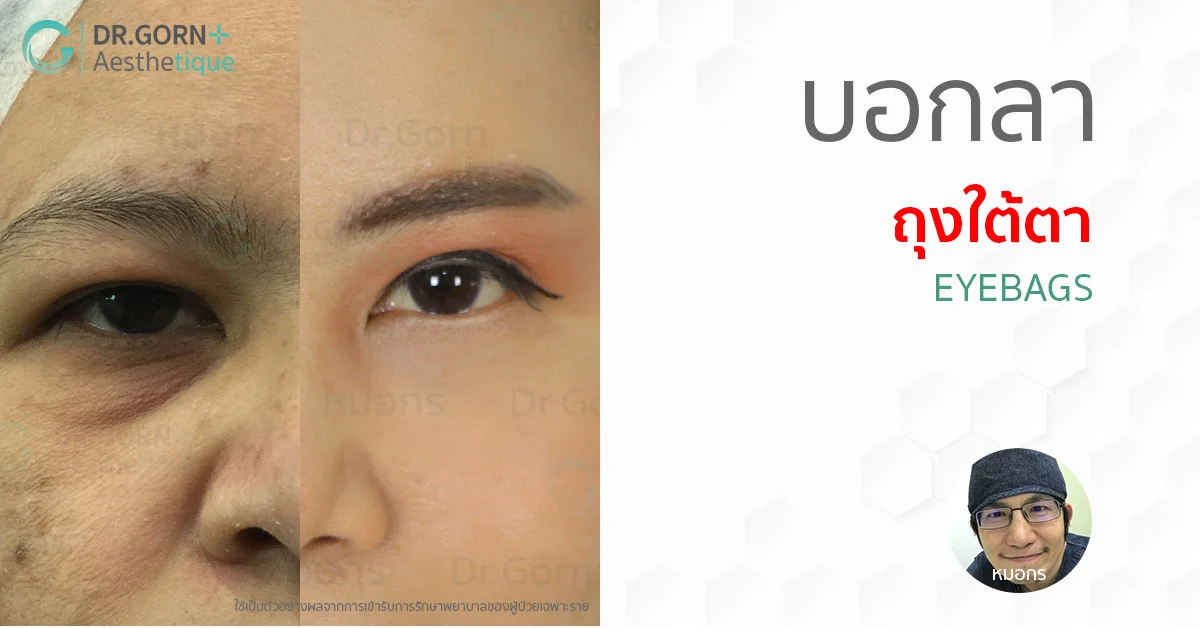
The lower eyelid is an important part of the face because changes in this area are often among the earliest visible signs of facial aging.
Eye bags are one sign of aging in the lower eyelids and midface. They can create a tired or sad appearance and make the transition between the lower eyelid and cheek more noticeable, contributing to an older appearance.
Watch the video about eye bags and lower eyelid treatment
Some people have eye bags together with enlargement of the muscle just beneath the lower eyelashes, known as pretarsal orbicularis oculi hypertrophy, or have previously undergone a procedure to create a fuller “Dolly Eye” appearance. This can create two visible contours beneath the eyes. As the orbital septum weakens, orbital fat may bulge forward and form eye bags. Larger bags can cast more pronounced shadows underneath, contributing to the appearance of dark circles.
These changes can make the face look older and affect confidence. Makeup may not fully conceal them, particularly during periods of insufficient sleep, a demanding workload, or prolonged stress. Although the cheeks rise when smiling and may temporarily soften the appearance, the underlying changes remain.


**ภาษาอังกฤษ**
```html
The lower eyelid is an important part of the face because changes in this area are often among the earliest visible signs of facial aging.
Eye bags are one sign of aging in the lower eyelids and midface. They can create a tired or sad appearance and make the transition between the lower eyelid and cheek more noticeable, contributing to an older appearance.
Watch the video about eye bags and lower eyelid treatment
Some people have eye bags together with an enlarged muscle just beneath the lower eyelashes, known as pretarsal orbicularis oculi hypertrophy, or have previously undergone a treatment to create a “dolly eye” appearance. This can produce two visible contours beneath the eyes. When the orbital septum becomes lax, orbital fat may bulge forward and form eye bags. Larger bags can cast more noticeable shadows, contributing to dark circles.
These changes may affect confidence and can be difficult to conceal with makeup. Their appearance may become more noticeable during periods of insufficient sleep, heavy workloads, or prolonged stress. Although smiling raises the cheeks and may temporarily soften the appearance, the underlying changes can remain.
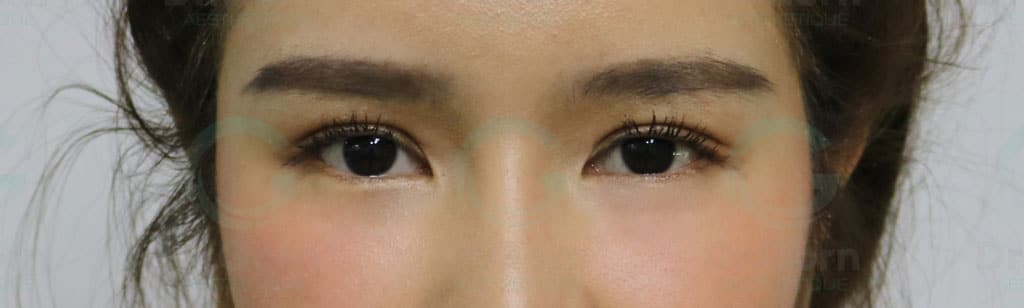
Features of a Smooth Lower Eyelid Area
- Smooth skin beneath the eyes.
- Few or no visible wrinkles.
- No prominent eye bags.
- Little or no tear trough hollowing.
- A smooth transition between the lower eyelid and cheek without a pronounced boundary.
Changes Associated with Lower Eyelid and Midface Aging
- Eye bags.
- Pronounced tear troughs.
- Dark circles.
- Loose skin, wrinkles, and deeper creases beneath the eyes.
- A groove extending into the cheek, known as a midcheek groove or Indian band.
- Lower eyelid laxity.
- Lower eyelid retraction or outward turning of the eyelid, known as ectropion.
- Visible white of the eye beneath the iris, known as scleral show.
- Hollowing beneath the eyes, sometimes revealing the contour of the orbital rim.
- Reduced bony support or projection in the cheek and upper jaw.
- A more pronounced or elongated transition between the lower eyelid and cheek.
- Deeper, more noticeable nasolabial folds.
How Can the Lower Eyelid and Cheek Area Be Rejuvenated?
Several treatments are available. The doctor will consider factors including:
- The size and severity of the eye bags.
- The structure and projection of the cheeks, particularly the relationship between the cheek bones and the eyes, known as the midface vector.
- The patient’s budget, available recovery time, and understanding of the advantages and limitations of each treatment.
- The doctor’s experience and technical expertise.
Common Lower Eyelid Concerns and Treatment Options
-
Excess skin and wrinkles visible at rest
Surgical removal of excess skin may be considered for suitable patients with loose skin or persistent wrinkles beneath the eyes.
-
Wrinkles that appear during facial expressions
Wrinkles that become noticeable when smiling may be treated with carefully selected botulinum toxin injections to relax the orbicularis oculi muscle. Treatment may be repeated at intervals, such as every 4 to 6 months, depending on the response and the doctor’s assessment.
-
Tear trough hollowing
Possible treatments include:
- Dermal filler injections.
- Fat grafting.
- Orbital fat repositioning.
-
Pronounced cheek folds
Depending on the depth of the folds and associated concerns, options may include:
- Dermal filler injections or fat grafting.
- A midface lift through an incision beneath the lower eyelashes or through the temple area.
-
Eye bags
Treatment may involve smoothing the surrounding contour or surgically managing the protruding orbital fat, as described below.
Two Main Approaches to Treating Eye Bags
Approach 1: Filling the Hollow Beneath the Eye Bag
Camouflage filling adds volume beneath the eye bag to create a smoother contour. This may suit people with mild eye bags or reduced cheek and orbital rim support, sometimes described as a negative midface vector. Two commonly used options are:
1.1 Hyaluronic Acid Filler
Hyaluronic acid (HA) fillers are manufactured medical products used to restore volume. Their effects may last approximately 4 to 18 months, depending on the product, formulation, placement, and individual response.
Softer formulations may provide a smooth result but may require more frequent treatment. Firmer formulations may last longer, although lumps or unevenness can occur in some cases. The doctor may select different formulations for different tissue layers or combine them when appropriate.
1.2 Fat Grafting Using Your Own Fat
Autologous fat grafting uses fat taken from another part of the body, such as the abdomen or thighs, to restore volume beneath the eyes. It may suit people who prefer to use their own tissue.
The survival of the transferred fat depends on the condition of the fat cells and the development of a blood supply in the treated area. Fat that successfully establishes itself may remain for a long time, reducing the need for frequent treatment. However, fat retention varies, and additional treatment may sometimes be needed.
Approach 2: Surgical Management of Lower Orbital Fat
There are two main approaches to managing the fat that forms eye bags:
2.1 Eye Bag Fat Removal
For prominent eye bags, the doctor may consider one of two surgical approaches:
-
Transconjunctival approach
Fat is accessed through an incision inside the lower eyelid, leaving no visible external skin incision.
-
Subciliary approach
An external incision is placed approximately 2 millimeters beneath the lower eyelashes. This approach may be selected when excess skin also needs to be removed or when a midface lift is planned.
In selected cases, the doctor may remove part of the protruding fat and then use additional fat grafting to refine the contour and create a smoother transition to the cheek. This may be performed during the same procedure or approximately 1 to 3 months afterward, depending on the treatment plan.
2.2 Orbital Fat Repositioning
Instead of removing all the protruding fat, the doctor may preserve and reposition it, sometimes removing only a portion. The fat is moved over the lower orbital rim or into hollow areas between the lower eyelid and cheek.
This approach can address two concerns at the same time: reducing the prominence of eye bags and filling the hollow beneath them. If there is substantial hollowing or reduced cheek support, the available orbital fat may not be sufficient. Additional fat grafting from another part of the body may be considered to improve the contour.
Caring for the Lower Eyelid Area
To support the skin beneath the eyes and help limit premature aging, consider the following:
-
Get adequate rest
Sleep gives the body time to recover and supports skin repair. Stress, sunlight, and pollution can contribute to skin aging. As we age, changes in collagen affect the strength and elasticity of the tissues supporting the lower eyelids, including the orbital septum that helps contain orbital fat.
-
Manage allergies appropriately
People with allergic conjunctivitis or allergic rhinitis should manage their symptoms appropriately and seek specialist care when symptoms are severe or persistent. Allergy related inflammation and rubbing itchy eyes can worsen swelling and dark circles.
-
Care for the delicate skin around the eyes
Eyelid skin is thin and can become irritated, dry, or sensitive easily. Use a gentle moisturizer in the morning and evening and drink enough water throughout the day. Suitable eye care products can help maintain skin moisture and reduce the appearance of dryness related fine lines.


