

First, let’s understand that the nasal tip can be assessed from 2 perspectives:
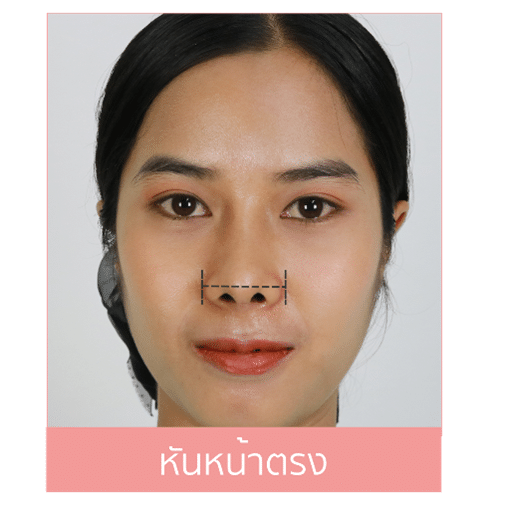
1. Front View
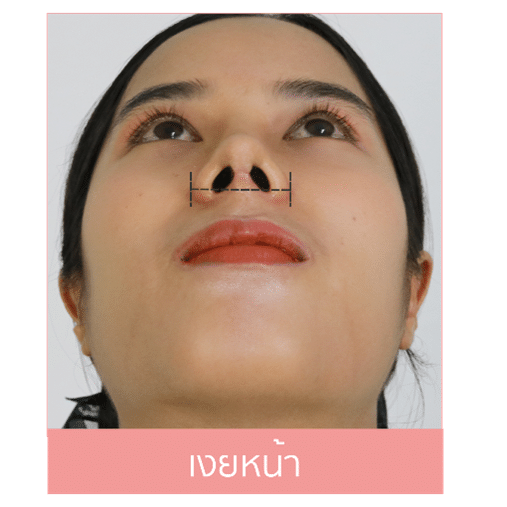
2. View from Below with the Head Tilted Back
A large nasal base can involve 3 structural components:
- The nasal tip
- The nasal alae
- The width of the nostril sills
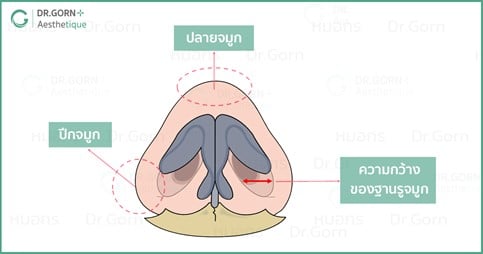
Reducing the nasal alae alone does not necessarily make the nasal tip smaller, as many people assume. In some cases, it may create an imbalance between the size of the nostrils, the nasal tip, and the overall nasal shape. Excessive reduction can make the nostril openings too narrow, even making it difficult to insert a little finger.
Causes of a Large Nasal Tip (Bulbous Tip / Boxy Tip)
1. A Large Nasal Tip Caused by Widely Spaced and/or Oversized Tip Cartilages
Correction : Excess cartilage is surgically removed as appropriate, and sutures are used to reshape the remaining cartilage. A cartilage tip graft may also be used to strengthen and support the nasal tip.
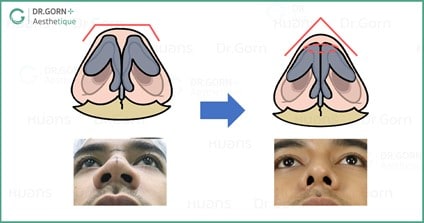
2. A Large Nasal Tip Caused by Excess Tissue Beneath the Tip Skin, Particularly Fat, Often Seen in Thai Patients with Relatively Thick and Oily Facial Skin
Correction : Excess tissue is carefully reduced as appropriate. In addition to refining the nasal tip, this may allow the surgeon to improve tip projection and length through suitable structural support.
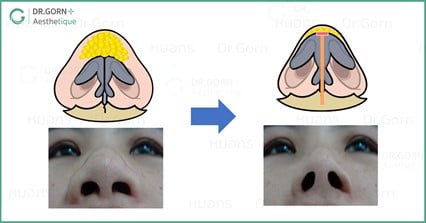
3. A Large Nasal Tip Caused by Both Oversized Cartilage and Excessively Thick Tissue Beneath the Skin
Correction : Both contributing factors are addressed together surgically to reduce and refine the nasal tip.
4. A Nasal Tip That Appears Large Because It Has Insufficient Projection
Correction : Various nasal tip surgery techniques can increase tip projection, helping the tip appear smaller and more refined.
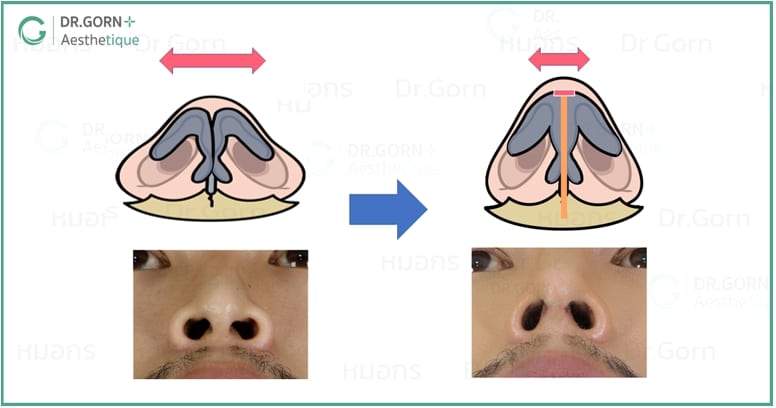
A Wide Nasal Sill
Correction : Nasal sill reduction is performed to narrow the nostril base according to its existing width.

Flared, Large, or Wide Nasal Alae (Wide Alar Base / Alar Flaring)
Correction : Alar reduction may use external incisions, internal incisions, or a combination of both approaches, depending on the surgeon’s assessment.
1. Excessive Alar Flaring
Correction : Surgical reduction of alar thickness (Alar Rim Reduction).
2. Excessively Thick Nasal Alae or Nostril Rims (Thick Alar Rim)
Correction : Surgical reduction of alar thickness (Alar Rim Reduction).
When the nasal alae flare noticeably during smiling (Smiling Test Positive), alar reduction alone may have a limited effect. This is because the flaring is also influenced by the muscles around the lips and the muscles that elevate the upper lip and mouth corners.
Botulinum toxin injections may temporarily reduce the appearance of nasal flaring by targeting the muscles that widen the nostrils, known as the nasal dilator muscles. This temporarily reduces muscle activity rather than removing tissue or permanently reducing the nasal tip.
Clear communication between the patient and surgeon is essential for setting expectations about nasal tip refinement and alar reduction. A detailed consultation and examination are recommended before deciding to undergo surgery.


