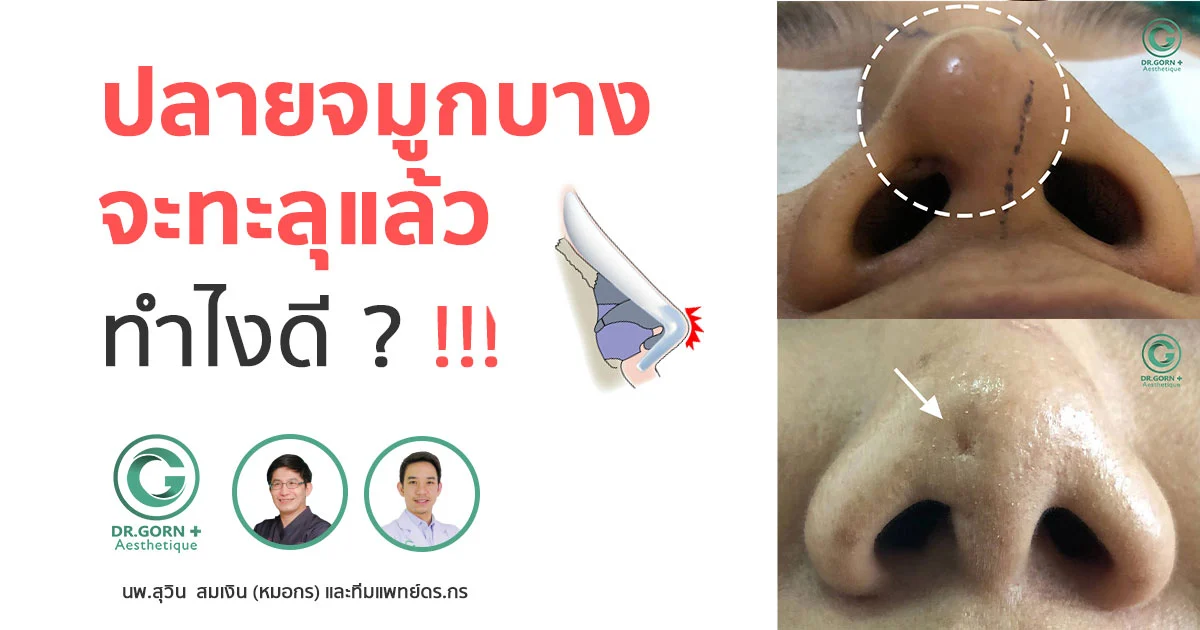
Thinning of the nasal tip skin after rhinoplasty is a common concern. It often occurs when a silicone implant places excessive tension on the nasal tip. This may develop months or years after surgery. The degree of thinning depends on the amount of tension and the patient's original nasal tissue.
To determine the appropriate treatment, a doctor must assess how thin the nasal tip tissue has become. If the thinning is mild, reducing the size or length of the silicone implant may be an option. However, if the tissue is severely thinned, simply replacing the implant is not advisable, and a corrective approach that avoids silicone augmentation should be considered. The two main approaches are:

1. Remove the Implant, Allow Recovery, and Place a Fat Graft at the Nasal Tip
Thinning of the nasal tip skin after rhinoplasty is a common concern. It often occurs when a silicone implant places excessive tension on the nasal tip. This may develop months or years after surgery. The degree of thinning depends on the amount of tension and the patient's original nasal tissue.
To determine the appropriate treatment, a doctor must assess how thin the nasal tip tissue has become. If the thinning is mild, reducing the size or length of the silicone implant may be an option. However, if the tissue is severely thinned, simply replacing the implant is not advisable, and a corrective approach that avoids silicone augmentation should be considered. The two main approaches are:


2. Rhinoplasty Without Silicone at the Nasal Tip or Structural Nasal Reconstruction
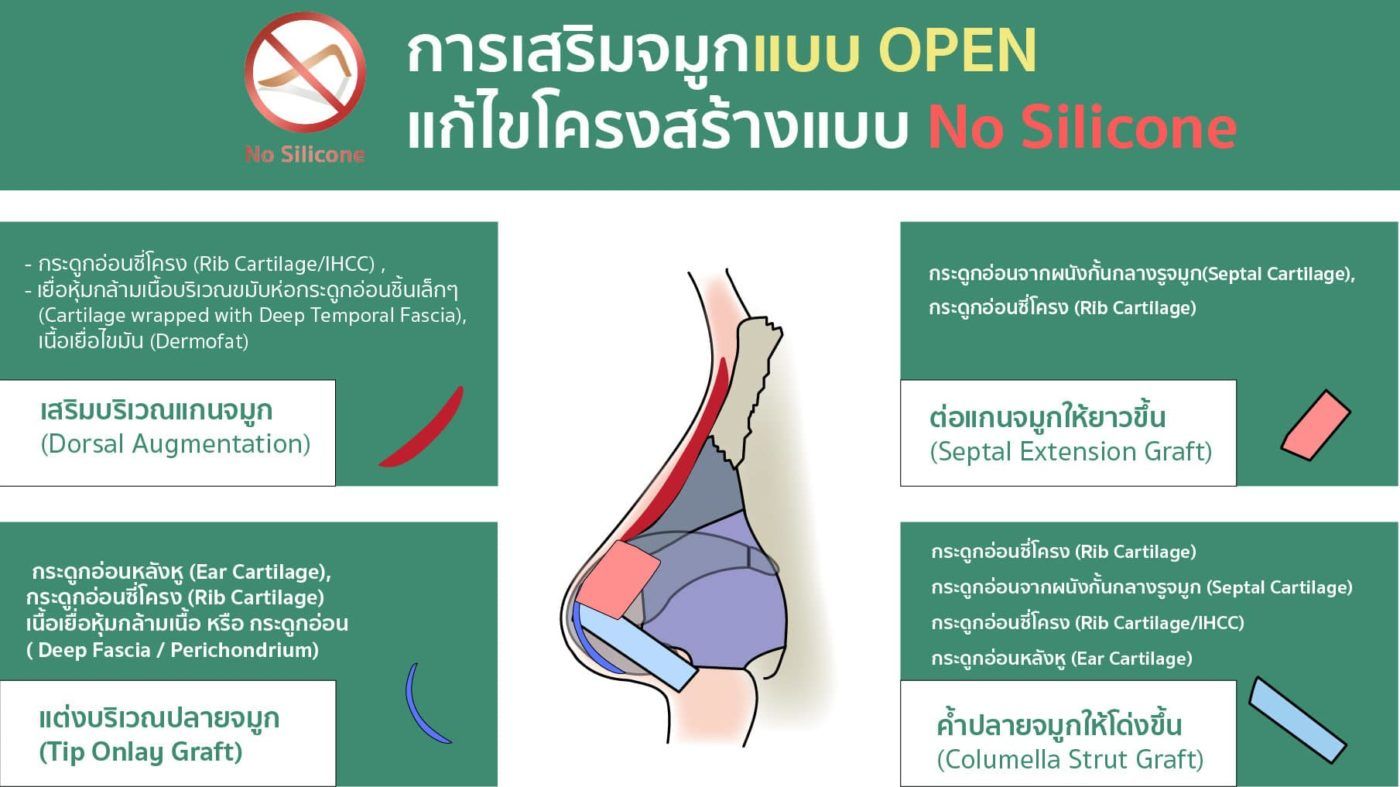
This approach may be suitable for patients whose nasal tip tissue is not severely thinned and who wish to proceed directly with a different rhinoplasty technique. It uses the patient's own tissue to reshape the nasal tip, such as ear cartilage, fatty tissue, nasal septal cartilage, or rib cartilage. The doctor assesses the patient and selects the most appropriate approach.