

Thin, translucent skin over the nasal bridge following silicone implant rhinoplasty is another commonly encountered concern. However, many patients pay less attention to it than to tight or thinning skin at the nasal tip. Excessive tension and skin thinning over the bridge can lead to serious problems that become difficult to correct if left untreated for too long.
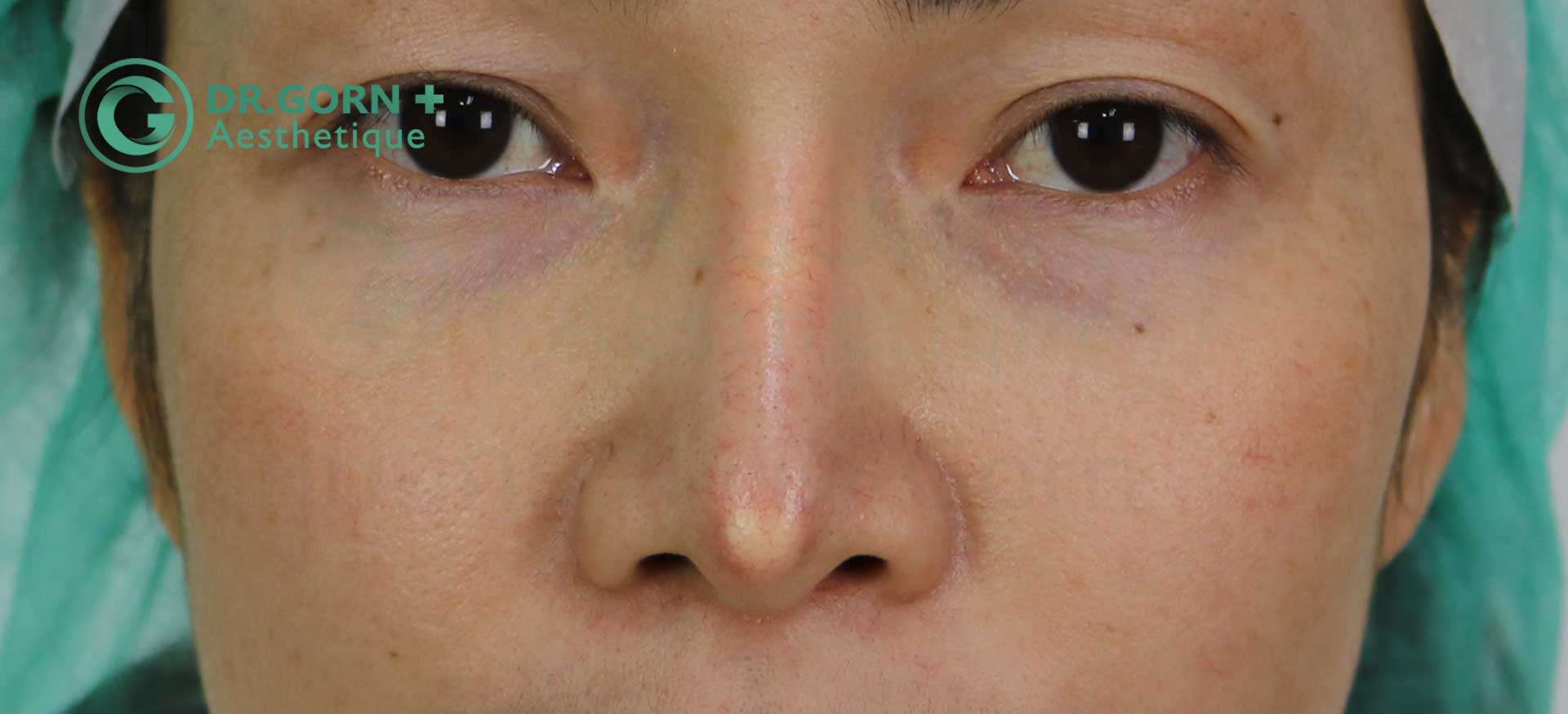
Causes of Tight and Thinning Nasal Bridge Skin
1. An Implant That Is Too Thick for the Tissue's Elasticity
A silicone implant that is too thick for the tissues over the nasal bridge can place excessive tension on the skin, eventually causing it to become thinner.

2. Implant Placement in an Overly Superficial Layer Rather Than Beneath the Periosteum
Superficial placement leaves less tissue covering the implant. The skin may appear thin, making the implant clearly visible. This can also occur alongside a floating or mobile silicone implant.

3. Naturally Thin Nasal Bridge Skin That Becomes Tight Easily After Implant Placement
When the tissue covering the implant is thin, the skin over the nasal bridge may appear translucent and the implant may become clearly visible. This may also occur alongside a floating or mobile silicone implant.


4. Skin Thinning Caused by Tissue Damage from Acne-Related Inflammation or Nasal Infection

5. Previous Filler or Liquid Silicone Removal Followed by Silicone Implant Rhinoplasty

Is Revision Needed When the Skin Over a Silicone Nasal Implant Becomes Tight and Thin?
The clinic recommends correction in these cases, although the urgency varies. Severe tension and thinning, particularly when accompanied by infection, require urgent assessment and treatment. If the implant becomes exposed through the skin over the bridge, correction can become much more difficult.
Correcting Thin Nasal Bridge Skin
Treatment depends on the underlying cause. In many cases, conventional silicone implant revision alone may not adequately address the problem, as the same condition can recur. The approaches for each cause are outlined below.
1. An Oversized Silicone Implant
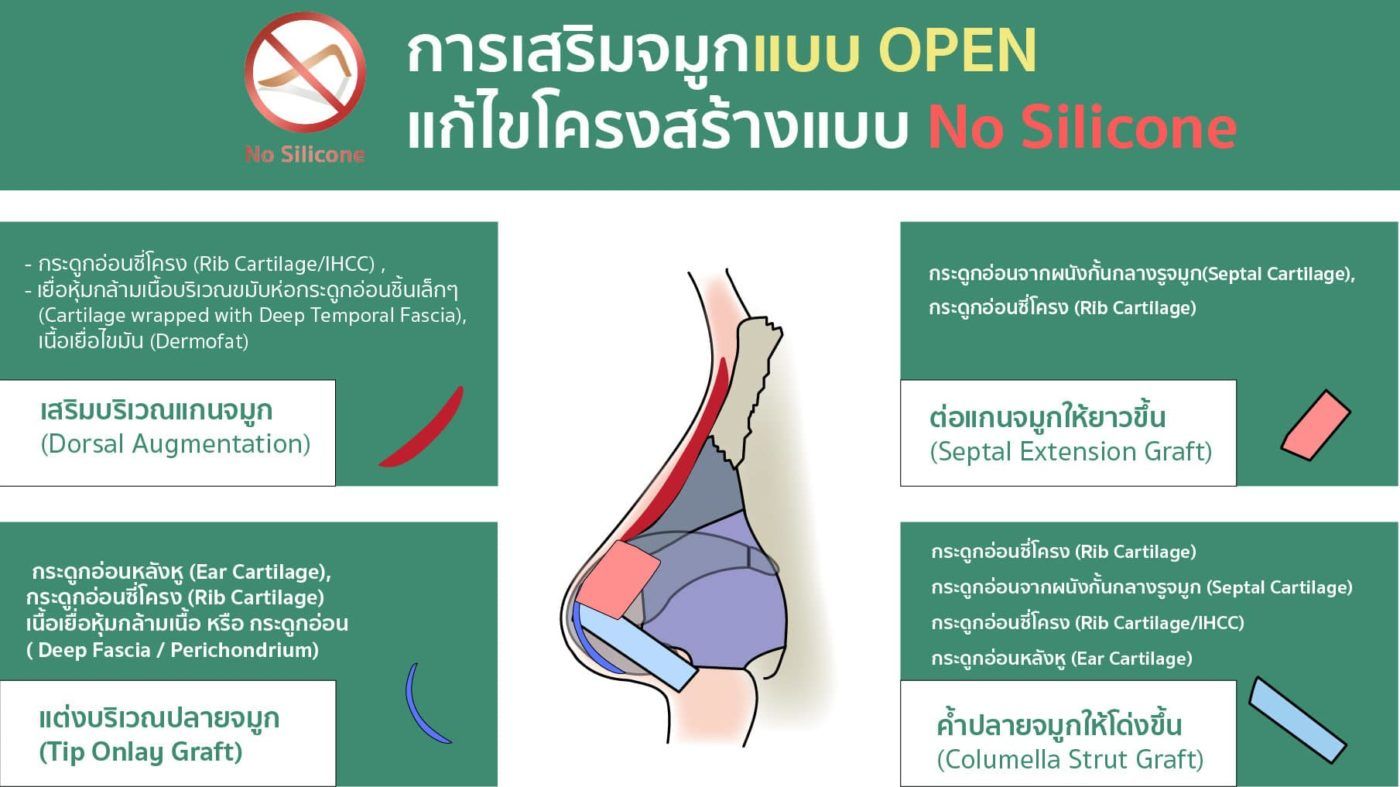
Reducing the implant size may help, but the problem can still recur. Simply choosing softer silicone may offer limited benefit. When the nasal bridge skin is severely tight and thin, the surgeon may recommend reconstruction using the patient's own tissue, such as dermofat or rib cartilage.
2. Overly Superficial Silicone Implant Placement
If the skin over the bridge is not severely thin, revision may still involve a silicone implant, with the new implant placed beneath the periosteum. However, if the skin is very thin, open structural reconstruction using the patient's own tissue instead of silicone may be recommended (silicone-free reconstructive rhinoplasty).

3. A Thin Nasal Skin and Soft Tissue Envelope
For this cause, the clinic recommends open structural rhinoplasty using the patient's own tissue as the main approach, rather than further silicone implant placement. Nasal thread lifts and filler injections are also discouraged in these cases, as they may lead to surface irregularities and inflammation.
4. Chronic Pustular Acne or Infection Affecting the Nasal Bridge
In these cases, prompt implant removal and appropriate antibiotic treatment may be necessary. Once the infection has fully resolved, the surgeon can assess the most suitable approach to nasal reconstruction.
5. Previous Surgical Removal of Nasal Filler or Liquid Silicone
For this cause, the clinic recommends reconstruction using the patient's own tissue (autologous grafts), such as dermofat or rib cartilage, rather than a silicone implant. Further silicone implant placement may lead to thinning of the nasal bridge skin, an increased risk of infection, recurrent swelling, or, in severe cases, implant exposure through the skin.
Thin skin over the nasal bridge should not be dismissed as a minor concern. Anyone experiencing this problem should promptly consult a surgeon experienced in rhinoplasty to identify the cause and select an appropriate corrective technique.



