
Today, we will discuss facial sagging and answer a common question: why does the face sometimes remain saggy after thread lifting or HIFU treatment?
Facial sagging is a common concern as both women and men grow older. Before exploring its causes, let us understand the changes that can occur with age.
Age-Related Changes in the Face and Neck
- Horizontal forehead lines
- More prominent tear troughs and a drooping nasal tip
- Deep nasolabial folds
- Downturned mouth corners
- Hollowing beneath the cheekbones
- Loss of jawline definition
- Neck wrinkles
- A more noticeable double chin
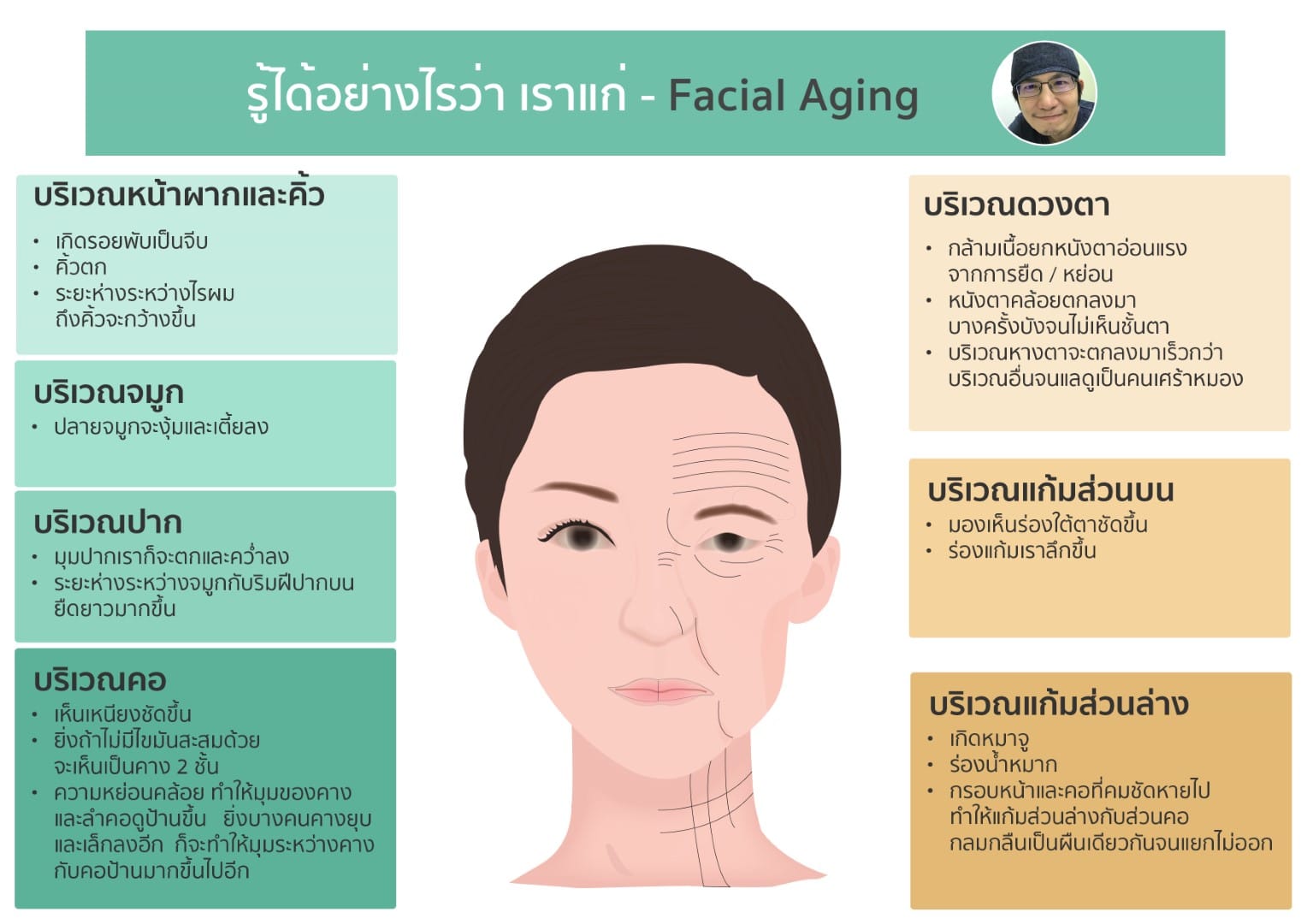
Facial sagging can make us appear older. The eyebrows and eyelids may droop, the under-eye area may look tired, nasolabial folds can become more pronounced, and the mouth corners may turn downward. More substantial sagging of the cheeks and mouth corner region can produce visible jowls and marionette lines. Loose tissue beneath the chin may create a double chin, while the jawline becomes less defined. What causes these changes?
To understand facial sagging more clearly, let us first review the different layers of the face.
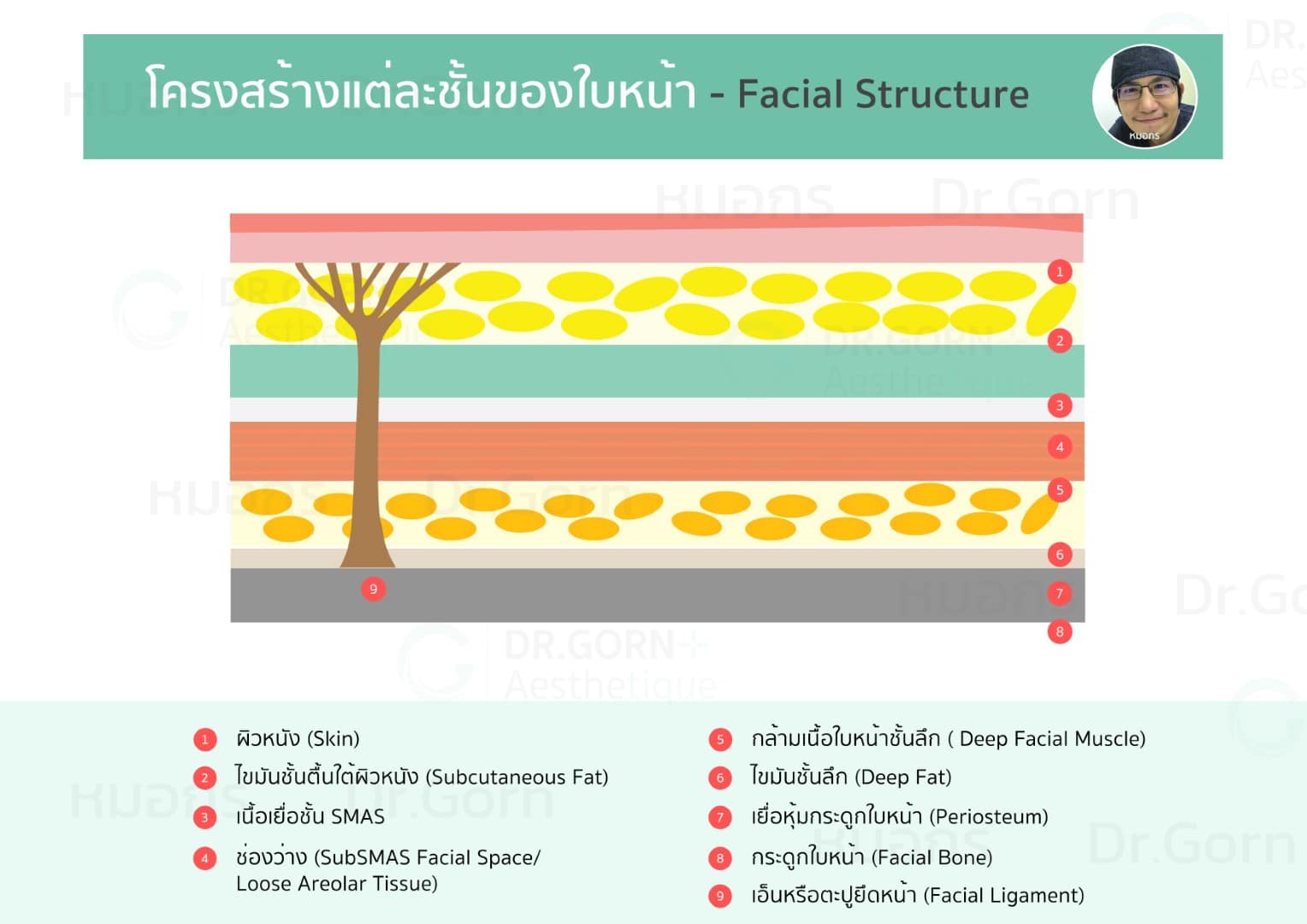
The Structural Layers of the Face
- Skin
- Superficial subcutaneous fat
- The superficial musculoaponeurotic system, or SMAS, comprising superficial muscle and fibrous tissue
- Facial spaces beneath the SMAS
- Deep facial muscles
- Deep fat compartments
- Periosteum, the tissue covering the bones
- Facial bones
- Facial retaining ligaments that anchor the soft tissues to the underlying facial framework
Causes of Facial Structural Sagging
This article focuses on two main contributing factors.
Cause 1: Loosening of the Facial Retaining Ligaments
Facial retaining ligaments help anchor the skin and soft tissues to deeper structures, resisting downward movement under gravity. Three important supporting regions discussed here are:
1. Ligaments Around the Outer Brow
These structures support the tissues around the outer eyebrow and help maintain its position.
2. Ligaments Around the Cheekbones
The strong retaining ligaments around the cheekbones help support the midface and cheek tissues. They help resist cheek descent and contribute to maintaining the contour around the nasolabial folds.
3. Ligaments in Front of the Ears
Another important supporting region is in front of the ears. The retaining structures here help support the lateral facial tissues and limit sagging that contributes to jowl formation.

Cause 2: Changes in the Facial Bones
The facial bones form the foundation of the face and play an important role in its shape. With age, bone remodeling and resorption can reduce support in certain areas. Bone loss may become more pronounced after menopause. As the underlying support changes, the overlying soft tissues and their retaining structures may become less effectively supported and descend under gravity. This can contribute to deeper nasolabial folds, more noticeable under-eye bags, and increased sagging beneath the chin.
Now that we have explored these contributing factors, the next question is how facial sagging can be prevented or improved.
A useful starting point is maintaining general health, managing stress, and limiting excessive exposure to pollution. For mild sagging, people may consider approaches such as facial massage, botulinum toxin injections to refine the facial contour, fillers to restore support in selected areas, thread lifting, or HIFU. These approaches differ in their effects and suitability. If you are unsure which option is appropriate, a medical consultation can help assess your facial structure and treatment goals.
For more pronounced sagging, especially when there is substantial loss of structural support and loosening of the facial retaining ligaments, surgical treatment may be considered. Options include facelift surgery, brow lift surgery, and neck lift surgery. In the next article, we will discuss the different surgical techniques, their advantages and limitations, and how they differ.



