
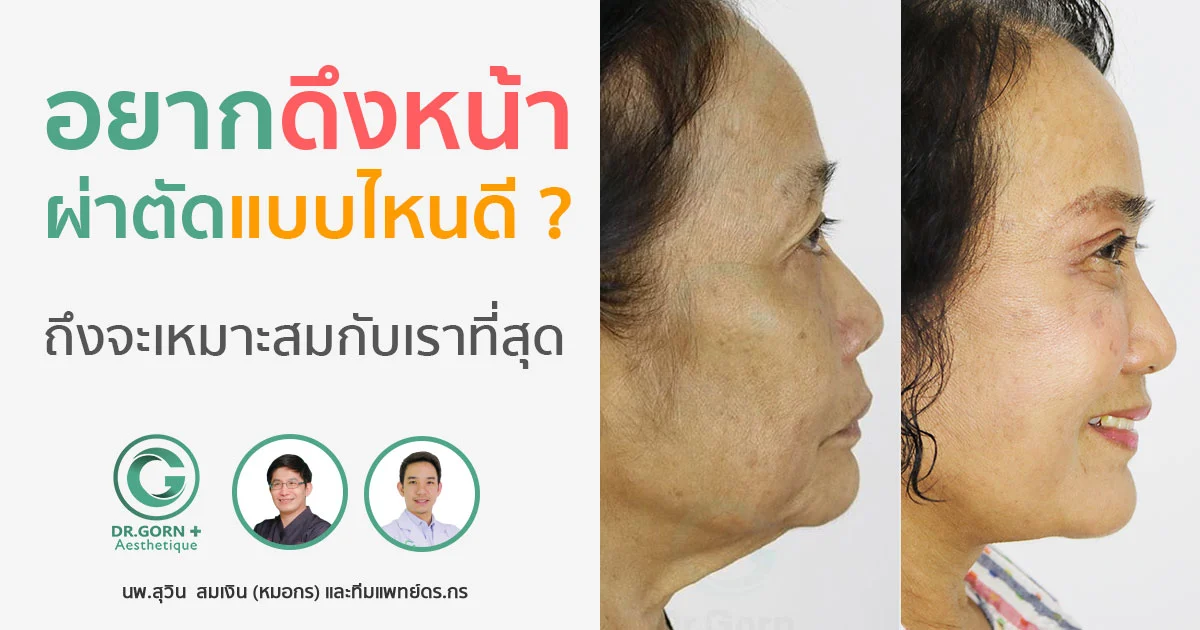
Welcome back to Dr.Gorn Aesthetique Channel, where we explore facial aesthetic surgery in depth. In this article, we will discuss treatment for facial sagging, following our previous article on its causes. Let us begin with a brief review.
One contributing factor is the loss of facial bone volume with age. As the underlying bones become smaller, the facial tissues lose support and descend under gravity. Lifestyle factors, pollution exposure, and smoking may also contribute. Excessive reduction during cheekbone surgery can reduce the bony support beneath the cheeks, allowing the overlying soft tissues to descend. Age-related loosening of the facial retaining ligaments can further contribute to sagging. These factors often act together.
There are several ways to address facial sagging. The appropriate treatment depends on its severity, the recovery time available, and personal preferences.
Many people first consider non-surgical treatments, particularly when sagging is mild and they have limited time for recovery. Options include botulinum toxin injections to refine the facial contour, fillers to provide support and definition, thread lifting, and HIFU treatments. Some people also seek traditional approaches such as facial massage or tapping.
However, these approaches may provide limited or unsatisfactory improvement when facial sagging is more pronounced. In such cases, surgery may be considered. This article explains face and neck lift surgery in more detail.
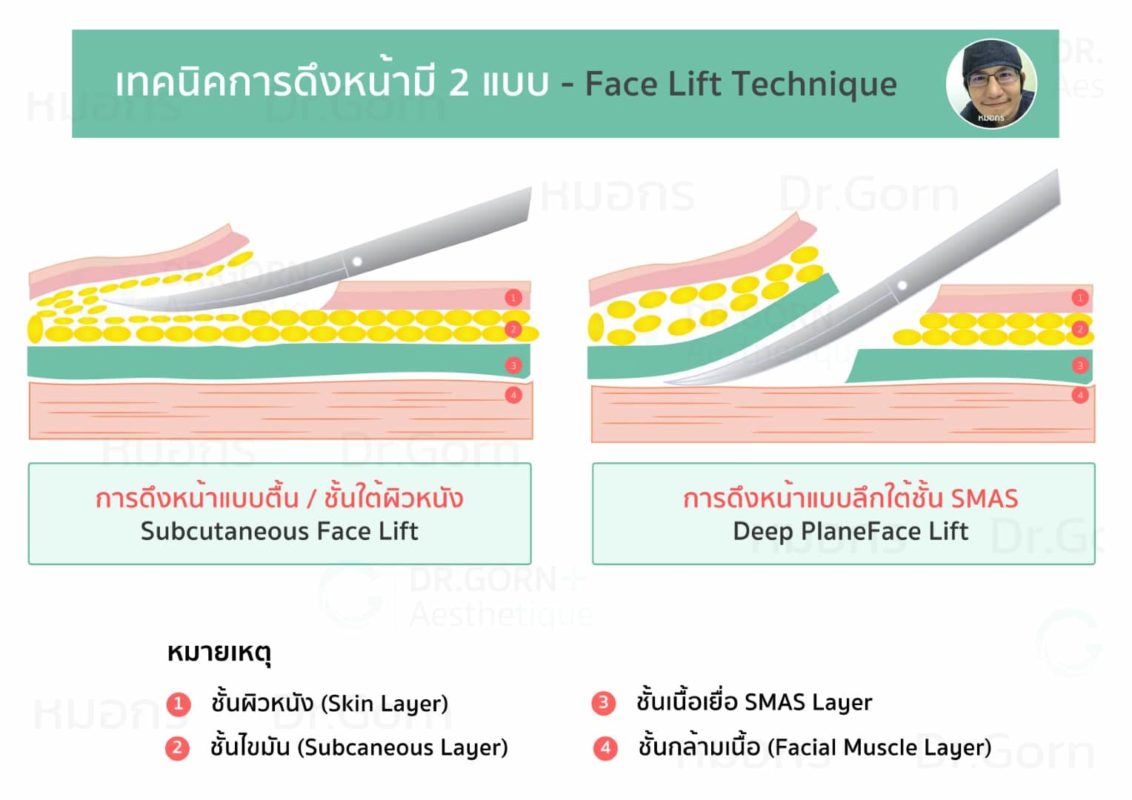
For this discussion, face and neck lift surgery can be broadly divided into two main approaches.
1. Superficial Facelift Surgery
In this approach, the surgeon dissects within the subcutaneous layer, above the superficial musculoaponeurotic system (SMAS). The degree and extent of lifting are relatively limited. The temple is one area commonly treated, while deep nasolabial folds and downturned mouth corners may show less improvement. This approach may suit patients with mild sagging or selected revision cases in which more extensive surgery would be technically difficult or carry greater risk.
One limitation is tension on the skin around the surgical incision. Excessive wound tension can increase the risk of noticeable or raised scars, including keloids in susceptible patients.
2. Deep Plane Facelift Surgery
A deep plane facelift involves dissection beneath the SMAS layer, with release and repositioning of the facial retaining ligaments and associated tissues. This allows the surgeon to lift deeper facial structures and may provide a more substantial, natural-looking, and longer-lasting improvement than a superficial skin-focused approach.
This technique allows more precise control over the direction of lifting in different areas of the face. The surgeon first repositions and secures the deeper tissues, then adjusts the superficial skin. This reduces tension on the incision and may reduce tension-related scarring compared with a skin-focused lift. A deep plane facelift may be suitable for patients with pronounced facial sagging, deep nasolabial folds, significantly downturned mouth corners, or prominent jowls.
Facelift techniques that address deeper tissues have continued to evolve. Approaches discussed here include the extended deep plane facelift and the high SMAS facelift. These techniques may provide more comprehensive improvement in the nasolabial folds and mouth corner region in appropriately selected patients. Dr. Gorn favors these approaches for suitable cases. One concern frequently raised during consultations is anxiety about general anesthesia.
For selected patients who are concerned about general anesthesia, facelift surgery may be performed under local anesthesia. The appropriate anesthesia plan depends on the procedure and the patient's individual circumstances.
If you have significant facial sagging, or have tried treatments such as botulinum toxin, thread lifting, or HIFU without achieving your desired improvement, you can arrange a consultation. The doctor will assess your concerns and discuss the most appropriate approach with you. Treatment should be planned individually to achieve a satisfactory result while minimizing complications.



