
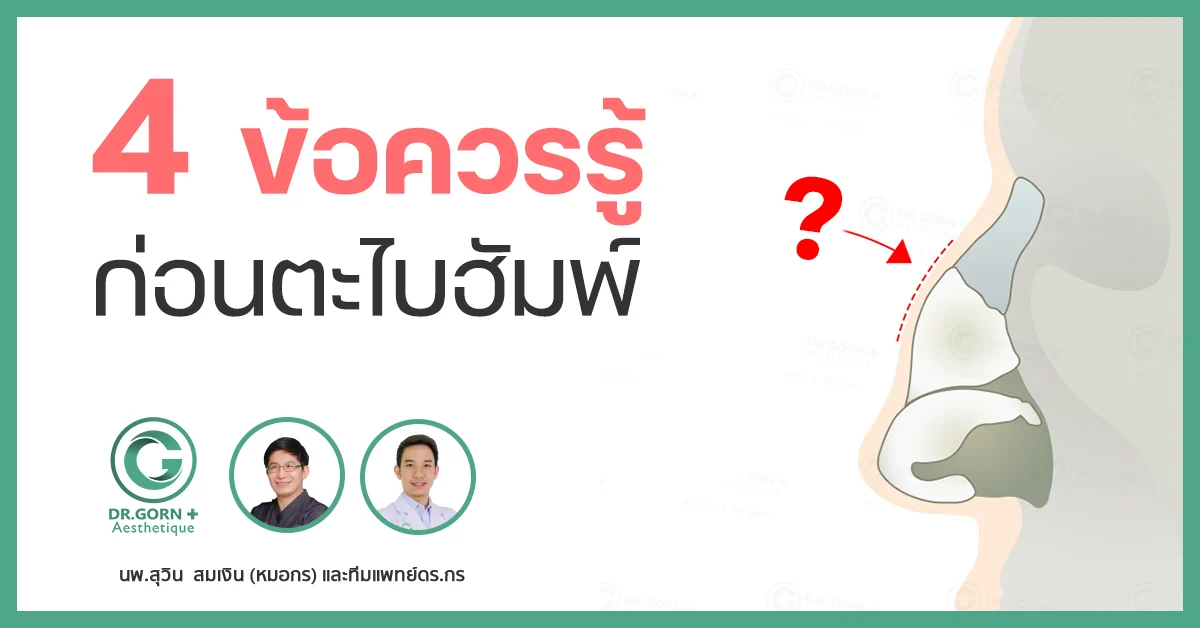
1. What Is a Nasal Hump?
A nasal hump (dorsal hump) is a raised area along the bridge of the nose. A small hump may be part of a person's natural nasal profile and can contribute to a distinctive appearance. Some people associate a pronounced dorsal hump with a stronger or more masculine facial profile, while others prefer a smoother and softer nasal contour. The ideal appearance depends on individual facial proportions and personal aesthetic preferences.

2. What Are the Different Types of Nasal Humps?
2.1. Bony Nasal Hump (Nasal Bone)

2.2. Cartilaginous Nasal Hump (Upper Lateral Cartilage)

2.3. Combined Bony and Cartilaginous Nasal Hump (Nasal Bone and Upper Lateral Cartilage)

3. How Can a Nasal Hump Be Corrected?
There are two main approaches described for reducing or correcting a nasal hump, depending on its size and underlying anatomical structure.
3.1. Small Nasal Hump: Hump Rasping
For a relatively small bony hump, the surgeon may use a specialized instrument called a nasal rasp to gradually smooth the raised area. This technique is known as hump rasping. Whether rasping alone is appropriate depends on the hump's composition, the nasal framework, and the amount of correction required.

3.2. Large Nasal Hump: Surgical Correction Techniques
For a large or prominent dorsal hump, the surgeon may consider one of two main surgical approaches:
- Dorsal Hump Resection (Humpectomy): The prominent portion of the nasal dorsum is surgically removed. Additional restructuring, including nasal bone osteotomy, may be necessary to narrow or reposition the nasal bones and address an open roof deformity that could result from removing a large hump.
- Dorsal Preservation Rhinoplasty: Techniques such as Push-Down and Let-Down aim to lower the nasal dorsum while preserving its upper surface rather than directly removing the hump. These methods may be suitable for selected nasal structures. Attempting extensive correction of a large hump through rasping alone may be inadequate and could increase the risk of bleeding, prolonged swelling, or damage to surrounding tissues. The correct approach depends on the anatomy and the surgeon's assessment.
4. Important Considerations: A Nasal Hump May Not Be a True Hump
An important point to understand before undergoing hump reduction is that a raised-looking nasal bridge is not always caused by a true anatomical dorsal hump. In some cases, the appearance is due to a pseudo hump (apparent dorsal hump), resulting from the proportions of the surrounding nasal structures. Common situations include the following:
4.1. Drooping or Underprojected Nasal Tip
When the nasal tip is drooping, insufficiently projected, or has lost structural support, the nasal bridge may appear unusually prominent in comparison. Nasal tip shape and projection depend partly on the size, strength, and positioning of the lower lateral cartilages. If these cartilages are weak, small, or damaged, the tip may lose projection, creating the visual impression of a dorsal hump.
Possible Correction: In selected cases, improving nasal tip support and projection may help balance the nasal profile without requiring removal of the dorsal hump. The appropriate treatment must be determined through a detailed nasal examination.

4.2. Low Nasal Root (Deep Radix)
A deep radix occurs when the nasal root, where the forehead transitions into the nasal bridge, sits relatively low. This can make the middle section of the nasal dorsum appear raised, even when there is no prominent true hump.
Possible Correction: Rather than removing the apparent hump, the surgeon may consider augmenting the nasal root (radix) to improve the overall dorsal contour. Whether augmentation is appropriate depends on the patient's anatomy and aesthetic goals.

4.3. Combination of a Drooping Nasal Tip and a Deep Radix
When a patient has both a drooping or underprojected nasal tip and a low nasal root, the nasal bridge may appear even more prominent. This combination can create a noticeable pseudo hump despite the absence of a large anatomical dorsal hump.
Possible Correction: In selected cases, a combination of radix augmentation and improved nasal tip projection may create a more balanced nasal profile without requiring direct hump removal. The surgeon should first determine whether a true bony or cartilaginous hump is also present.




