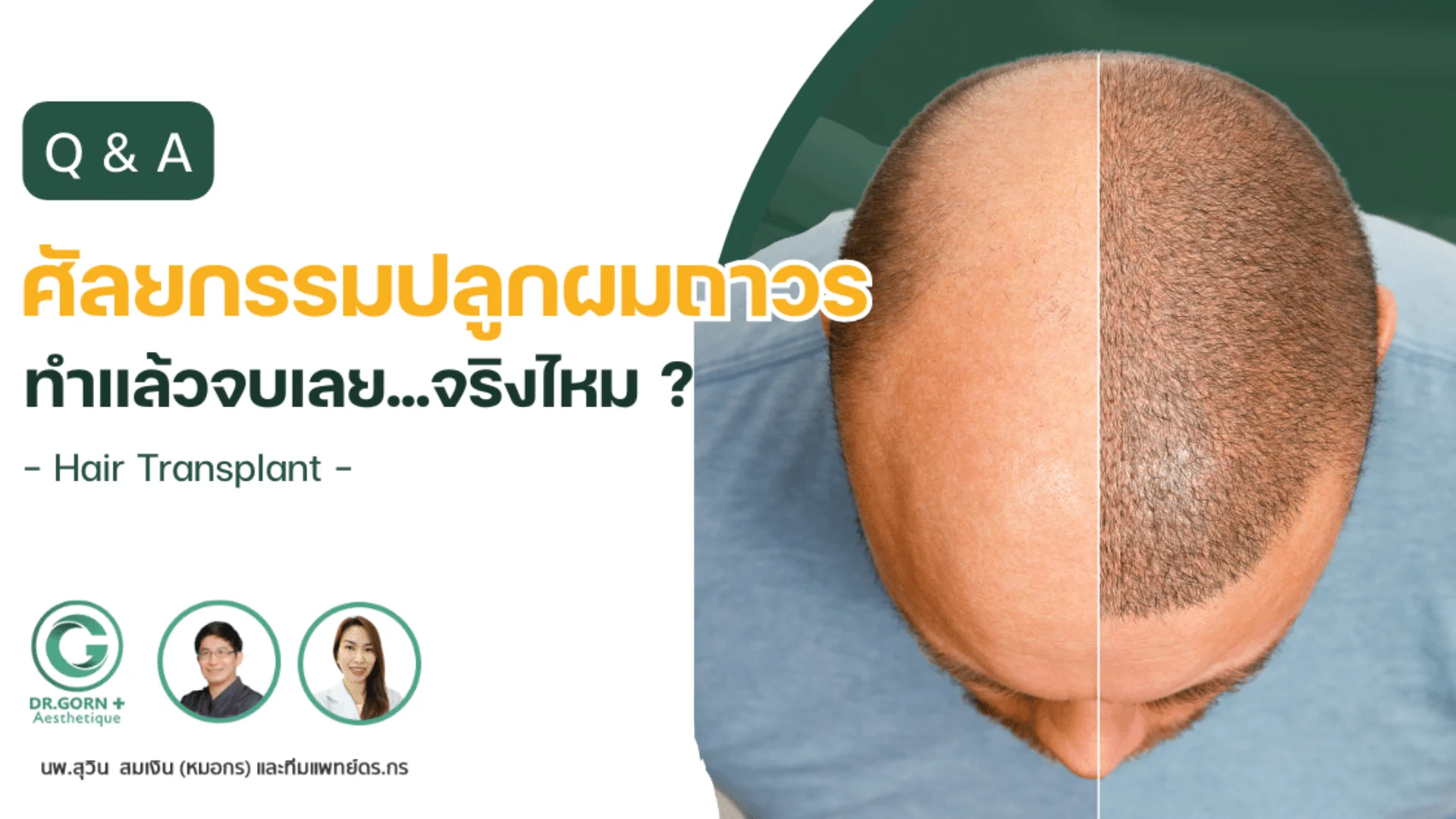
Have you ever wondered whether hair loss, thinning hair, or baldness can return after undergoing permanent hair transplantation? Is hair transplant surgery really a one-time solution that eliminates the need to worry about hair loss again? In this article, we will explore whether a hair transplant can provide lasting results without additional treatment, and why some patients may still require ongoing hair loss management after surgery.

Q: Is Permanent Hair Transplant Surgery Really a One-Time Solution?
A: It Depends. Some Patients May Not Need Further Treatment, While Others Require Ongoing Hair Loss Management.
Examples of When a Hair Transplant May Be a Long-Term Solution Without Ongoing Treatment
- Patients receiving a hair transplant to restore a small, localized area of hair loss. Examples include hair loss caused by a small, stable scar or selected eyebrow transplantation cases. When the underlying condition is no longer active and the recipient area has an adequate blood supply, transplanted follicles may survive and continue growing over the long term. Some patients may not require ongoing hair loss medication, although postoperative follow-up and monitoring remain important. Graft survival cannot be guaranteed, particularly in scarred tissue.
- Patients with male or female pattern hair loss (MPHL or FPHL) that is currently stable or non-progressive. If there is no significant ongoing loss of existing hair after transplantation, some patients may maintain satisfactory results without additional treatment. However, androgenetic alopecia can progress over time, even after a period of stability, so long-term monitoring may still be appropriate.
To understand this better, we should first discuss androgenetic alopecia (AGA), commonly known as hereditary or pattern hair loss. This condition includes male pattern hair loss (MPHL) and female pattern hair loss (FPHL). It is associated with genetic susceptibility and the effects of androgen hormones on hair follicles. Although androgenetic alopecia generally does not cause serious physical health problems, it can affect self-confidence, emotional well-being, and quality of life.
In patients whose pattern hair loss has stabilized, meaning there is no significant ongoing miniaturization of existing hair follicles or expansion of thinning areas, transplantation may provide a satisfactory long-term cosmetic improvement without immediate additional treatment. However, stability at the time of surgery does not necessarily mean that hereditary hair loss has permanently stopped. The need for future treatment should be reassessed according to changes in hair density and the patient's overall condition.
Examples of When Hair Transplantation May Not Be the Final Treatment
- Patients with progressive androgenetic alopecia (MPHL or FPHL). These patients may continue experiencing hereditary hair loss after transplantation because the underlying process affecting their existing, non-transplanted hair follicles remains active.
Progressive androgenetic alopecia is associated with inherited genetic factors and the sensitivity of certain hair follicles to androgens, particularly dihydrotestosterone (DHT). Over time, susceptible follicles—commonly found around the frontal hairline and crown—undergo hair follicle miniaturization. This means that the follicles gradually produce thinner, shorter hairs, leading to reduced hair density and potentially more extensive baldness.
After hair transplantation, follicles moved from a suitable donor area may continue growing in the recipient region. However, the patient's existing, non-transplanted hair can continue to thin or fall out if hereditary hair loss is still progressing. This can gradually create visible differences in hair density between transplanted and surrounding areas. Although donor follicles are generally selected for their relative resistance to androgen-related miniaturization, transplanted hair is not guaranteed to remain unchanged throughout life.
- Patients with additional factors affecting hair follicle growth. Hair shedding may occur before or after transplantation because of other conditions, including severe or prolonged emotional stress, anemia, systemic illness, thyroid disorders, fever or infections such as influenza, and certain medications. Some medications, including selected lipid-lowering drugs, have occasionally been associated with hair shedding. These factors may disrupt the normal hair growth cycle and contribute to temporary or persistent hair loss, depending on the underlying cause.
In these situations, a physician may recommend ongoing evaluation and treatment after hair transplantation. Depending on the diagnosis, possible management options include:
-
- Oral medications: Prescription treatments may be considered to manage hereditary hair loss or other underlying conditions, depending on suitability and potential side effects.
- Topical medications: Treatments applied directly to the scalp may help manage certain types of hair loss.
- Additional procedures: Some clinics offer platelet-rich plasma (PRP), growth factor-based treatments, or mesotherapy. However, the clinical evidence, effectiveness, safety, and regulatory status vary considerably between treatments. These procedures should not be assumed to provide the same benefits as established medical therapies, and some remain investigational.
It is important to consult a qualified physician to determine whether additional treatment is necessary after hair transplantation. The appropriate approach depends on the cause of hair loss, the condition of the scalp and existing hair follicles, the transplant results, and the patient's medical history.
In summary: Whether permanent hair transplant surgery is a one-time solution depends on the individual patient and the underlying cause of hair loss. Some patients with stable, localized hair loss may only require scheduled postoperative follow-up appointments. Others, particularly those with progressive hereditary hair loss or additional medical conditions, may benefit from ongoing treatment to protect their existing hair and maintain overall hair density. A professional diagnosis and individualized long-term care plan are essential for making informed decisions after hair transplantation.