
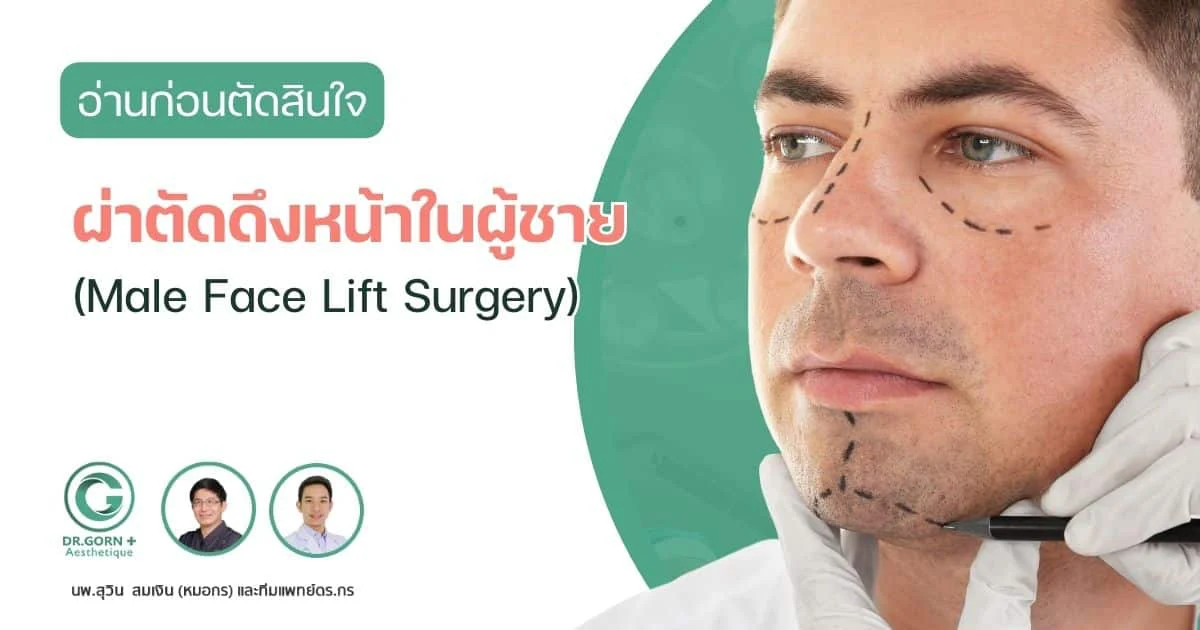
When comparing different facial rejuvenation treatments, including non-invasive and invasive procedures, deep plane facelift surgery is an established surgical approach that can provide substantial improvement in facial and neck laxity, with potentially long-lasting results. However, no single facelift technique is universally the most effective for every patient. The outcome depends on facial anatomy, the degree of aging, surgical technique, and individual healing characteristics.
Male facelift surgery has attracted increasing interest as more men pay attention to personal appearance and facial rejuvenation. Advances in surgical techniques, anesthesia, and postoperative care have provided additional options for improving facial contours while managing recovery and surgical risks.
Nevertheless, male facelift surgery differs from female facelift surgery in several important considerations. These differences relate to facial anatomy, skin and hair characteristics, vascularity, and individual aesthetic preferences. Many male patients want a refreshed, natural appearance while preserving the facial features they associate with masculinity.

Key Anatomical and Aesthetic Differences Between Men and Women
- Skin thickness: Men generally have thicker facial skin than women, although thickness varies considerably between individuals.
- Eyebrow shape and density: Male eyebrows are often thicker and denser, with a relatively flat or horizontal shape. The inner and outer eyebrow regions may be positioned at similar heights, whereas some female eyebrow shapes have a more pronounced arch.
- Skin vascularity and bleeding risk: Male facial skin may have greater vascularity, which is one factor considered during facelift surgery. Some studies have reported higher postoperative hematoma rates among male facelift patients. However, blood pressure, medications, smoking, surgical technique, and other health factors also influence bleeding risk.
- Hairline and facial hair distribution: Men often have different temporal hairline patterns, sideburn density, and beard growth compared with women. These characteristics are particularly important when planning surgical incisions to avoid unnatural displacement of hair-bearing skin.
- Cheekbone contours: The shape and prominence of the malar eminence vary between individuals and may differ in average facial proportions between men and women. These features should be considered when planning facial rejuvenation.
- Nasolabial folds and jowls: Some male patients present with pronounced nasolabial folds and visible jowling caused by changes in facial fat compartments and tissue support.
- Midface volume: Differences in facial fat distribution may cause some men to have a relatively lean or hollow appearance in the central face. Individual assessment is necessary before considering volume restoration.
- Lower face and neck aging: Men may develop noticeable lower facial laxity, jowls, loose neck skin, and prominent vertical platysmal bands. These concerns can influence whether a neck lift should be combined with a facelift.
- Preserving a natural masculine appearance: One concern expressed by some male patients is that facelift surgery might create an unnatural, excessively tight, or feminized facial appearance. Surgical planning should therefore take the patient's preferred facial characteristics into account.
These considerations can influence preoperative preparation, incision placement, the extent of tissue dissection, the direction of facial lifting, recovery planning, and whether additional procedures are appropriate. The goal of male facelift surgery is not simply to tighten the skin, but to improve age-related changes while respecting each patient's natural facial proportions and desired masculine appearance.
Nine Important Considerations in Male Facelift Surgery
- Preoperative Preparation and Blood Pressure Control: Careful medical assessment is essential before male facelift surgery, particularly in patients with hypertension, cardiovascular disease, or other health conditions. The original article places special emphasis on men older than 45 years, although age alone does not determine surgical risk. Uncontrolled blood pressure can increase the likelihood of perioperative bleeding and hematoma formation. A preoperative medical and anesthesia assessment can help identify and manage individual risk factors.
- Anesthesia and Pain Management During Facelift Surgery: The original article discusses reducing the use of inhalational anesthetic agents in certain cases because some medications may cause vasodilation and contribute to postoperative nausea or vomiting. However, anesthesia must be individualized. The anesthesiologist may select general anesthesia, intravenous anesthetic techniques, local anesthesia with sedation, or an appropriate combination according to the operation and the patient's health. No single anesthetic approach is appropriate for every male facelift patient.
- Planning the Facelift Incisions: Incision placement is particularly important in male patients because of the temporal hairline, sideburns, and facial hair distribution.
- Temporal Facelift Incisions: The original article recommends assessing the distance between the anterior temporal hairline and the lateral orbital rim. When this distance is relatively wide, described in the article as greater than approximately 5 cm, an incision along the hairline may be considered to avoid shifting the hairline backward and making the upper face appear wider. When the distance is approximately 5 cm or less, an incision within the temporal hair-bearing region may be considered. These measurements are part of the original surgical approach and are not universal incision-planning criteria.

-
- Facelift Incisions in Front of the Ear: Depending on the anatomy and surgical plan, the incision may be placed along the natural skin crease in front of the tragus (pretragal incision) or around the tragus (intertragal incision). The surgeon considers the following factors:
- Skin color and texture matching: Careful incision placement may help avoid a noticeable difference between the cheek skin and tragal skin, which could otherwise create an operated-on appearance.
- Preservation of sideburns: Appropriate incision planning helps prevent the temporal hair tuft and sideburn-bearing skin from being displaced toward the ear canal, maintaining a more natural hair pattern after surgery.
- Facelift Incisions in Front of the Ear: Depending on the anatomy and surgical plan, the incision may be placed along the natural skin crease in front of the tragus (pretragal incision) or around the tragus (intertragal incision). The surgeon considers the following factors:

4. Skin Flap Elevation: The original article explains that some male facelift procedures may require more extensive skin flap dissection because male facial skin is often thicker. However, the extent of dissection should be based on individual anatomy rather than sex alone. The surgeon must carefully protect the blood supply and surrounding structures, including hair follicles, to reduce unnecessary tissue injury and help preserve the patient's hairline and sideburn pattern.
5. Deep Plane and SMAS Dissection: During deep plane or SMAS facelift surgery, selected facial retaining ligaments may need to be released to allow effective repositioning of facial tissues. The original article emphasizes the nasomaxillary ligament near the nasolabial fold and the mandibular retaining ligament in the lower facial region, particularly when addressing prominent nasolabial folds and jowls. The extent of ligament release must be tailored to each patient and performed with careful attention to the facial nerves and blood vessels. More extensive dissection can contribute to postoperative swelling and may affect recovery time.
6. Direction of SMAS Lifting: The appropriate lifting direction should be determined according to the patient's original facial anatomy, facial width, facial length, and desired appearance. In male facelift surgery, the goal is to reposition the supporting tissues in a way that improves facial laxity while preserving balanced and natural-looking masculine contours.
7. Combining a Facelift with a Neck Lift: Some male patients experience prominent aging changes in the neck, including loose skin, excess submental tissue, and visible platysmal bands. For these patients, combining a facelift with a neck lift may provide a more harmonious result by treating the lower face and neck together. However, a neck lift is not necessary for every patient and should be recommended according to the findings of an individual examination.
8. Combining a Facelift with Facial Fat Grafting: Some patients have pronounced nasolabial folds, midface hollowing, or age-related loss of facial fat. In selected cases, autologous fat grafting may be considered to restore volume to the cheeks, midface, or nasolabial regions alongside facelift surgery. The purpose is to improve facial balance and volume distribution rather than relying on lifting alone. The need for fat grafting depends on individual facial anatomy, and additional volume is not beneficial for every patient.
9. Postoperative Care and Recovery: Recovery following male facelift surgery depends on the extent of the operation, skin and tissue characteristics, general health, and individual healing response. The original article notes that some men, especially those with thick or oily skin who undergo extensive dissection, may experience more prolonged swelling. Nevertheless, recovery is not necessarily slower in every male patient. Preoperative skin assessment and individualized postoperative care may help improve comfort and wound management.
Careful monitoring of blood pressure, bleeding, swelling, and cardiovascular symptoms is particularly important after facelift surgery. The risk of postoperative hematoma can be affected by multiple factors, including hypertension, medication use, and surgical circumstances. Following postoperative instructions, attending scheduled follow-up appointments, and reporting concerning symptoms promptly help the medical team identify and manage complications early.
In summary, male face and neck lift surgery requires attention to specific anatomical, aesthetic, and medical considerations, from preoperative assessment and incision planning to deep tissue repositioning and postoperative care. Understanding these factors allows the surgeon and patient to work together toward natural-looking facial rejuvenation while reducing avoidable surgical risks. Individualized planning remains essential because not all male patients require the same technique or additional procedures.



