
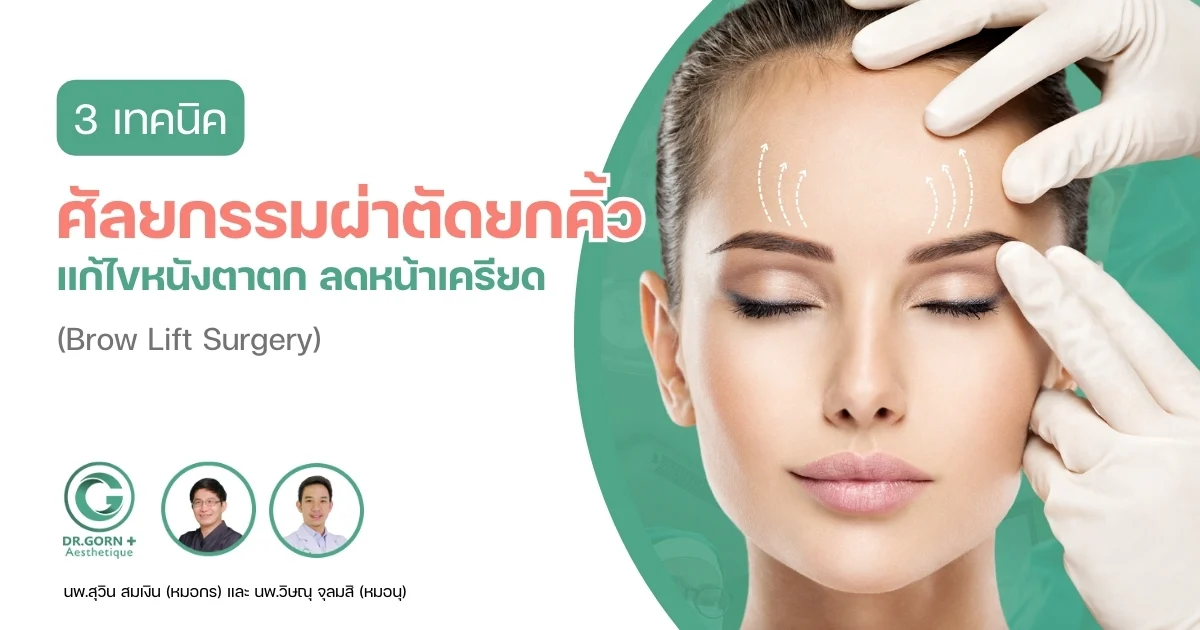
What Are the Effects of Drooping Eyebrows (Brow Ptosis) or Naturally Low-Set Eyebrows?
1. Drooping or naturally low-set eyebrows can make a person appear stressed, stern, tired, or constantly angry. The distance between the eyebrow and the upper eyelid margin is commonly described as approximately 1.5–2.0 cm, although normal measurements vary depending on individual facial anatomy. Men's eyebrows also tend to sit lower than women's eyebrows.

2. When the eyebrows descend, the upper eyelid skin may fold downward and cover the natural eyelid crease. This can make the eyelid crease appear smaller or almost invisible, giving the eyes a less refreshed appearance and making the face look older. In many cases, the original double-eyelid crease has not disappeared; it is simply concealed by the descending skin.

How can you tell whether your eyebrows are gradually descending? One simple way to observe the effect of eyebrow position is to gently lift both eyebrows vertically with your fingers while looking in a mirror. If your original eyelid creases become more visible, eyebrow descent may be contributing to the appearance of your upper eyelids. This observation is not a medical diagnosis, but it may help you decide whether to seek an assessment for brow ptosis and possible brow lift treatment.
Why Do Eyebrows Droop? Four Factors That Affect Eyebrow Position
Several anatomical and functional factors influence eyebrow position. Understanding these factors can help explain why eyebrows gradually descend or appear lower during facial expressions.
Factor 1: Weakness or Reduced Function of the Frontalis Muscle
The frontalis muscle, located in the forehead, is responsible for raising the eyebrows. When its function is weakened or interrupted, the eyebrows may descend. Potential causes include:
- Damage or dysfunction affecting the facial nerve (Cranial Nerve VII), which supplies the frontalis muscle. This may occur following trauma, inflammation, or certain medical and surgical procedures.
- The temporary effects of botulinum toxin injections into the forehead, which may weaken the frontalis muscle while the medication remains active. In other individuals, a naturally flat or low brow ridge and low-set eyebrows may reflect their original facial anatomy rather than muscle weakness.

Factor 2: Changes in the Brow Ridge and Supporting Bone Structure
Age-related changes in the bone structure around the brow ridge, including skeletal remodeling and loss of bony support, may contribute to changes in eyebrow position and the appearance of the upper face. Significant bone loss may also affect the surrounding soft-tissue support.

Factor 3: Laxity of the Forehead and Temporal Supporting Ligaments
As people age, the connective tissues and retaining structures supporting the forehead and temples may become more lax, contributing to eyebrow descent.
- When the supporting tissues of the forehead become lax, both the inner and outer portions of the eyebrows may descend vertically.
- When tissue laxity primarily affects the temporal region, the outer eyebrow or brow tail may descend.
- When both the forehead and temporal regions are affected, the entire length of the eyebrow may appear lower.

Factor 4: Contraction of the Muscles Around the Eyes and Eyebrows
The muscles surrounding the eyelids and those involved in frowning contract during facial expressions such as smiling, laughing, concentrating, or feeling stressed. Different muscle groups can pull different portions of the eyebrows downward:
- Contraction of the muscles around the inner eye and glabella may pull the inner eyebrow downward.
- Contraction of the muscles around the outer eye may pull the brow tail downward.
- Contraction of multiple eyebrow depressor muscles may lower much of the eyebrow.
In individuals who frequently frown or concentrate intensely, repeated contraction of these muscles may make the eyebrows appear lower during facial expressions.

Eyebrow position naturally changes as facial muscles contract. It is therefore impossible to keep the eyebrows at exactly the same height during every expression, even after brow lift surgery.
Because the causes of brow ptosis vary, treatment should be selected according to the underlying mechanism and the severity of eyebrow descent.
- Relaxing facial expressions: For patients whose eyebrows are positioned normally at rest but descend when frowning or concentrating, consciously relaxing the forehead and reducing unnecessary muscle tension may lessen the temporary downward pull. This approach does not correct structural brow ptosis.
- Botulinum toxin injections: Carefully targeted injections may relax selected muscles around the eyes and eyebrows that pull the brows downward. This may provide modest brow elevation in appropriately selected patients. The original article describes repeat treatments approximately every 4–6 months, although the duration varies. Incorrect injection placement can worsen brow or eyelid drooping, so specialist assessment is essential.
- Dermal filler injections: Injecting suitable fillers into selected areas, such as the temples, may improve soft-tissue support and produce a subtle improvement in the outer brow contour for some patients. These procedures must be performed by appropriately trained medical professionals. The temple and surrounding facial regions contain important blood vessels and nerves, and inadvertent injection into a blood vessel can cause serious complications, including tissue damage or vision loss.
- Brow Lift Surgery: For patients whose eyebrows remain low even when the face is relaxed, particularly when the cause involves congenital low-set eyebrows, changes in brow support, or significant forehead and temporal tissue laxity, surgical brow lifting may be considered. The most suitable technique depends on anatomy, functional concerns, and the desired outcome.
Brow Lift Surgery: Techniques for Correcting Drooping Eyebrows
Technique 1: Vertical Brow Lift — Elevating Both the Inner and Outer Eyebrows
Three surgical approaches may be considered for lifting the eyebrows vertically:
1. Direct Brow Lift or Supra-Brow Lift: This technique places the surgical incision directly above the natural eyebrow or along the upper border of a previously tattooed eyebrow. The surgeon adjusts the tissues to elevate the eyebrow into a higher position.


2. Pretrichial Brow Lift: This technique uses an incision along the anterior hairline. By lifting and adjusting forehead tissues, it can elevate the eyebrows while also improving forehead skin laxity and certain forehead wrinkles. The effect on hairline position depends on the technique and the patient's anatomy.

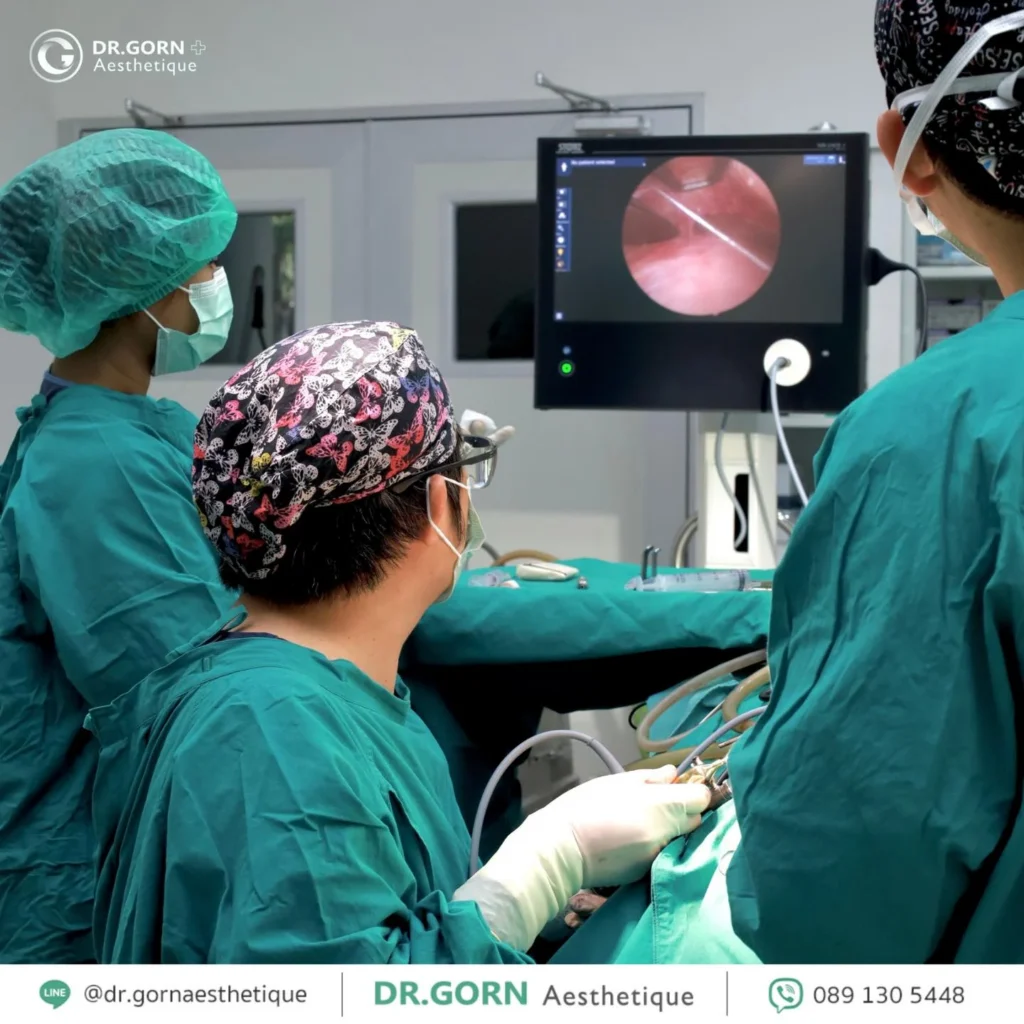
3. Endoscopic Brow Lift: This technique involves surgery assisted by an endoscope, using several small incisions hidden within or near the hairline. The original article describes approximately 3–5 incisions, each around 2 cm in length. An endoscope allows the surgeon to visualize and reposition the forehead and eyebrow tissues through these limited incisions.


Technique 2: Lateral Brow Lift Using a Temporal Lift
This technique focuses on elevating the outer portion of the eyebrows. Two approaches are described:
- Endoscopic Temporal Lift: An endoscopic procedure using incisions in the right and left temporal regions. The original article describes incisions of approximately 3 cm on each side.
- Open Temporal Lift: The incision may be placed along the temporal hairline or within the hair-bearing temple region. The original article uses a distance of approximately 4 cm between the temporal hairline and outer corner of the eye as a planning consideration: when this distance is 4 cm or less, the incision may be concealed within the temple hair; when it exceeds 4 cm, an incision along the hairline may be considered. Actual placement depends on individual anatomy and the surgeon's assessment.


Technique 3: Full-Length Brow Lift
For patients who require elevation across the entire eyebrow, the surgeon may consider combining a vertical brow lifting technique with a temporal lift. This allows different portions of the eyebrow to be addressed according to the patient's anatomical needs. The surgical plan should consider the following:
- The patient's preferences regarding how much eyebrow elevation is desired.
- A detailed clinical assessment to determine which combination of surgical approaches may be appropriate.
- Whether the patient wishes to change forehead height or hairline position. Some brow lift techniques may increase the apparent forehead height, while others can alter the hairline differently. In selected cases, hair transplantation may be considered separately to modify the hairline rather than attempting forehead reduction through a brow lift.

Technique 4: Brow Lift Considerations for Patients with Eyebrow Tattoos
Patients who already have eyebrow tattoos or who are planning cosmetic eyebrow tattooing should discuss their plans with the surgeon before undergoing a brow lift. Surgical eyebrow elevation can change the position, shape, and alignment of existing eyebrow tattoos, potentially affecting their appearance after surgery.
Important Information to Understand Before Brow Lift Surgery
Brow lift surgery is designed to raise the resting position of the eyebrows. However, the eyebrows can still move downward during facial expressions because the muscles around the eyes continue to contract. Surgery may change the resting position and range of movement, but it does not completely eliminate natural eyebrow movement.
Over time, patients who frequently frown or have strong eyebrow depressor muscle activity may continue to notice dynamic downward movement of the brows. In selected cases, a physician may recommend occasional botulinum toxin injections to reduce the activity of specific muscles around the eyes and glabella. These injections are an optional treatment for selected concerns and do not guarantee prevention of future brow ptosis. Long-term outcomes depend on aging, anatomy, muscle activity, and the original surgical procedure.



