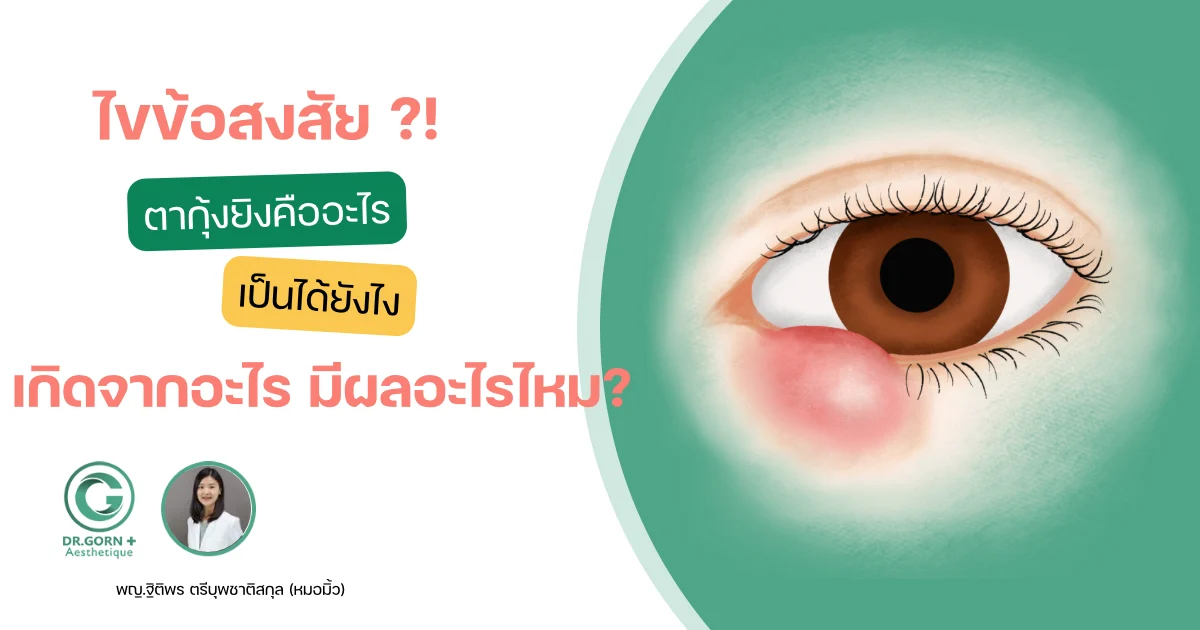
A stye (Hordeolum) is an acute inflammation of an eyelid gland, commonly caused by a bacterial infection involving Staphylococcus aureus. This bacterium is commonly found on the skin. When it infects an eyelid gland or eyelash follicle, it can cause localized swelling, redness, tenderness, and pain.
Types of Styes (Hordeolum)
- External Hordeolum (External Stye)
An external stye develops around an eyelash follicle or its associated oil glands. It typically appears as a red, swollen bump along the outer eyelid margin, resembling a pimple, and may contain pus. - Internal Hordeolum (Internal Stye)
An internal stye develops from infection of a meibomian gland located within the eyelid. Patients may experience eyelid pain, irritation, tearing, and sometimes redness of the eye.

Risk Factors for Developing a Stye
- Touching or rubbing the eyes with unwashed hands.
- Handling or inserting contact lenses without washing your hands first.
- Failing to remove eye makeup thoroughly or using expired eye cosmetics.
- Having certain health conditions, such as diabetes or a weakened immune system.
- Having a history of previous styes.
How to Treat a Stye at Home
Most uncomplicated styes improve on their own within approximately 1–2 weeks and may not require medication or surgery.
One of the most commonly recommended home-care measures is applying a warm compress to the affected eyelid.
How to Apply a Warm Compress Correctly
- Prepare a clean cloth, such as a small, soft washcloth.
- Soak it in comfortably warm water, then gently wring out the excess water. Avoid water that is hot enough to burn the skin.
- Place the compress gently over the closed eyelid for approximately 5–10 minutes.
- Repeat 3–4 times daily, using a clean cloth and reheating it as needed.
Warm compresses may encourage natural drainage of the blocked or infected gland and help relieve discomfort. Do not squeeze, puncture, or attempt to drain a stye yourself, as this may worsen the infection.

When Should You See an Ophthalmologist?
Seek medical advice from an ophthalmologist if you experience any of the following symptoms:
- Severe redness or swelling, especially if it spreads beyond the eyelid.
- Significant eye pain or a large pus-filled swelling.
- Blurred vision or other changes in vision.
- Symptoms that do not improve within 5–7 days or become progressively worse.
Depending on the examination findings, medical treatment may include antibiotics when clinically indicated and/or professional incision and drainage of a persistent abscess. Not every stye requires antibiotics or a drainage procedure. Sudden vision loss, severe pain with eye movement, fever accompanied by spreading swelling, or a protruding eye requires urgent medical assessment.
If you are in Bangkok or a nearby province and would like to consult an oculoplastic surgeon (an ophthalmologist specializing in eyelid and surrounding eye structures), you may contact the clinic for an assessment and individualized treatment plan.
How Can You Get Specialist Stye Treatment in Thailand?
If you live in Bangkok, the surrounding metropolitan area, or elsewhere in Thailand and experience recurrent or persistent styes, consider consulting an ophthalmologist or oculoplastic surgeon. A specialist can assess possible underlying causes, distinguish a stye from other eyelid conditions, and recommend appropriate treatment.
Specialist evaluation may help identify factors contributing to recurrent styes and guide treatment to reduce future episodes. However, complete resolution without scarring cannot be guaranteed. For more information, you may request a consultation with Dr.Mew.

How to Prevent Styes from Coming Back
- Wash your hands thoroughly before touching your eyes or handling contact lenses.
- Replace eye makeup regularly, follow product expiration and period-after-opening instructions, and avoid sharing cosmetics. Some eye products should be replaced sooner than six months after opening.
- Maintain good facial and eyelid hygiene, and remove eye makeup thoroughly before sleeping.
- After recovering from a stye, your ophthalmologist may recommend continuing warm compresses or eyelid hygiene for 1–2 weeks, particularly if underlying gland blockage is present.