
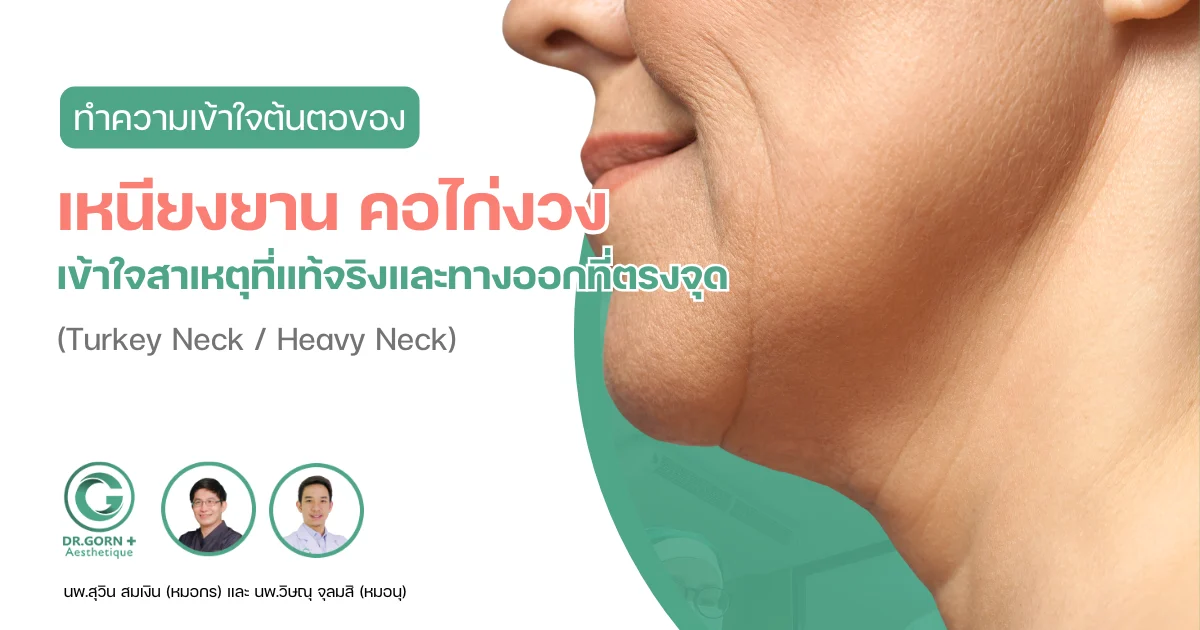
What Are Turkey Neck and Heavy Neck?
Turkey neck refers to noticeable sagging skin and soft tissue beneath the chin and along the neck, creating an appearance that resembles the loose neck skin of a turkey. This condition can make the face and neck appear older. It commonly develops as part of the aging process, although its progression varies depending on genetics, body weight, skin condition, and lifestyle factors.

What Causes Turkey Neck and Heavy Neck? Understanding the Underlying Anatomy
Before considering treatment, it is important to understand the structural changes occurring beneath the skin of the neck. Identifying the underlying causes helps patients develop realistic expectations and select treatments that address their particular concerns rather than focusing only on temporary cosmetic improvement.
Turkey Neck and Heavy Neck are descriptive terms for noticeable sagging or fullness of the skin and soft tissues beneath the chin and along the neck. These changes are commonly associated with aging and may affect overall facial appearance. However, the degree and progression of neck sagging also depend on genetics, weight fluctuations, and lifestyle.

The pathophysiology of turkey neck involves three main factors:
1. Skin Laxity As we age, the skin gradually loses collagen and elastin, two structural components responsible for firmness and elasticity. As these supporting fibers become less effective, the skin beneath the chin loses elasticity and may sag under the influence of gravity.
2. Fat Accumulation Fat within the neck is commonly considered in two anatomical layers: superficial subcutaneous fat and deeper subplatysmal fat, located beneath the platysma muscle. Excess fat in either compartment can contribute to neck fullness and accentuate sagging, although the relative contribution of each layer differs between individuals.

3. Weakening and Laxity of the Platysma Muscle The platysma is a broad, thin muscle extending across the superficial neck. Changes in its tension, position, and relationship to the deeper structures can contribute to neck aging. Structures beneath the platysma include deep fat, the digastric and mylohyoid muscles, and the submandibular salivary glands. With age, the platysma may undergo several changes:
- Thinning: Age-related changes may reduce the muscle's supportive function.
- Laxity: Loss of tension may produce visible vertical platysmal bands or loose tissue along the neck.
- Separation: The medial edges of the right and left platysma muscles may become more apparent or separate. The degree of normal midline overlap varies between individuals; the original article describes overlapping fibers in approximately 75% of people.
As the platysma and surrounding connective tissues change, deeper neck structures may become more prominent, contributing to the appearance of a heavy or sagging neck. The relative contribution of muscle laxity, deep fat, salivary gland prominence, and other anatomy must be assessed individually.

In summary, turkey neck is not simply a problem of excess skin or fat. It often involves several anatomical components, including the skin, superficial and deep fat compartments, and platysma muscle. Understanding these factors helps explain why different treatment methods produce different results.
Treatment Options for Turkey Neck: Nonsurgical vs. Surgical Approaches
This section compares nonsurgical and surgical treatment approaches, including their objectives, potential benefits, and limitations. Understanding these differences can help patients consider their options before exploring individual techniques in greater detail.
1. Nonsurgical Treatments and Their Limitations
Various nonsurgical treatments are used to address skin laxity and changes in neck appearance. These include massage, energy-based devices such as high-intensity focused ultrasound (HIFU), radiofrequency (RF), certain plasma-based technologies, thread lifting, injectable fillers, and collagen-stimulating treatments known as biostimulators.
However, the effectiveness of these methods depends on the severity and underlying cause of neck sagging. Many nonsurgical treatments primarily target skin quality or mild to moderate laxity. They generally cannot directly correct substantial deep fat accumulation, significant platysma laxity, or prominent deeper anatomical structures in the same way as surgery. Some patients may experience visible improvements, but results are variable and may require maintenance treatment.

2. Surgical Management
For patients with significant neck sagging or substantial changes in the underlying anatomy, surgery may provide more extensive structural correction than nonsurgical treatments. The main surgical approaches discussed in the original article include the following:
- Neck Liposuction: Liposuction removes excess superficial neck fat and may be beneficial for appropriately selected patients with good skin elasticity and limited platysma laxity. However, liposuction alone does not correct significant muscle laxity or deeper anatomical fullness. If substantial loose skin is already present, removing fat without addressing the underlying support may leave the skin appearing more redundant, sometimes described as an "empty sac effect."

- Deep Plane Neck Lift: This is an advanced surgical approach for selected patients with substantial neck laxity or fullness involving deeper structures. A related concept, Reduction Neck Lift, focuses on carefully reducing or reshaping selected deep-neck components, which may include subplatysmal fat, portions of certain muscles, or prominent submandibular glands in appropriate cases. The surgeon may then tighten or reposition the platysma muscle to improve neck contour. Because this approach addresses deeper anatomical structures, it may provide meaningful improvement in selected patients; however, it is not universally the gold standard or the best option for every patient, and surgery involving deep-neck structures carries additional risks.

Because deep plane neck lifting can address several structural contributors to a heavy neck, the following section explains the principal surgical approaches and how they may be selected according to individual anatomy.
Deep Plane Neck Lift Surgery for Turkey Neck and Double Chin Correction
Deep Plane Neck Lift Surgery is one option for correcting substantial neck sagging and the appearance of a heavy neck. The reduction neck lift concept involves selectively addressing prominent deep-neck structures and then tightening or repositioning the platysma muscle. Depending on the patient's anatomy and degree of laxity, the surgeon may consider two main surgical approaches:
1. Submental Approach: Incision Beneath the Chin Only This approach uses an incision beneath the chin, described in the original article as approximately 3–4 centimeters long. It may be appropriate for selected younger patients, particularly those without significant sagging along the sides or back of the neck. The article mentions patients younger than approximately 45 years, although suitability should be based on anatomy rather than age alone.

2. Combined Submental and Periauricular Approach (Lateral or Posterior Neck Lift) This approach may be considered for patients with substantial lateral neck sagging or heavy neck anatomy that cannot be adequately addressed through a submental incision alone. The original article discusses prominent structures such as the parotid glands in selected cases. Enlargement of a salivary gland, however, requires appropriate medical evaluation and should not automatically be treated as a cosmetic concern. If a patient also has significant jowling, loose jawline tissues, or marionette lines, the surgeon may discuss combining neck surgery with a deep plane facelift or a lower-face lifting procedure. The aim is to improve harmony between the neck, jawline, and face.


Important Considerations Before Deep Plane Neck Lift Surgery
Deep plane neck lift surgery can be more technically complex and may require a longer operating time than less invasive procedures. The original article recommends allowing approximately 1–2 weeks for initial postoperative recovery and self-care. However, complete healing may take longer. Before surgery, patients should understand the planned procedures, expected recovery, possible complications, and the potential need for additional treatment.
Possible postoperative effects and complications include:
- Difficulty swallowing (Dysphagia): Some patients may experience temporary discomfort or swallowing difficulty, particularly when surgery involves structures near the hyoid bone or plication of the digastric muscles. The original article mentions symptoms potentially lasting 1–3 months. Persistent or worsening swallowing difficulties require medical assessment.
- Asymmetry of mouth movement: Temporary uneven movement at the corners of the mouth may occur because of changes or injury involving the platysma muscle or nearby nerves. Although some cases improve over time, nerve-related complications can occasionally persist and require further evaluation.
- Postoperative drainage: In selected cases, a surgical drain may be placed to remove accumulated fluid or blood and assist postoperative monitoring. Drains do not eliminate the risk of bleeding, hematoma, infection, or other complications.
Patients experiencing significant neck sagging, a double chin, or turkey neck should consult a qualified plastic surgeon experienced in facial and neck anatomy before deciding on treatment. A comprehensive assessment can help determine which procedure is appropriate, clarify expected costs and recovery, and ensure that potential benefits are weighed carefully against surgical risks.



