
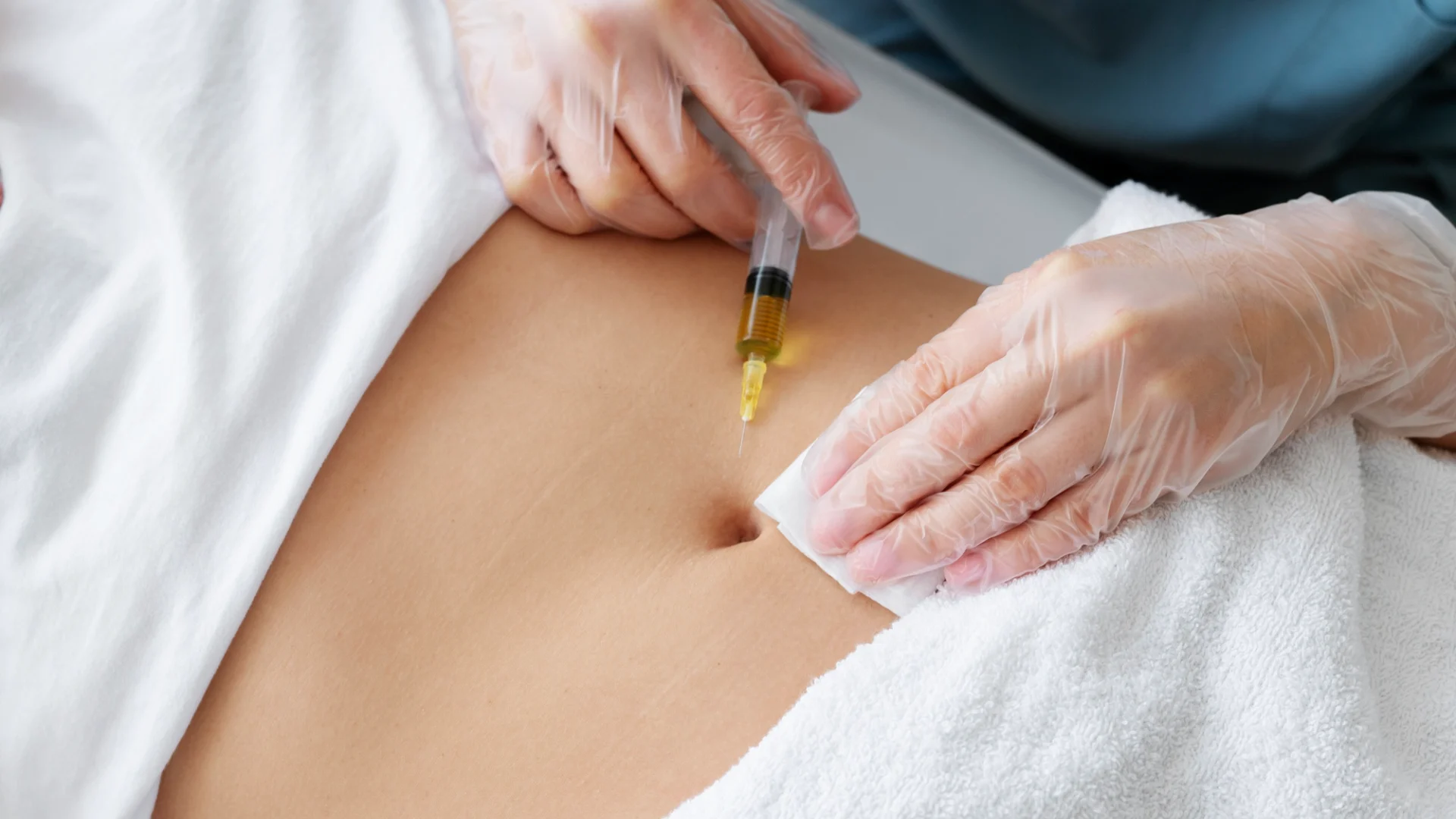
Autologous Fat Grafting is a procedure that involves harvesting fat from the patient's own body, processing it, and reinjecting it into areas requiring additional volume or contour enhancement, such as the forehead, temples, under-eye area, cheeks, nasolabial folds, and other areas of facial volume loss.
This approach uses the patient's own tissue. Physicians evaluate facial anatomy, facial fat compartments, skin quality, and facial proportions to determine the appropriate injection sites and amount of fat for each area.
At Dr. Gorn Aesthetique, fat grafting is planned according to facial structure rather than simply filling areas that appear hollow. The relationship between volume in different facial regions is carefully considered to achieve balanced overall facial proportions.
What Is Autologous Fat Grafting?
The term autologous refers to tissue obtained from the patient's own body. Autologous fat grafting therefore involves harvesting fat from areas with sufficient fat, such as the abdomen, thighs, or other suitable locations, processing the harvested fat, and reinjecting it into the intended treatment areas.
The general procedure includes:
- Assessing the intended treatment areas and potential fat donor sites
- Harvesting fat from the donor site
- Processing and separating the harvested fat using the physician's selected technique
- Injecting the prepared fat into the intended treatment areas
- Distributing the fat within appropriate tissue layers according to the planned contours
Where Can Autologous Fat Grafting Be Performed?
For facial contour enhancement, physicians may consider fat grafting in several areas, including:
- Forehead – Restoring volume and improving forehead contour transitions
- Temples – Restoring volume in hollow or volume-deficient areas
- Under-Eye Area – Addressing certain hollows or volume deficiencies in patients with suitable anatomy
- Midface – Restoring volume in areas affected by tissue volume loss
- Cheeks – Improving facial contours
- Nasolabial Folds – Restoring volume in selected areas when appropriate
- Perioral Area – Addressing certain types of volume loss around the mouth
- Chin and Jawline – Refining contours according to individual indications
Not every facial area requires treatment at the same time. Fat grafting should target areas with an identified volume deficiency.
Why Does the Face Lose Volume?
Age-related facial changes involve more than skin laxity. They may also include changes in facial fat compartments and other supporting structures.
Factors contributing to a hollow or sunken facial appearance may include:
- Loss or redistribution of facial fat
- Changes in facial bone structure
- Reduced skin elasticity
- Significant weight loss
- Individual anatomy and genetics
- Other age-related changes
Volume restoration should therefore be planned alongside an assessment of tissue laxity rather than focusing solely on an individual fold or hollow area.
How Is Autologous Fat Grafting Different from Dermal Fillers?
Both fat grafting and dermal fillers can restore volume, but their characteristics and treatment procedures differ.
Fat grafting uses the patient's own fat and requires harvesting tissue from a donor site. Dermal fillers are manufactured injectable materials that do not require fat harvesting.
Another important difference is that not all transferred fat survives. Some fat may be reabsorbed after treatment, while fat that establishes a blood supply and survives may remain as part of the tissue in the treated area.
Therefore, the choice should not be based solely on which treatment "lasts longer." Individual anatomy, the amount of volume needed, and treatment goals should also be considered.
Is Fat Grafting Permanent?
Following fat grafting, some of the transferred fat is reabsorbed, while other portions may survive after establishing an adequate blood supply from the surrounding tissues.
The amount of fat that survives varies between individuals and treatment areas. Factors include:
- Quality of the harvested fat
- Fat harvesting and processing techniques
- Injection technique and tissue depth
- Volume of fat injected
- Blood supply to the surrounding tissues
- Post-treatment care
- Future changes in body weight
Therefore, survival of all transferred fat cannot be guaranteed.
Why Does the Face Look Fuller Immediately After Fat Grafting?
Immediately after treatment, both the transferred fat and swelling caused by the procedure may make the treated areas appear fuller than they will at a later stage.
As swelling subsides and some of the transferred fat undergoes natural changes, the volume gradually changes.
Long-term outcomes should therefore be assessed after the tissues have had sufficient time to recover.
Can Autologous Fat Grafting Improve Skin Quality?
The primary purpose of fat grafting is to restore volume and improve tissue contours.
Although fat is a biological tissue containing various components, fat grafting should not be presented as a treatment that guarantees skin repair or rejuvenation for every patient.
If improving skin quality is the primary goal, the physician should assess whether additional skin-focused treatments are appropriate.
Who May Be Suitable for Autologous Fat Grafting?
Individuals may consider an assessment if they have concerns such as:
- Hollow temples
- Volume deficiency in the forehead or cheeks
- Midface volume loss
- Certain types of under-eye hollows or volume deficiency
- A hollow-looking face following weight loss
- A desire to improve facial contours using their own tissue
- A desire to restore volume in multiple facial areas
- Interest in combining fat grafting with a facelift or other facial surgery
Can Fat Grafting Be Combined with a Facelift?
Combining these procedures may be considered because facelifts and fat grafting address different aspects of facial aging.
A facelift primarily repositions sagging tissues, while fat grafting restores volume in areas affected by volume loss.
For individuals with both tissue laxity and volume loss, the physician may plan both procedures together to address multiple aspects of facial structure.
Does Fat Harvesting Make the Donor Area Smaller?
Fat harvesting removes fat from the donor site. However, the main purpose of facial fat grafting is to collect an appropriate amount of fat for facial use rather than to perform body contouring.
Individuals seeking a significant reduction in fat or a noticeable contour change at the donor site should undergo a separate assessment for body contouring treatment.
How Long Is Recovery After Autologous Fat Grafting?
Following treatment, swelling, bruising, or tightness may occur in both the recipient areas and the donor site. The severity of these symptoms depends on the amount of fat transferred, the number of injection sites, and the fat harvesting technique.
During the initial recovery period, avoid pressing, massaging, or applying pressure to the treated areas unless instructed by your physician. Follow the recommended donor site aftercare instructions.
Facial contours gradually change as swelling decreases and the transferred fat undergoes tissue adaptation.



