
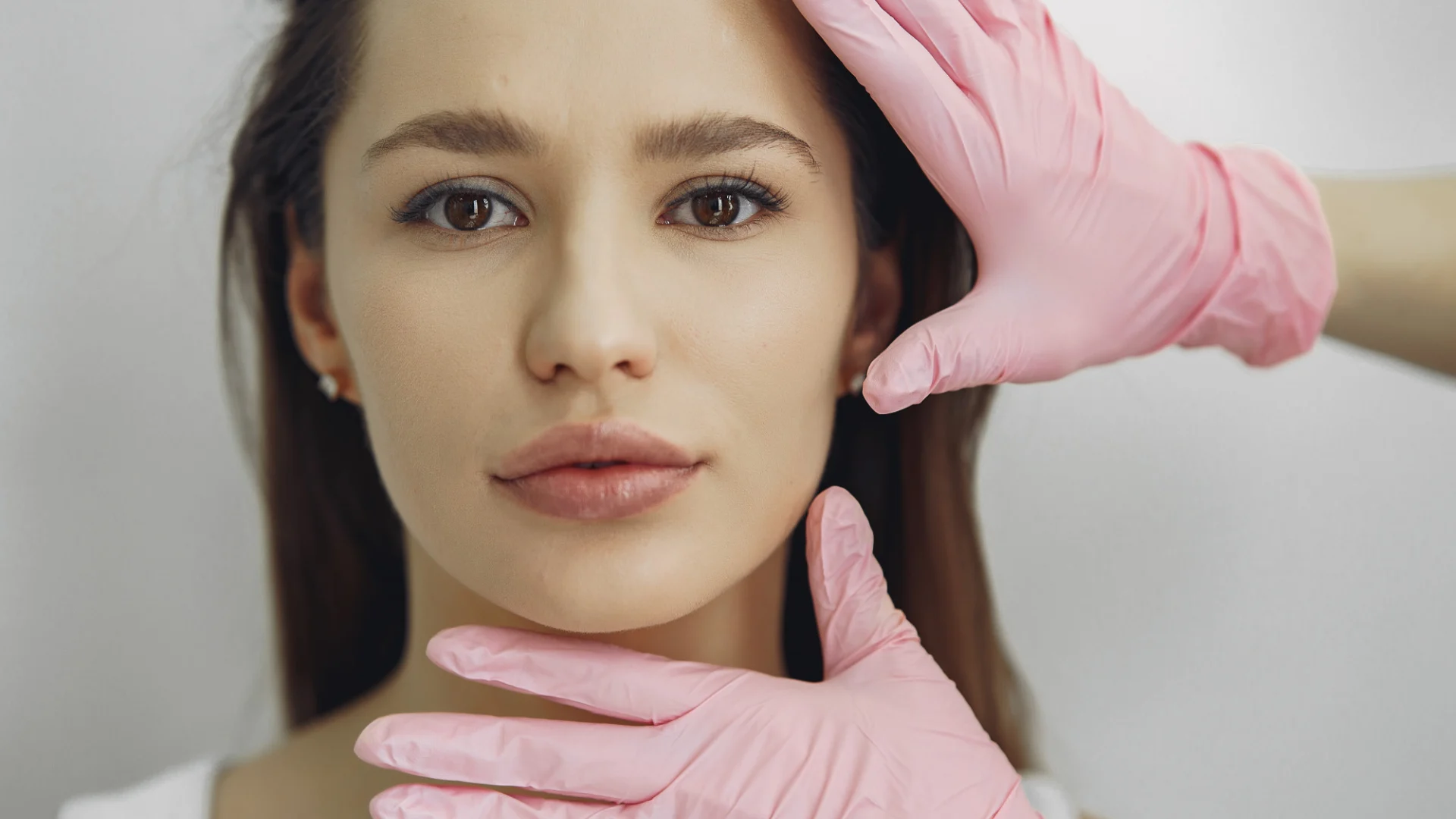
Face Rejuvenation is an approach to restoring and refining facial appearance by addressing age-related changes, including volume loss, tissue laxity, and changes in facial proportions. The surgeon evaluates the facial anatomy as a whole before selecting the most appropriate treatment methods for each individual.
At Dr. Gorn Aesthetique, Face Rejuvenation is not simply about filling individual folds or adding volume to isolated areas. Instead, it considers the relationship between the forehead, temples, periorbital area, midface, nasolabial folds, and facial contours to develop a balanced treatment plan.
What Is Face Rejuvenation?
As we age, changes can occur simultaneously in multiple layers of the face, including the skin, fat, muscles, retaining ligaments, and underlying bone structure.
These changes may lead to:
- Forehead or temple hollowing
- Under-eye hollowing or more prominent tear troughs
- Loss of cheek volume
- A flattened or sagging midface
- More prominent nasolabial folds and marionette lines
- A hollow or tired-looking facial appearance
- Changes in facial contours
Face Rejuvenation therefore involves identifying the underlying causes of changes in different facial areas before selecting appropriate corrective methods.
Facial Volume Restoration Is More Than Filling Wrinkles and Folds
Facial folds are not always caused by volume deficiency directly beneath them. They may also be related to tissue displacement or loss of structural support in nearby areas.
For example, more prominent nasolabial folds may be associated with volume loss and changes in tissue position within the midface.
Therefore, filling individual folds without assessing the surrounding structures may not be appropriate for some patients.
The concept of Full-Face Rejuvenation emphasizes assessing the face as a whole rather than correcting each area independently.
Which Facial Areas Can Be Addressed with Face Rejuvenation?
The surgeon may develop a treatment plan based on changes in specific facial areas, including:
- Forehead – Restoring forehead volume and contour
- Temple – Addressing hollow or sunken temples
- Under-Eye – Assessing tear troughs and volume loss around the eyes
- Midface – Restoring volume and refining the central cheek contours
- Cheek – Improving cheek contours
- Nasolabial Area – Evaluating nasolabial folds in relation to the midface
- Perioral Area – Addressing volume loss around the lips and corners of the mouth
- Chin & Jawline – Refining lower facial contours when indicated
Not every area needs to be treated at the same time. The surgeon selects only the areas requiring correction based on individual anatomy.
What Treatments Can Be Used for Face Rejuvenation?
Face Rejuvenation does not refer to a single procedure. It is an approach to selecting treatments according to the underlying causes of facial changes.
If the main concern is volume loss, volume restoration techniques such as Autologous Fat Grafting or other appropriate methods may be considered.
If tissue laxity is also present, adding volume alone may not address the underlying causes. Lifting procedures or facelift surgery may need to be evaluated as additional options.
The key principle is to select treatment according to the cause rather than assuming that adding volume is the solution to every facial concern.
Face Rejuvenation with Autologous Fat Grafting
Autologous Fat Grafting is one technique that may be used for Full-Face Rejuvenation. Fat is harvested from the patient's own body, prepared, and transferred into areas with volume deficiency.
Fat grafting may be planned for several areas, including the forehead, temples, under-eye region, cheeks, and other locations based on individual anatomy.
Some of the transferred fat may be reabsorbed after the procedure, while some may survive after establishing a blood supply. The amount of retained volume therefore varies between individuals.
What Is the Difference Between Face Rejuvenation and Fat Grafting?
Face Rejuvenation refers to the overall treatment goal or approach to improving facial appearance.
Fat Grafting, on the other hand, is one of the techniques that can be used to restore facial volume.
Therefore, Face Rejuvenation may involve fat grafting alone or a combination of techniques when both volume loss and tissue laxity are present.
Can Face Rejuvenation Be Combined with a Facelift?
These approaches may be considered together, particularly for individuals with both volume loss and facial laxity.
A Facelift addresses the repositioning of sagging facial tissues, while Fat Grafting or Volume Restoration focuses on replenishing volume in areas where it has been lost.
In some cases, addressing both concerns together may be more appropriate than attempting to compensate for tissue laxity by adding excessive volume.
Who May Be Suitable for Face Rejuvenation?
Individuals with the following concerns may consider a professional assessment:
- A hollow facial appearance or loss of facial volume
- Hollow temples
- Under-eye hollowing or a tired-looking appearance
- Loss of midface volume
- More prominent facial folds
- Age-related changes in facial proportions
- Both volume loss and tissue laxity
- A desire to improve the balance between several facial areas rather than treating isolated concerns
Can Face Rejuvenation Make the Face Look Younger?
The goal of Facial Rejuvenation is to improve the balance of facial features affected by aging, rather than guaranteeing a return to the appearance of a particular age.
Appropriate treatment should respect the patient's original anatomy and distinctive facial characteristics while avoiding unnecessary or excessive volume augmentation.
Does Every Facial Area Need Volume Restoration?
No, not necessarily.
A Full-Face Assessment means evaluating the entire face, not necessarily treating every area.
The surgeon may identify significant volume loss in some regions while finding that others already have appropriate proportions. Treatment should therefore focus only on areas with a clear indication.
How Long Is Recovery After Face Rejuvenation?
Recovery depends on the procedures performed. After fat grafting, patients may experience swelling, bruising, or tightness in both the treated areas and the fat donor sites.
If treatment is combined with a facelift or another surgical procedure, recovery also depends on the extent of that surgery.
The surgeon will provide postoperative care instructions according to the treatment performed and each patient's individual anatomy.



