
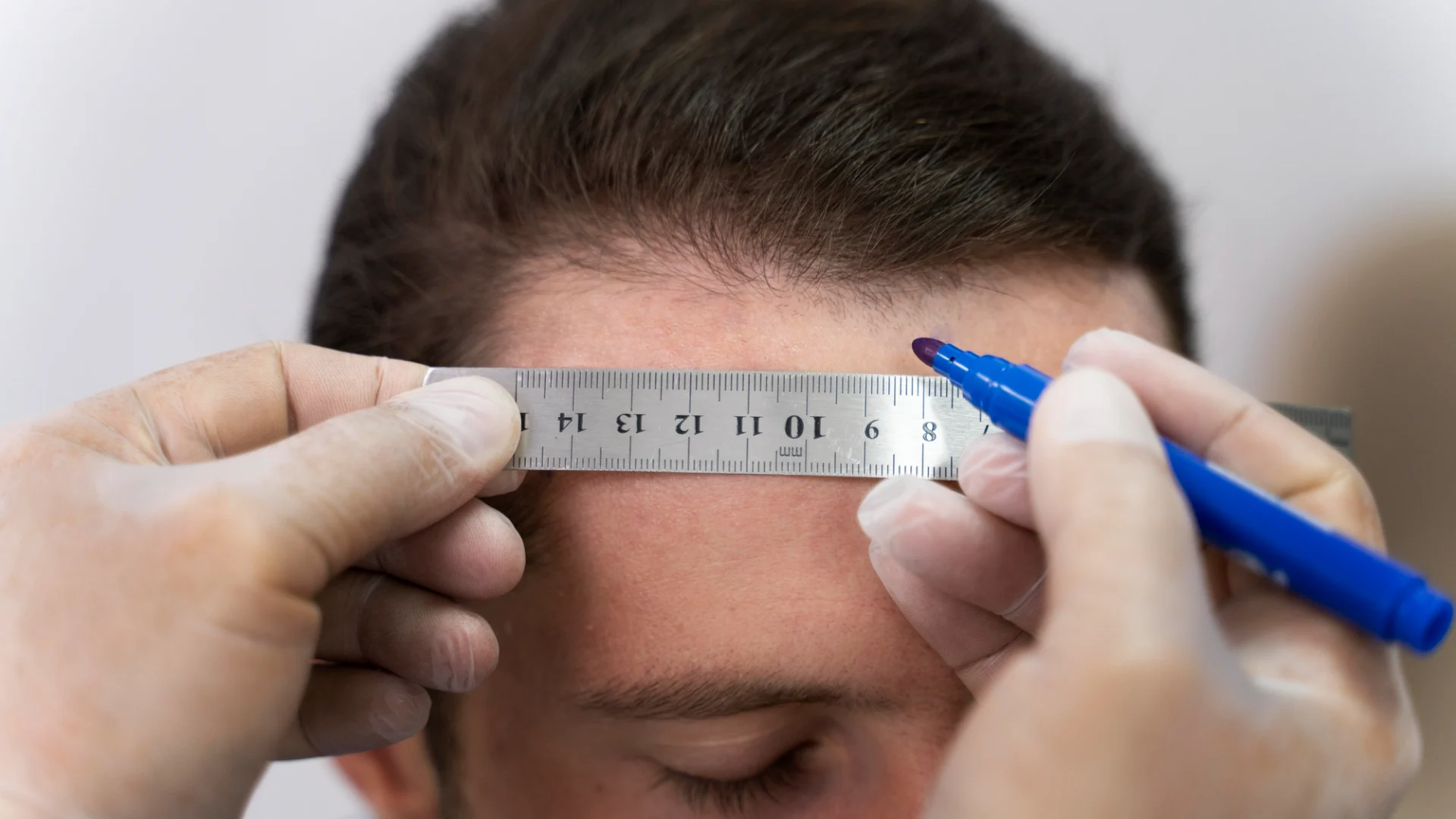
Hair Transplantation is a procedure that transfers hair follicles from a suitable area with healthy hair, known as the donor area, to areas where greater hair density or a new hairline is desired. It may be performed on the scalp, eyebrows, mustache, and beard. Physicians plan the direction, angle, density, and distribution of the transplanted hair according to each individual's anatomy and existing hair characteristics.
At Dr. Gorn Aesthetique, hair transplantation is not planned solely around the number of grafts. Physicians carefully assess the hairline, donor area, hair density, hair direction, and facial proportions to develop a treatment plan suited to each individual.
What Is Hair Transplantation?
Hair transplantation involves transferring hair follicles or follicular units from a suitable donor area to areas affected by hair thinning, hair loss, or areas where a new hairline or facial hair pattern is desired.
Hair transplantation may be considered for several areas, including:
- Frontal scalp and hairline transplantation
- Increasing density in areas of thinning hair
- Temple hair transplantation
- Hairline reshaping
- Eyebrow transplantation
- Mustache transplantation
- Beard transplantation
- Filling patchy areas of mustache or beard growth
How Is Hair Transplantation Performed?
The fundamental principle is to transfer follicular units from a suitable donor area to the intended recipient area.
The general procedure includes:
- Assessing the underlying cause and pattern of hair thinning or hair loss
- Evaluating donor area quality and density
- Designing the hairline or intended transplant area
- Estimating the appropriate number of grafts
- Harvesting follicular units from the donor area
- Preparing the recipient area
- Implanting grafts according to the planned angles, directions, and density
The specific technique and number of grafts required vary according to each individual's anatomy and treatment goals.
Why Is Hairline Design Important?
Hairline design is an important part of hair transplantation because the hairline directly influences the proportions of the forehead and face.
Physicians consider several factors, including:
- Forehead height and width
- Existing hairline
- Age and pattern of hair loss
- Donor area density
- Hair direction and characteristics
- Facial proportions
- Potential future hair loss
The goal is not to create the lowest possible hairline, but to design an appropriate hairline while considering the available donor hair supply.
What Is a Hair Graft?
A graft or follicular unit is a unit of hair follicles used for transplantation. One graft may contain more than one hair.
Therefore, the terms "number of grafts" and "number of hairs" do not mean the same thing.
The number of grafts required depends on the treatment area, desired density, donor area quality, and the number of follicles that can be appropriately harvested.
Eyebrow Transplantation
Eyebrow Transplantation involves transferring the patient's own hair follicles to the eyebrow area to increase density, fill sparse areas, or reshape the eyebrows.
Eyebrow transplantation requires careful attention to hair direction and angle, as eyebrow hairs grow in different directions across different regions.
Physicians design the eyebrow from the head through the body to the tail, taking into account eye shape, forehead proportions, and overall facial structure.
Who May Be Suitable for Eyebrow Transplantation?
Individuals may consider an assessment if they have concerns such as:
- Naturally sparse eyebrows
- Incomplete eyebrow hair growth in certain areas
- Sparse or missing eyebrow tails
- A desire to reshape the eyebrows using natural hair
- Certain scars affecting eyebrow hair growth
- Eyebrow hair loss with an underlying cause already evaluated and considered suitable for transplantation
In cases of unusual eyebrow hair loss, the underlying cause should be identified before eyebrow transplantation is considered.
Beard & Mustache Transplantation
Beard & Mustache Transplantation involves transferring hair follicles to the mustache and beard areas to increase density, fill uneven growth patterns, or create facial hair shapes suited to the individual's facial anatomy.
Possible treatment areas include:
- Mustache above the upper lip
- Chin beard
- Sides of the face
- Jawline
- Sideburns
- Patchy mustache or beard areas
Design planning must consider the direction of existing facial hair, jawline shape, chin structure, and overall facial proportions.
How Is Beard and Mustache Transplantation Different from Scalp Hair Transplantation?
The basic principle of transferring follicular units is similar, but the design requirements differ significantly.
Scalp hair, eyebrow hair, mustache hair, and beard hair have different growth angles, directions, distributions, and growth characteristics.
In eyebrow and beard transplantation in particular, the placement angle of each graft is important for the resulting appearance as the transplanted hair grows.
Will Transplanted Hair Grow Immediately?
After transplantation, the hair shafts attached to the grafts may shed during the initial recovery period before the follicles gradually produce new hair as part of their growth cycle.
Hair growth takes time, and not all grafts enter the growth phase simultaneously.
Therefore, hair transplantation results should be evaluated according to the hair growth cycle rather than solely on the appearance immediately after the procedure.
What Does Permanent Hair Transplantation Mean?
The term permanent hair transplantation generally refers to transferring hair follicles from a suitable donor area to a new location, where surviving follicles may continue producing hair.
However, hair transplantation does not stop hair loss in existing, non-transplanted hair. Hair characteristics may also change with age, health, and individual factors.
Long-term treatment planning should therefore consider the possibility of future hair loss.
Who May Be Suitable for Hair Transplantation?
Individuals with the following concerns may consider an assessment:
- A receding or increasingly high hairline
- Hair thinning in the frontal or midscalp areas
- Hair thinning patterns considered suitable for transplantation
- A desire to reshape the hairline
- Sparse or partially missing eyebrows
- Uneven mustache or beard growth
- A desire to increase mustache or beard density
- A donor area with sufficient hair quantity and quality
Before transplantation, the cause of hair loss should be assessed, as certain types of hair loss may require treatment of the underlying condition first.
Why Is the Donor Area Important?
Donor hair is a limited resource. Treatment planning must therefore consider both the current procedure and possible future transplantation needs.
The physician evaluates:
- Hair density
- Hair shaft thickness
- Hair characteristics and color
- Contrast between hair color and skin tone
- Number of grafts that can be appropriately harvested
- Hair loss pattern
Therefore, using the maximum possible number of grafts does not necessarily produce the most appropriate result.
How Should You Care for the Area After Hair Transplantation?
During the initial recovery period, temporary swelling, redness, scabbing, or changes in sensation may occur in the transplanted and donor areas.
Avoid scratching, picking, or applying physical pressure to the transplanted area. Follow your physician's instructions regarding hair washing, sleeping positions, and exercise.
After the initial recovery period, transplanted follicles will enter their hair growth cycle, and hair growth will gradually change over time.



