
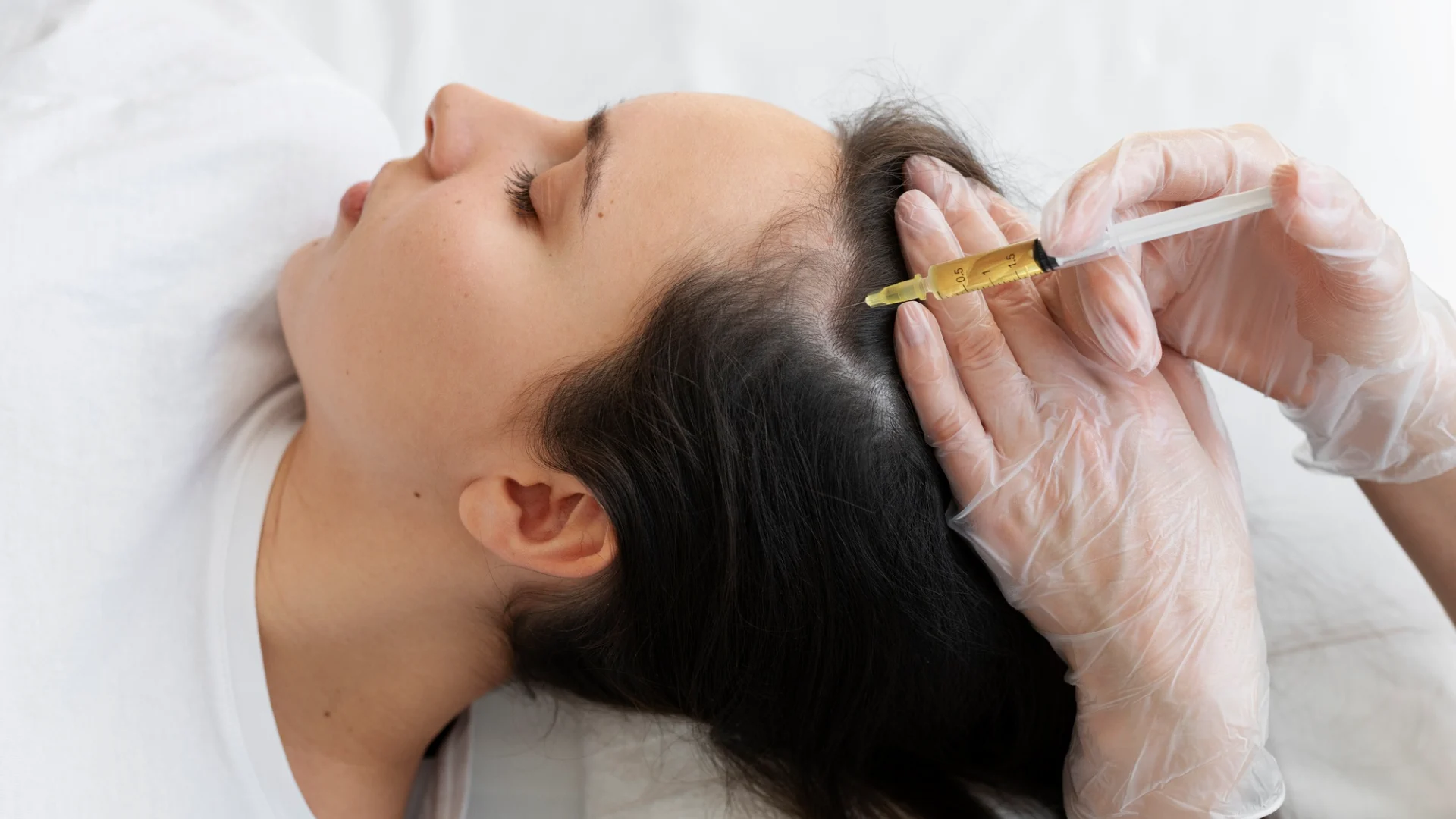
Long Hair FUE is a hair transplantation technique based on FUE (Follicular Unit Excision). It involves extracting follicular units from a suitable donor area while preserving the length of the hair shafts according to the technique used. The harvested grafts are then transplanted into areas affected by hair thinning, a receding hairline, or reduced hair density.
One of the distinguishing features of Long Hair FUE is that the retained hair length allows physicians to assess hair direction, angle, and distribution during planning and transplantation. Immediately after the procedure, the hair shafts attached to the grafts can also provide an initial view of the hairline and hair distribution before the transplanted follicles enter their natural growth cycle.
At Dr. Gorn Aesthetique, Long Hair FUE treatment is planned according to each individual's hair loss pattern, hairline, donor density, hair direction, and facial proportions.
What Is Long Hair FUE?
Long Hair FUE is a variation of FUE in which donor hair is managed to preserve longer hair shafts compared with conventional FUE procedures that typically involve trimming the hair short.
The fundamental procedure remains the extraction of individual follicular units from the donor area, followed by their transplantation into the recipient area.
The general process includes:
- Assessing the cause and pattern of hair loss
- Evaluating the donor area
- Designing the hairline and identifying areas requiring additional density
- Determining the number of grafts required
- Extracting follicular units with retained hair shafts using the Long Hair FUE technique
- Preparing the recipient area
- Implanting grafts according to the planned angles and directions
How Is Long Hair FUE Different from Conventional FUE?
The main difference lies in how hair length is managed during graft extraction.
Conventional FUE generally involves trimming or shaving the donor hair short to facilitate the extraction of follicular units.
Long Hair FUE, on the other hand, preserves hair length according to the specific technique, allowing the hair's characteristics to remain visible during the procedure.
However, both approaches are based on the same fundamental principle of Follicular Unit Excision.
Is Long Hair FUE the Same as No-Shave FUE?
The terms Long Hair FUE and No-Shave FUE may be used in similar contexts, but they should not always be considered interchangeable.
No-Shave or Unshaven FUE generally refers to techniques designed to harvest grafts without shaving a large portion of the donor area. Long Hair FUE specifically emphasizes preserving the length of the hair shafts associated with the extracted follicular units.
The details of these techniques may vary, so the actual approach should be clarified during the preoperative assessment.
What Are the Advantages of Long Hair FUE?
Long Hair FUE may be considered by individuals who wish to:
- Preserve their existing hairstyle around the donor area as much as possible
- Reduce concerns about shaving a large area of the scalp
- Restore the hairline or increase density in areas with existing hair
- Allow the physician to evaluate hair direction during implantation
- Obtain an initial preview of hair distribution after transplantation
- Return to daily activities while retaining surrounding hair that may help conceal the donor area
However, the hair shafts attached to transplanted grafts may still undergo shedding after the procedure as part of the post-transplant hair cycle.
Is Long Hair FUE Suitable for Women?
Long Hair FUE may be considered for women, particularly those concerned about shaving the donor area.
It may be evaluated for concerns such as:
- A high hairline
- A broad forehead
- Temporal recession
- Thinning along the hairline
- A desire to increase density in selected areas
- A preference for preserving the length of the surrounding hairstyle
However, female hair loss can have many underlying causes. The cause of hair loss and the quality of the donor area should therefore be assessed before treatment.
Can Men Undergo Long Hair FUE?
Yes. Long Hair FUE may be suitable for men when the hair loss pattern, donor area, and required number of grafts are appropriate.
Long Hair FUE is not limited to women. Technique selection should be based on anatomy, hairstyle, graft requirements, and individual goals rather than gender alone.
Can Long Hair FUE Increase Hair Density?
Long Hair FUE may be used to increase hair density in suitable areas. However, the physician must carefully assess the existing hair and the available space between follicular units.
When implanting grafts among existing hairs, the placement, angles, and directions of the grafts must be carefully planned to complement the surrounding hair.
The appropriate number of grafts therefore depends on the size of the treatment area and each individual's available donor supply.
Can Long Hair FUE Improve the Hairline?
Long Hair FUE may be used to design, restore, or increase the density of the hairline.
The physician will consider:
- Existing hairline shape
- Forehead height and width
- Temporal hairline
- Hair angles and growth directions
- Hair shaft thickness
- Donor density
- Age and future hair loss patterns
- Facial proportions
The goal is to create a hairline that complements facial proportions while allowing appropriate long-term management of the available donor hair.
Does Long Hair FUE Require Shaving?
One of the main objectives of Long Hair FUE is to reduce the need to trim or shave hair short as commonly required in conventional FUE. However, the details depend on the specific Long Hair FUE technique, number of grafts, and donor area characteristics.
In some cases, limited trimming or preparation of certain hairs may still be required to allow appropriate follicular unit extraction.
Therefore, the claim of "100% no shaving" should not be applied to every patient without an individual assessment.
Are Long Hair FUE Results Visible Immediately?
Immediately after transplantation, the position and distribution of the hair shafts attached to the grafts may be visible. However, this is not the final result.
These hairs may shed after transplantation as part of the hair growth cycle. Surviving follicles then gradually enter the growth phase and produce new hair over time.
Therefore, the advantage of Long Hair FUE is that it may provide an early preview of hair distribution, not that it eliminates the post-transplant shedding phase.
Does Long Hair FUE Leave Scars?
Like other FUE techniques, Long Hair FUE should not be described as a scarless hair transplantation procedure.
Extracting follicular units creates small wounds in the donor area, which may leave visible marks after healing.
However, it does not create the long linear incision associated with FUT strip harvesting. The appearance of any resulting marks depends on the technique, instrument size, number of grafts, and individual healing response.
Who May Be Suitable for Long Hair FUE?
Individuals may consider an assessment if they:
- Want a hair transplant but are concerned about shaving their hair short
- Have a receding or high hairline
- Have temporal recession
- Experience localized hair thinning
- Wish to increase hair density
- Wish to add grafts between existing hairs
- Prefer to preserve their hairstyle around the donor area
- Have sufficient donor hair of suitable quality
How Should You Care for Your Hair After Long Hair FUE?
After treatment, temporary swelling, redness, scabbing, or changes in sensation may occur in the donor and recipient areas.
Although longer hair shafts may remain in the transplanted area, care must be taken during the initial healing period to prevent hair from being pulled or caught, as this could place stress on the grafts.
Follow your physician's instructions regarding hair washing, brushing, sleeping positions, exercise, and hairstyling during recovery.



