
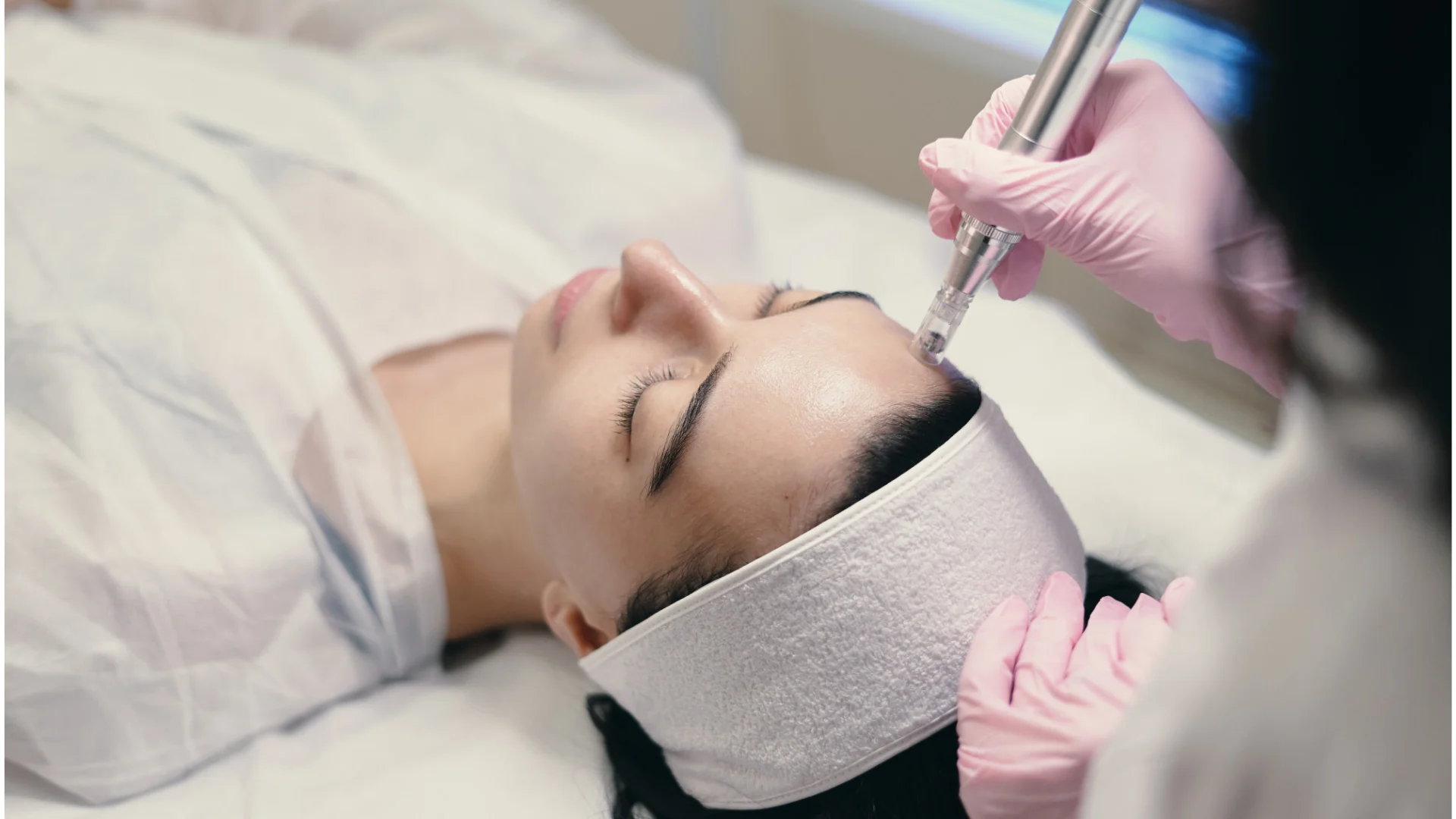
Skin Boosters are a category of injectable treatments designed to support skin hydration, smoothness, elasticity, and overall skin quality. They differ from dermal fillers, which generally focus on restoring facial volume or enhancing facial contours.
Skin boosters include various products and formulations, such as those containing Hyaluronic Acid (HA) and other ingredients designed to improve skin quality. Each product has different properties, injection techniques, and medical indications.
At Dr. Gorn Aesthetique, physicians assess skin quality, hydration, texture, elasticity, and facial anatomy before selecting a suitable product and developing an individualized treatment plan.
What Is a Skin Booster?
Skin Booster is a term used for a category of injectable treatments primarily intended to improve skin quality rather than significantly alter facial contours or restore volume.
Skin boosters may be considered for concerns such as:
- Dehydrated skin
- Dry or uneven-looking skin
- Uneven skin texture
- Certain types of superficial fine lines
- Age-related loss of skin elasticity
- Overall skin quality concerns
However, results depend on the specific product, skin condition, and individual response to treatment.
What Can Skin Boosters Help Improve?
Different skin boosters have different properties, but they are generally used to address skin hydration and overall skin quality.
Treatment goals may include:
- Improving skin hydration
- Helping the skin appear smoother
- Addressing superficial fine lines
- Improving the appearance of dry skin
- Supporting skin elasticity
- Improving overall skin texture
Before treatment, it is important to determine whether the primary concern is skin quality or another factor, such as volume loss, tissue laxity, or structural changes.
Where Can Skin Boosters Be Injected?
Suitable treatment areas depend on the specific product and its approved indications. These may include:
- Face
- Cheeks
- Area around the mouth
- Area around the eyes, with appropriately indicated products
- Neck
- Décolletage
- Back of the hands
Not every skin booster is suitable for every treatment area. Product selection must be based on its properties and specific indications.
How Are Skin Boosters Different from Dermal Fillers?
Although some skin boosters and dermal fillers contain Hyaluronic Acid, their primary treatment goals differ.
Dermal Fillers are generally used to restore volume, fill depressions, or enhance facial contours in areas such as the chin, lips, cheeks, or other regions affected by volume loss.
Skin Boosters, on the other hand, primarily focus on hydration and skin quality rather than creating projection or significantly changing facial shape.
Therefore, the choice is not about which treatment is “better,” but whether the main concern involves facial volume or skin quality.
How Are Skin Boosters Different from Botox?
Botulinum Toxin is used to reduce muscle activity in targeted areas. It is commonly used to address dynamic wrinkles, such as forehead lines, frown lines, and crow's feet.
Skin boosters focus on improving skin quality and are not primarily intended to reduce muscle activity.
Patients with both muscle-related wrinkles and skin quality concerns may need separate assessments of these two factors.
How Are Skin Boosters Different from Biostimulators?
The terms Skin Booster and Biostimulator are sometimes used interchangeably in marketing, but they should not automatically be considered equivalent in medical practice.
Skin boosters generally focus on hydration and skin quality, while products categorized as biostimulators may have different goals and mechanisms involving stimulation of tissue component production.
Each product has different ingredients, mechanisms of action, indications, and supporting evidence. Therefore, it is more appropriate to evaluate the specific product and its active ingredients rather than relying solely on marketing terminology.
Can Skin Boosters Reduce the Appearance of Pores?
The appearance of pores is influenced by several factors, including sebum production, skin structure, genetics, and age-related changes.
Improving hydration and skin quality may help the overall texture appear smoother in some individuals. However, skin boosters should not be promoted as a treatment that can make pores “disappear.”
If enlarged or visible pores are the main concern, other skincare approaches should also be evaluated.
Can Skin Boosters Improve Wrinkles?
Skin boosters may help improve the appearance of certain superficial fine lines associated with skin quality and hydration.
However, if wrinkles result from muscle movement or deep folds caused by volume loss, skin boosters alone may not address the underlying cause.
A physician should therefore assess whether the wrinkles are primarily related to skin quality, muscle movement, volume loss, or tissue laxity.
When Will Skin Booster Results Become Noticeable?
The time required to observe changes depends on the product, injection technique, and individual's skin condition.
Some products primarily target hydration, while others involve a series of treatments and require time to evaluate changes in skin quality.
Therefore, the expected timeline should be based on the specific product used rather than applying a single timeframe to all skin boosters.
How Many Skin Booster Sessions Are Needed?
There is no standard number of sessions suitable for every skin booster product.
The number and intervals of sessions depend on:
- Specific product used
- Ingredients and concentration
- Skin condition
- Age and age-related skin changes
- Treatment area
- Individual treatment goals
- Response to previous treatments
The treatment schedule should be based on product information and the physician's assessment.
Who May Be Suitable for Skin Boosters?
Individuals may consider an assessment for skin boosters if they have concerns such as:
- Dry or dehydrated skin
- Uneven skin texture
- Certain superficial fine lines
- Age-related changes in skin quality
- A desire to care for the skin on the face, neck, or hands
- A preference for improving skin quality rather than adding volume
- Interest in combining skin boosters with other appropriate treatments
Are There Risks Associated with Skin Boosters?
Yes. As injectable treatments, skin boosters may cause redness, swelling, bruising, pain, raised bumps at injection sites, infection, or reactions to the product.
Other risks depend on the type of substance, injection site, and tissue depth. Because the face contains important blood vessels and anatomical structures, injections should be performed by a physician familiar with facial anatomy and the characteristics of the product.
How Should You Care for Your Skin After Skin Booster Injections?
After treatment, temporary needle marks, redness, swelling, or small raised bumps may occur, depending on the injection technique and product.
Avoid unnecessary pressure, massage, or touching of the treated area, and follow your physician's instructions regarding skincare and activities after treatment.
If pain, swelling, redness, or other unusual symptoms increase, contact your healthcare provider for medical assessment.



