
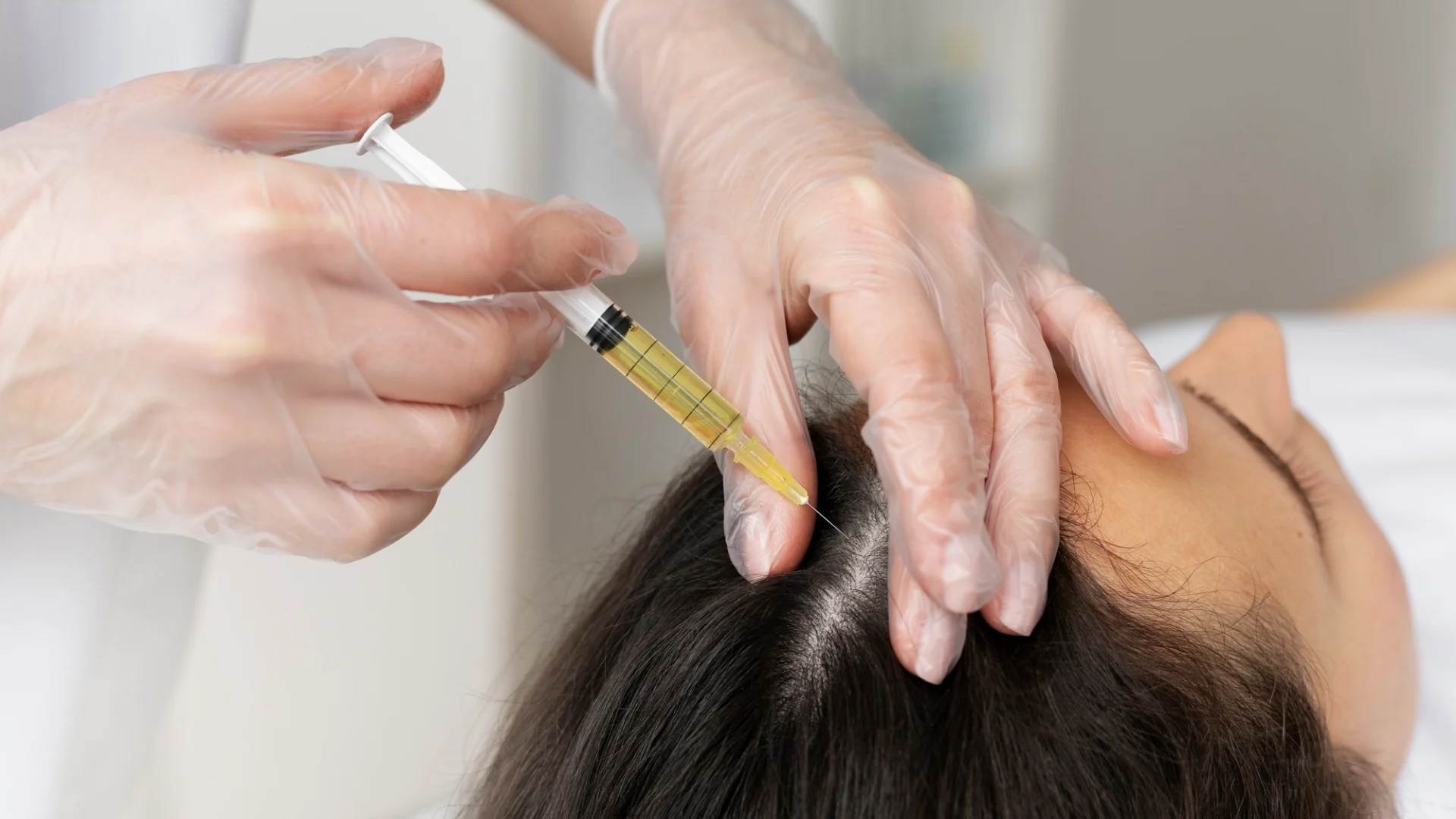
PRF (Platelet-Rich Fibrin) is prepared from the patient's own blood through a process that produces components containing platelets and fibrin. These components may then be used in targeted areas to support tissue repair and regeneration through biological substances and growth factors involved in the body's natural healing processes.
PRF has been applied in skin rejuvenation, hair and scalp treatments, and tissue care across various medical fields. Its characteristics vary depending on preparation methods, centrifugation speed and duration, and the specific protocol used.
At Dr. Gorn Aesthetique, physicians assess skin quality, hair and scalp condition, facial anatomy, and treatment goals before determining whether PRF is appropriate for each individual.
What Is PRF?
PRF stands for Platelet-Rich Fibrin. It is a product prepared from the patient's own blood and is considered an autologous treatment.
After blood collection, the sample undergoes a separation process according to a specific protocol to prepare components containing platelets and fibrin. The resulting PRF may then be applied to selected treatment areas when clinically appropriate.
The general process includes:
- Collecting blood from the patient
- Processing the blood through a separation procedure
- Preparing Platelet-Rich Fibrin
- Applying PRF to the planned treatment area
PRF preparation methods may differ between systems, so the specific protocol used should always be considered.
What Is Fibrin in PRF?
Fibrin is a protein that plays an important role in blood clotting and tissue repair.
In PRF, fibrin may form a fibrin matrix or fibrin network, providing a structural framework that supports the organization of various blood-derived components.
This is one of the key characteristics that distinguishes PRF from certain other platelet concentrate products.
Does PRF Contain Growth Factors?
Platelets contain various biological substances and growth factors involved in tissue responses and repair processes.
PRF has therefore been investigated and applied in different medical settings to support tissue healing and regeneration.
However, the amount and release patterns of growth factors may vary depending on PRF preparation methods, centrifugation protocols, and individual blood characteristics.
Therefore, not all PRF systems should be assumed to have identical properties.
What Can PRF Help Improve?
In aesthetic medicine, PRF may be considered for several treatment goals, including:
- Supporting skin quality
- Improving the appearance of skin texture
- Addressing certain superficial fine lines
- Serving as part of a facial rejuvenation plan
- Periorbital tissue care when clinically appropriate
- Managing selected types of hair thinning
- Supporting hair and scalp health
- Use alongside other procedures according to an individualized treatment plan
PRF is not suitable for every condition. The underlying cause of each concern should be evaluated before treatment is considered.
PRF for Facial Rejuvenation
PRF Facial Rejuvenation uses components derived from the patient's own blood to support tissue repair and regenerative responses.
PRF may be considered for individuals seeking care related to:
- Overall skin quality
- Skin texture
- Superficial fine lines
- Age-related skin changes
- Specific areas requiring tissue care when clinically indicated
However, PRF is not primarily designed to create facial projection or reshape facial structures in the same way as dermal fillers.
PRF for the Under-Eye Area
The under-eye area has thin skin and complex anatomy. Under-eye concerns can arise from several factors, including:
- Volume loss
- Tear trough hollows
- Under-eye bags
- Thin skin
- Pigmentation
- Visible blood vessels beneath the skin
- Lower eyelid laxity
PRF may be considered to support tissue quality in appropriately selected patients, but it cannot correct every type of under-eye concern.
When prominent under-eye bags or significant tissue laxity are present, other approaches, such as dermal fillers, fat grafting, or lower blepharoplasty, may need to be evaluated according to the underlying cause.
PRF for Hair Thinning and Scalp Health
PRF Hair Treatment may be considered for certain types of hair thinning, with the aim of supporting the environment surrounding hair follicles.
Before treatment, the physician should assess the hair loss pattern and scalp condition, as hair loss can result from many different causes.
If an area no longer contains functional hair follicles capable of producing hair, PRF cannot create new hair follicles to replace them. Hair transplantation may need to be considered when clinically appropriate.
What Is the Difference Between PRF and PRP?
Both PRF and PRP are autologous treatments prepared from the patient's own blood, but they differ in their preparation processes and the composition of the resulting products.
PRP (Platelet-Rich Plasma) focuses on preparing plasma containing an appropriate concentration of platelets.
PRF (Platelet-Rich Fibrin), on the other hand, features a fibrin matrix as an important component and uses preparation protocols that differ from those of PRP.
These differences may influence the properties and clinical applications of the products. However, PRF should not automatically be considered superior to PRP in every situation.
Is PRF Better Than PRP?
There is no single answer that applies to every patient.
The suitability of PRF or PRP depends on:
- Treatment goals
- Target treatment area
- Preparation protocol
- Characteristics of the prepared product
- Skin condition or hair follicle status
- Medical evidence supporting the specific indication
Therefore, the choice between PRP and PRF should be based on the patient's concerns and treatment plan rather than assuming that one method is newer or inherently better.
How Is PRF Different from Dermal Fillers?
PRF is not a dermal filler.
Dermal fillers are designed to restore volume, fill depressions, or improve facial contours in selected areas. PRF, in contrast, is an autologous blood-derived treatment intended to support tissue responses and repair processes.
If significant volume loss is the primary concern, the physician may need to evaluate whether dermal fillers or fat grafting would be more appropriate.
How Is PRF Different from Biostimulators?
PRF uses components obtained from the patient's own blood. In contrast, biostimulators generally refer to injectable products containing specific substances, such as PLLA or CaHA in certain formulations, designed to stimulate tissue responses.
Both approaches may be considered for tissue rejuvenation, but they differ in composition, mechanisms of action, and treatment protocols.
How Many PRF Sessions Are Needed?
There is no standard number of PRF sessions that is appropriate for everyone.
The treatment plan depends on:
- Treatment area
- Skin or hair condition
- PRF preparation protocol
- Treatment goals
- Age and tissue quality
- Individual response to treatment
The physician should evaluate treatment-related changes before determining whether further sessions are necessary.
Are PRF Results Immediate?
PRF is not designed to deliver all of its intended regenerative effects immediately.
Changes in skin quality or hair condition involve tissue responses that develop over time.
For hair-related applications, the hair growth cycle must also be considered, meaning results should be assessed over an appropriate period rather than immediately after treatment.
Is PRF 100% Safe Because It Uses Your Own Blood?
PRF should not be described as 100% safe.
Although PRF is prepared from the patient's own blood, it remains a medical procedure involving blood collection, product preparation, and administration into the targeted tissues.
Possible risks include:
- Pain or tenderness
- Swelling
- Bruising
- Bleeding
- Infection
- Variable individual treatment responses
PRF procedures should therefore be performed using appropriate sterile techniques under medical supervision.
Who May Be Suitable for PRF?
Individuals may consider an assessment for PRF if they:
- Wish to maintain or improve skin quality
- Are interested in tissue rejuvenation for suitable treatment areas
- Experience certain types of hair thinning
- Wish to support hair and scalp health
- Are interested in autologous treatments
- Wish to explore facial rejuvenation using products derived from their own blood
Patients with blood disorders, platelet abnormalities, underlying medical conditions, or those taking certain medications should inform their physician before treatment.
How Should You Care for the Treatment Area After PRF?
Temporary redness, swelling, bruising, or tenderness may occur in the treated area following PRF.
Avoid unnecessary pressure, massage, or manipulation of the treated area unless advised by the physician. Follow the recommended hygiene and aftercare instructions.
If swelling, redness, pain, or other abnormal symptoms increase, contact the healthcare provider for medical assessment.



