

Chin Augmentation: External vs. Intraoral Incision—Which Is Better?
Chin augmentation with a silicone implant is a popular procedure for reshaping the chin and facial contours. It can make the face appear longer and slimmer and help improve the contour beneath the chin. There are two main incision techniques for inserting the implant:
- An external incision beneath the chin (submental incision).
- An incision inside the mouth (intraoral incision).
External Incision (Submental Incision)
An incision is made beneath the chin to insert the silicone implant under the periosteum, the tissue covering the chin bone.

Incision Inside the Mouth (Intraoral Incision)
An incision is made inside the mouth, in front of the gums of the lower front teeth, to provide access for inserting the silicone implant.
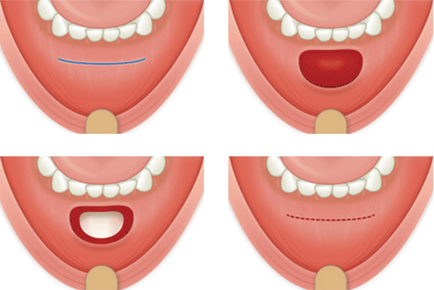
How Do the Two Techniques Differ?
Both techniques have different advantages and disadvantages. The surgeon selects the appropriate approach based on each individual case. The table below outlines the differences.
| Details | External Incision (Submental Approach) |
Incision Inside the Mouth (Intraoral Approach) |
|---|---|---|
| Incision Location | Beneath the chin | In front of the lower gums |
| Incision Visibility | A faint line approximately 12 weeks after surgery | A faint white line inside the mouth |
| Risk of Scarring | Very low | No external scar |
| Precision of Implant Placement | Better | Lower, with a greater chance of implant deviation or tilting |
| Bleeding During Surgery | Less | More |
| Risk of Injury to the Nerves Providing Sensation to the Chin | Lower | Higher |
| Infection Risk | Lower | Higher due to bacteria in the mouth |
| Postoperative Swelling | Less | More |
| Postoperative Care | Easier | More demanding |



