
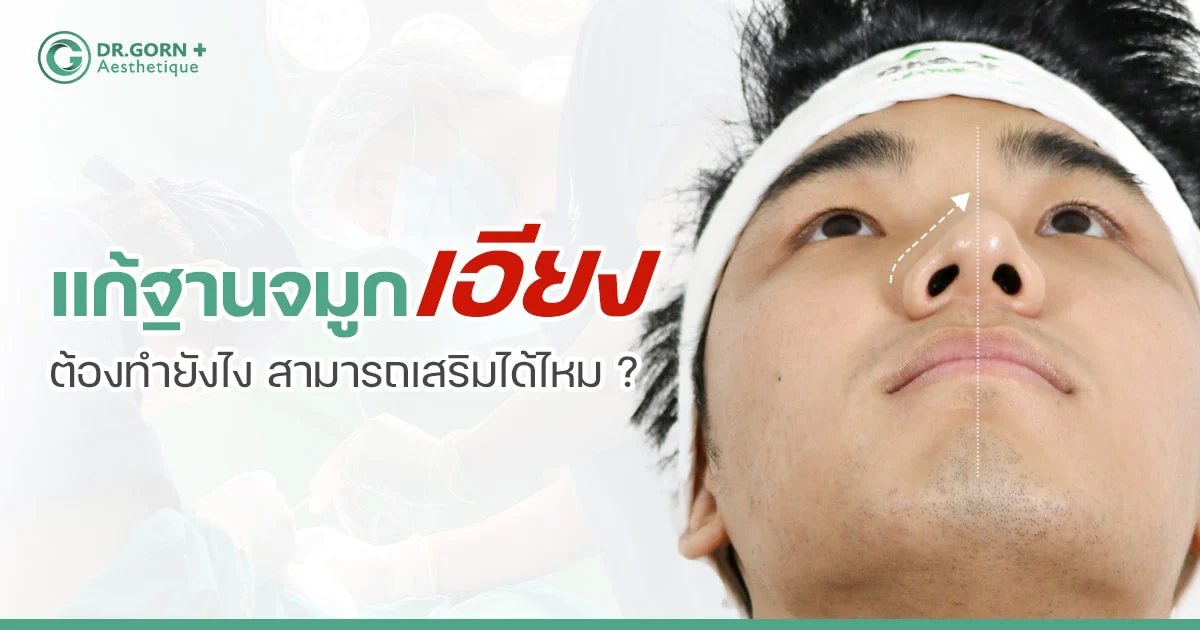
A crooked or deviated nasal base is one of the reasons people consider rhinoplasty to improve their nasal structure and achieve a more balanced, natural-looking appearance. Nasal deviation may be present from birth, develop following an injury, or become more noticeable after previous rhinoplasty. If you are concerned about a crooked nasal base and wondering whether it can be corrected or whether you can still undergo nose augmentation, Doctor Gorn Aesthetique Clinic (Dr. Gorn Aesthetique) explains the causes, treatment options, and important considerations.

What Causes a Crooked or Deviated Nasal Base?
The causes of a crooked or deviated nasal base can be divided into two main categories: deviations that are present from birth or develop after an injury, and deviations that become apparent following rhinoplasty. Each category has different characteristics and may require a different treatment approach.
1. Congenital Nasal Deviation or Deviation Caused by Injury
Some individuals naturally have an asymmetrical or crooked nasal base from birth. Others develop nasal deviation following an accident or injury that affects the nasal bones or nasal septum. In certain cases, the deviation may be subtle and difficult to recognize without a detailed examination.
For patients with congenital or trauma-related nasal deviation, open rhinoplasty (Open Rhinoplasty) may be considered when structural correction is required. Depending on the patient's anatomy, the surgeon may perform nasal bone osteotomy to reposition the nasal bones, correct a deviated septum, or realign displaced nasal structures. The selected technique depends on the location and severity of the deformity, as well as any associated breathing problems.
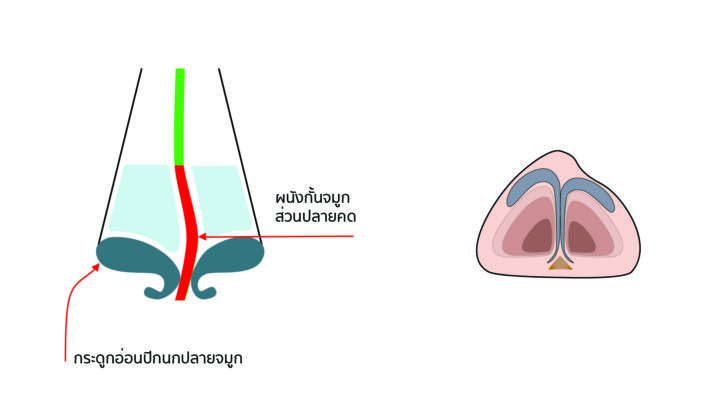
2. Crooked Nasal Base After Rhinoplasty
A crooked or asymmetrical nose after rhinoplasty may result from a pre-existing nasal deviation that was not adequately addressed during the original procedure. For example, when a silicone implant is placed over an already crooked nasal framework without correcting the underlying structure, the deviation may become more noticeable.
Other possible causes of nasal deviation after silicone rhinoplasty include:
- An excessively long or poorly fitted silicone implant: An implant that does not match the nasal anatomy may create excessive tension at the nasal tip, contribute to implant displacement, or, in more severe cases, increase the risk of implant exposure or extrusion.
- Inappropriate implant positioning: When an implant is placed in a tissue plane that does not provide adequate stability, it may be more likely to move or become displaced. The appropriate placement plane depends on the surgical technique and individual nasal anatomy.
- Repeated facial movements or external pressure: The original article mentions frequent frowning as a possible contributing factor. However, ordinary facial movements alone are not an established common cause of silicone implant displacement. Poor implant stability or other structural factors should also be assessed.
- Nasal trauma: An accident, direct impact, or injury to the nose may cause the silicone implant to shift or affect the underlying nasal structures.

Common Types of Nasal Deviation After Silicone Rhinoplasty
After silicone rhinoplasty, postoperative swelling gradually decreases and the surrounding tissues begin to settle around the implant. Changes in nasal contour may become more noticeable over the first two to three months, while further refinement can continue for approximately six months to one year. However, recovery and final healing times vary between patients.
Some patients may notice nasal asymmetry during the first three months following surgery. As swelling decreases, the shape and position of the implant become easier to assess. The original article describes the following common patterns of deviation:
- Deviation at the Nasal Root: The upper part of the implant, near the bridge between the eyebrows, leans toward one side.
- Nasal Tip Deviation: The tip of the implant appears displaced to one side while the main nasal bridge remains relatively straight.
- Deviation of the Entire Silicone Implant: The entire implant shifts or tilts toward one side of the nose.
- A Straight Implant with an Apparently Crooked Nose: The silicone implant itself may be correctly positioned, but the patient's underlying nasal base or skeletal framework is asymmetrical, making the nose appear crooked.
How Can You Tell If Your Nasal Base Is Crooked?
One simple way to make an initial assessment is to take a straight-on photograph of your face. Imagine a vertical line dividing the face into left and right halves, then compare the relative position and symmetry of the eyes, ears, nose, and nasal tip. This may help identify visible differences in nasal alignment and overall facial symmetry.
However, photographs alone cannot confirm the cause of a nasal deviation. During a medical consultation, the surgeon will examine the external nasal shape, internal septal structure, and facial proportions. In selected cases, X-rays or other imaging studies may be recommended to evaluate the nasal bones and underlying anatomy in greater detail.
Can You Undergo Rhinoplasty If You Have a Crooked Nasal Base?
Yes, rhinoplasty may be possible for patients with a crooked or deviated nasal base, whether the deviation is congenital, caused by trauma, or associated with previous nose surgery. However, correcting a crooked nasal framework may be more complex than routine nasal augmentation.
For patients requiring extensive structural correction, open rhinoplasty may provide greater access and visibility for the surgeon to examine and adjust the nasal bones, septum, and cartilage. Nevertheless, open surgery is not necessary for every case. The appropriate approach depends on the severity and location of the deviation, previous procedures, nasal breathing function, and the surgeon's assessment.
Why Consider Crooked Nasal Base Correction at Doctor Gorn Aesthetique Clinic?
Doctor Gorn Aesthetique Clinic provides consultations and surgical procedures involving open structural rhinoplasty and silicone-free nasal reconstruction. According to the original clinic information, the surgical approach includes techniques such as nasal bone osteotomy and dorsal hump reduction when appropriate for the patient's anatomy. These procedures may be relevant for individuals with a crooked nasal base or underlying structural irregularities.
Before treatment, the surgeon evaluates the nasal structure and determines whether implant adjustment, septal correction, nasal bone repositioning, cartilage grafting, or other procedures may be appropriate. The objective is to improve nasal alignment and facial harmony while considering functional breathing concerns, realistic expectations, and potential surgical risks.
Crooked Nasal Base Correction Process at Doctor Gorn Aesthetique Clinic
- Initial Online Assessment: Submit photographs of your nose through LINE at @dr.gornaesthetique for a preliminary assessment. The original article describes this service as free of charge.
- Detailed Nasal Examination: Attend an appointment for a comprehensive examination of the nasal framework. The surgeon will discuss suitable techniques for correcting the deviation and provide an estimated surgical cost.
- Scheduled Surgical Correction: Undergo the planned operation on the agreed date after appropriate preoperative assessment and preparation.
- Postoperative Follow-Up: The original clinic schedule includes follow-up examinations approximately 3, 7, 15, 30, and 90 days after surgery. The actual schedule may vary depending on individual recovery and clinical needs.



