1. Will the Final Nose Shape Match the Silicone Implant Chosen by the Patient?

The answer is no.
The final nose shape depends on two factors: the patient's existing nasal structure and the characteristics of the silicone implant inserted. The implant should be carved and adjusted to achieve an appropriate length and avoid excessive tension on the nasal tissues. Therefore, choosing an implant based on its shape alone is not enough to determine the outcome.
2. Does the Silicone Implant Need to Be Carved and Adjusted?
The answer is yes—in every case!
If the implant is not adjusted to suit the nose's length, width, proportions, and tissue elasticity, the resulting shape may be unsuitable. Problems may also develop after surgery, including excessive tension or thinning at the nasal tip, incomplete wound closure, an unnatural appearance, or, in severe cases, implant exposure through the skin. As the surgeon needs to carve and adjust the implant before insertion in every case, the final nose shape will not exactly match the original implant selected by the patient.

3. Silicone Implants Have Many Different Names. How Do They Differ?
The answer is that the differences are generally limited.
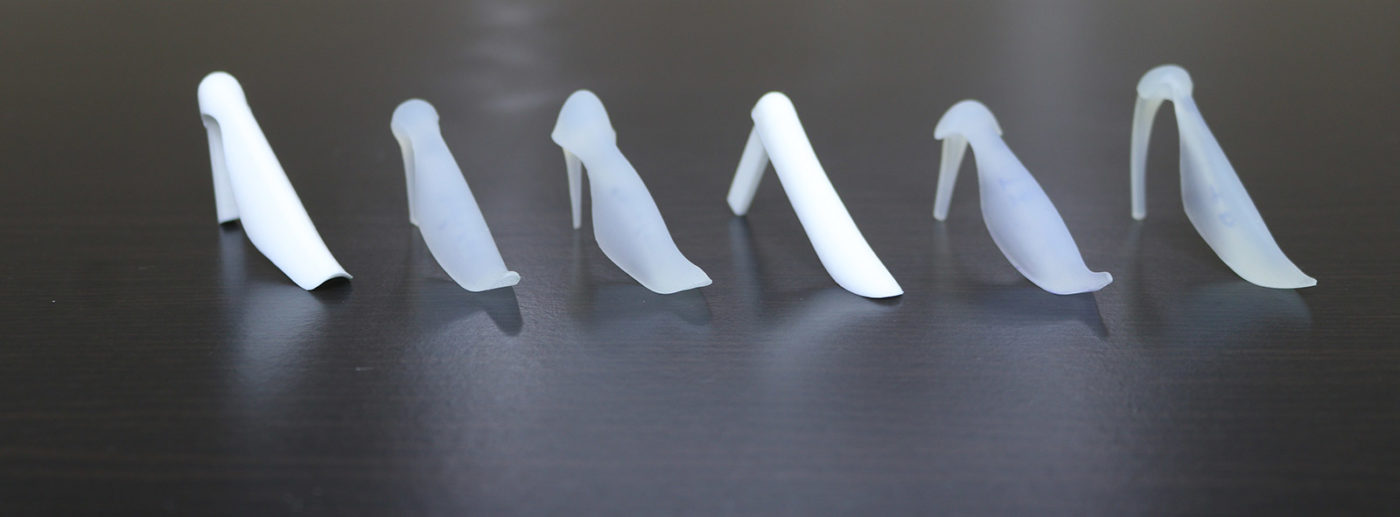
Clinics may use different names for implants with the same shape. Broadly, silicone implants fall into two categories. The first is an implant carved from scratch, which is less commonly used today and generally selected when necessary. The second is a pre-shaped implant available in various forms to make it easier for surgeons to work with. Clinics may give these implants different names, such as Barbie, Teardrop, or Mantis. However, the surgeon still needs to carve and adjust these implants before insertion in every case, so the final nose shape does not simply reproduce the implant's original shape. The key consideration is that the silicone must be medical grade, intended for use within the body.