
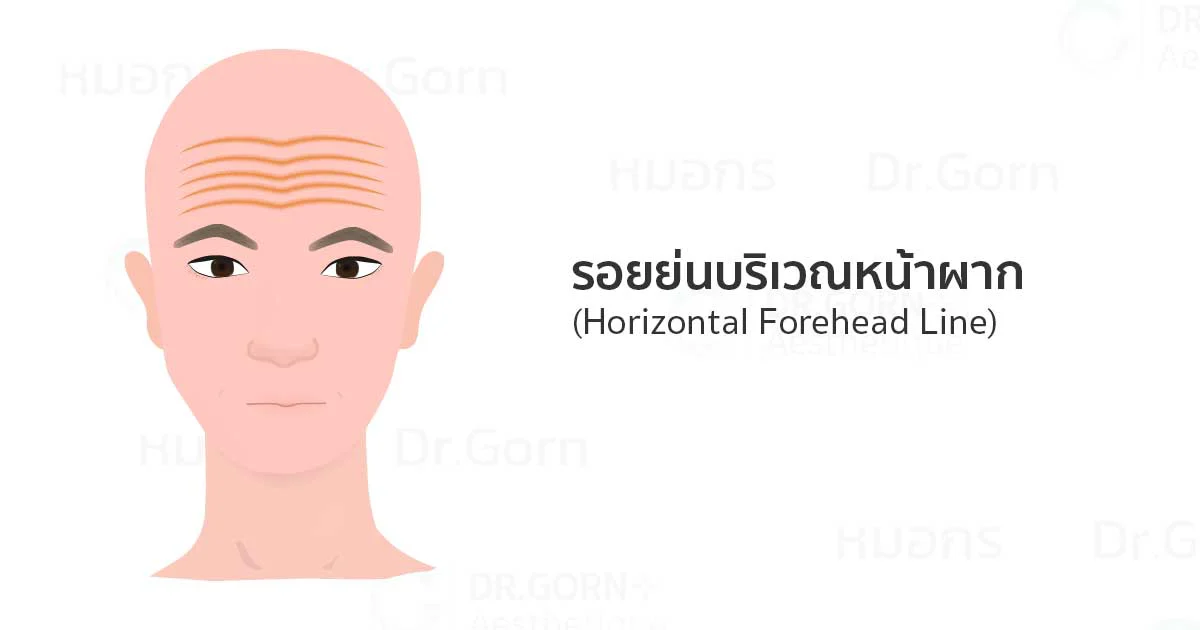
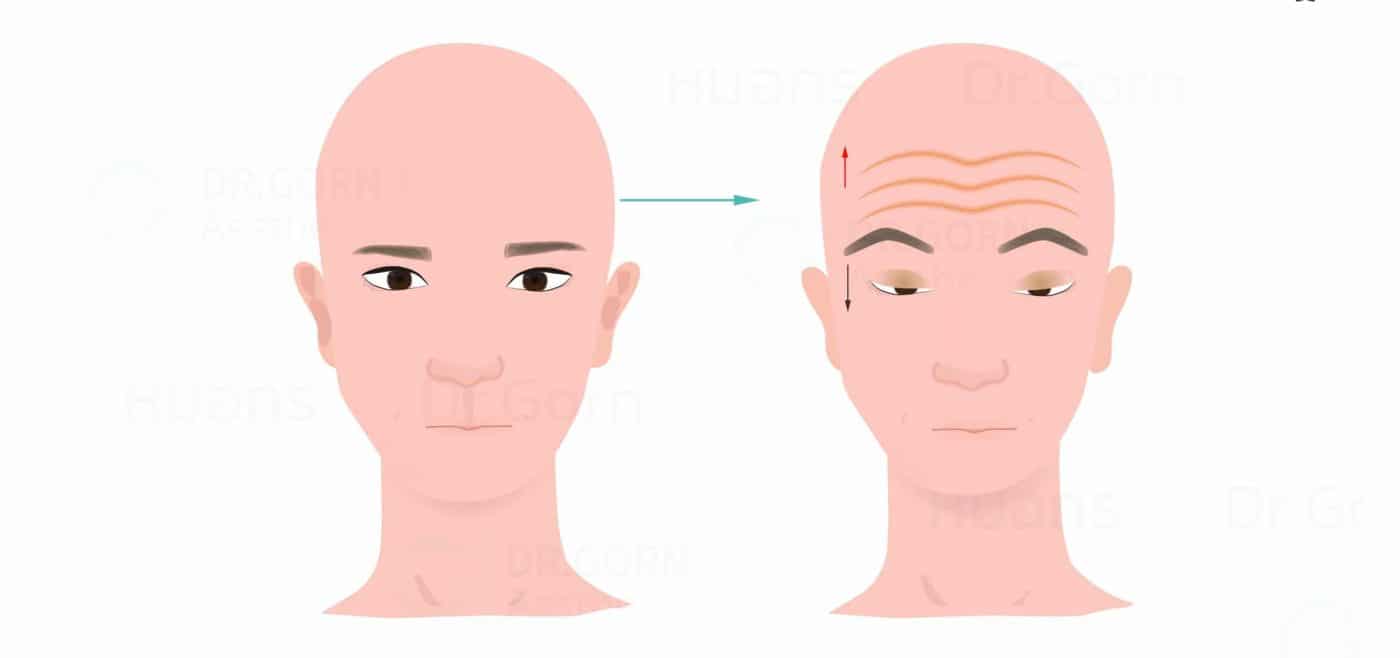
The forehead contains a muscle called the frontalis. Its main function is to raise the eyebrows, and it also moves the forehead skin. This muscle plays an important role in eyebrow position and the formation of horizontal forehead lines, as shown in the illustration.
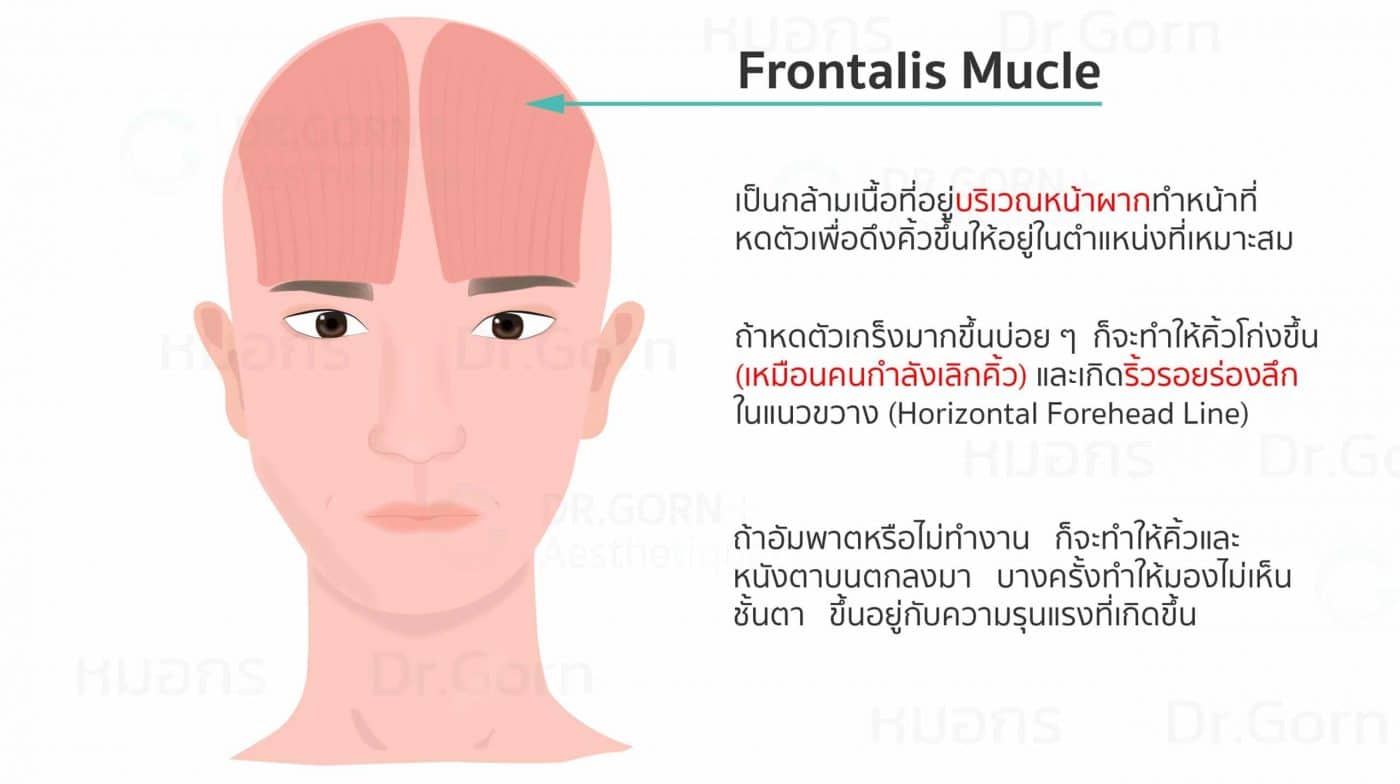
When the frontalis raises the eyebrows, it also lifts the overlying upper eyelid skin.
What Causes Repeated or Sustained Frontalis Contraction and Forehead Wrinkles?
1. Habitual Eyebrow Raising and Facial Expressions
Frequently raising the eyebrows, including during expressions of surprise, questioning, or stress, causes repeated frontalis contraction. This folds the forehead skin and creates horizontal lines.
Initially, these lines appear mainly during facial movement and are known as dynamic wrinkles. Over time, repeated folding can contribute to deeper lines that remain visible at rest, known as static furrows. These can be difficult to eliminate completely, even with surgery. A direct forehead procedure, such as a midforehead lift, also involves consideration of visible scarring.
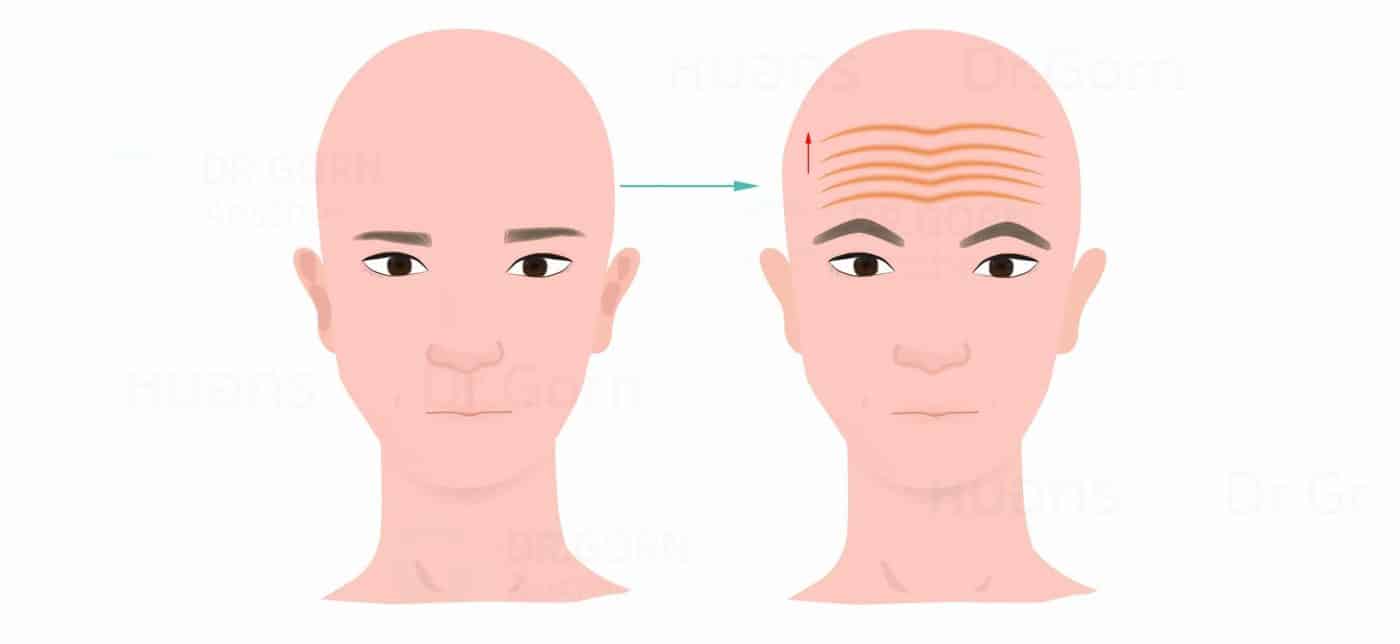
2. Drooping or Naturally Low Eyebrows
When the eyebrows sit low or have descended, the frontalis may contract to compensate by raising them. This repeated effort can make forehead wrinkles more noticeable.
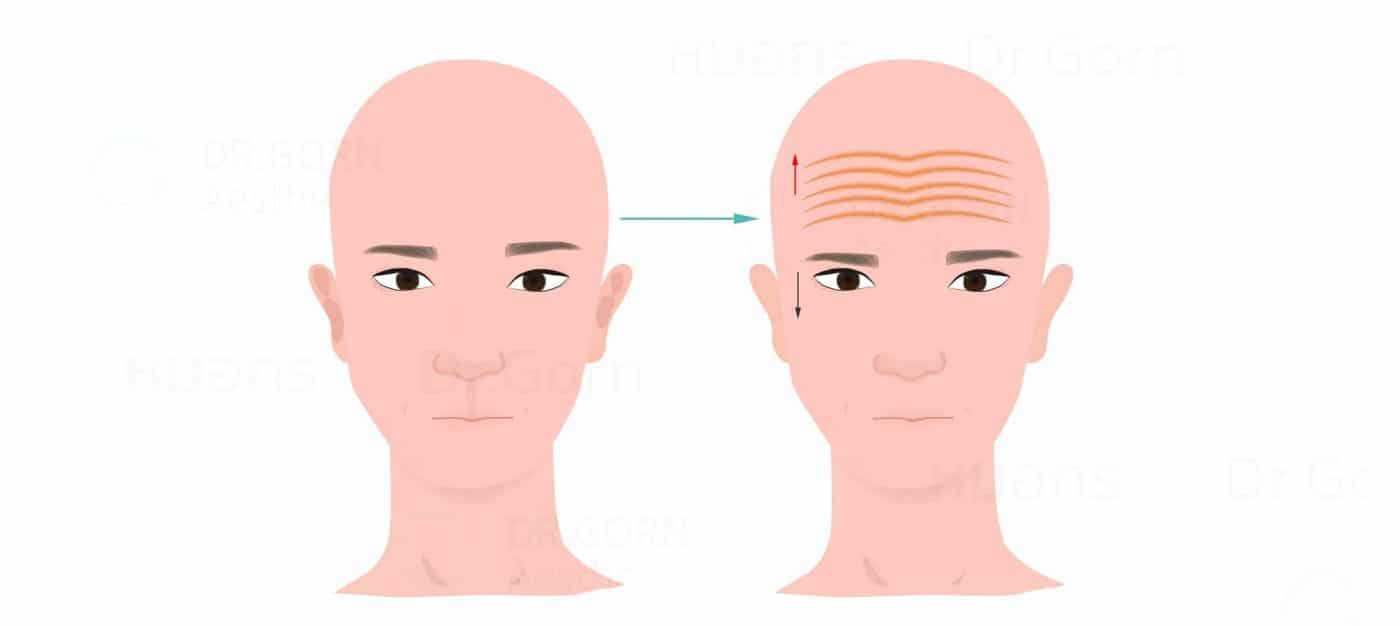
3. Upper Eyelid Ptosis
When the eyelid lifting structures, collectively described here as the levator complex, do not function adequately, the upper eyelid may droop and become difficult to lift. The frontalis then contracts to raise the eyebrows and help compensate for the eyelid drooping.
Frequent or prolonged compensatory contraction may affect daily comfort and contribute to forehead muscle tension and headaches. People with migraines may also notice an association between muscle tension and their symptoms.
4. Excess or Loose Upper Eyelid Skin (Dermatochalasis)
Excess upper eyelid skin may cover the eyelid crease and reduce the upper visual field. To compensate, a person may repeatedly raise the eyebrows using the frontalis muscle, which can contribute to forehead wrinkles.
Forehead Wrinkle Treatment Should Address the Underlying Cause
- Some patients may benefit from brow lift surgery.
- Some may need treatment of the upper eyelids.
- Others may require both brow and upper eyelid procedures.
- Some patients experience substantial wrinkle improvement with botulinum toxin injections.
- In others, injections may reduce forehead wrinkles while making eyebrow or eyelid drooping more noticeable.
Choosing Treatment According to the Cause
Wrinkles Associated With Habitual Eyebrow Raising
-
Muscle relaxing injections: These can temporarily reduce frontalis activity and soften wrinkles associated with muscle movement. The original article describes an effect lasting approximately four to six months, although duration and improvement vary.
If there are underlying eyebrow or upper eyelid problems, these should be assessed before injections. Treating the forehead before surgical planning can alter the apparent eyebrow position and eyelid crease, which may affect assessment and the appearance once the injection effects wear off.
-
Reduce unnecessary eyebrow raising: Becoming more aware of repeated eyebrow movements and managing stress may help reduce habitual forehead muscle activity.
Wrinkles Associated With Drooping or Low Eyebrows
Brow lift surgery may be considered when the eyebrow position is the underlying concern. The surgeon selects a technique according to the individual anatomy and treatment goals. In some patients, repositioning the eyebrows reduces the need for compensatory frontalis contraction and improves forehead lines without a separate procedure directed at the wrinkles.
Forehead botulinum toxin injections require particular care in this situation. Relaxing the frontalis may worsen eyebrow drooping even if the forehead lines become less visible.
Wrinkles Associated With Upper Eyelid Ptosis
When forehead contraction is compensating for upper eyelid ptosis, treatment should address the cause of the ptosis. Ptosis correction surgery may be appropriate following assessment.
Forehead muscle relaxing injections can reduce this compensatory lifting effect and make eyelid drooping more pronounced, particularly in patients with substantial preexisting ptosis. Management may involve waiting for the injection effects to wear off or using prescription eye drops in selected cases. The original article describes a possible eyelid lift of approximately two to three millimetres with certain drops, but the response varies and medication requires a doctor’s assessment.
Wrinkles Associated With Excess or Loose Upper Eyelid Skin
Upper eyelid surgery, sometimes combined with creation or adjustment of the eyelid crease, may address the underlying excess skin. Removing the excess can reduce the need to raise the eyebrows and may improve dynamic forehead wrinkles.
If additional botulinum toxin treatment is desired, it should be planned after the eyelid position and healing have stabilised. The original article recommends waiting at least three months after upper eyelid or double eyelid surgery, with the final timing determined by the treating doctor.
Fine Forehead Lines Related to Skin Quality
Small, shallow forehead lines may be associated with dry skin, sun exposure, and changes in the skin and underlying tissues, including collagen and fat. Moisturising, drinking sufficient water, using sunscreen regularly, and maintaining adequate dietary protein can support skin care and overall health.
Some people have several contributing causes and may need a combination of treatments. Choosing an unsuitable approach can worsen the original concern. A detailed consultation and examination help identify the causes, establish the treatment sequence, and select an approach that fits the patient’s needs and budget.



