

Facial plastic surgery techniques have advanced considerably, especially in rhinoplasty. In addition to traditional silicone implants, it is now possible to reshape and augment the nose without silicone, or to reconstruct the nasal tip without placing silicone in the tip.
What are the benefits of these techniques, and who may be suitable for rhinoplasty without silicone? Dr.Gorn Aesthetique explains the options.
There are many rhinoplasty techniques available today. The choice depends on the patient's goals, nasal concerns, budget and the surgeon's expertise. Silicone augmentation has long been popular, but it can have several disadvantages, as outlined below.
What Is Rhinoplasty Without Silicone?
Rhinoplasty without silicone uses an open approach to reshape the nasal framework and improve the nasal contour or bridge height without a silicone implant. A related option uses silicone only in selected areas. For patients who already have a high nasal bridge, the surgeon may focus on structural reshaping, such as hump reduction or osteotomy. The patient's own tissue or cartilage may also be used to increase bridge height instead of a traditional silicone implant.
How Does Rhinoplasty Without Silicone Compare with Silicone Augmentation?
Traditional silicone rhinoplasty uses medical grade or implant grade silicone to increase nasal bridge height. However, placing a silicone implant in the body can lead to complications, including:
- Some patients develop a pronounced fibrotic response around the implant. Excessive capsular contracture can make the implant edges visible, even when the silicone has been carefully carved.
- Complications such as silicone implant extrusion may occur, particularly when augmentation is excessive, the covering tissue is very thin, or an L shaped implant is used in a short nose.
Patients seeking revision surgery after silicone augmentation, those who have had foreign substances injected into the nose, and those with a history of nasal inflammation or infection may face a higher risk of complications with further silicone augmentation.
Rhinoplasty without silicone offers an alternative for addressing these concerns. Using the patient's own tissue or cartilage reduces concerns associated with reactions to a silicone implant and can provide lasting structural support. Its suitability and expected results depend on the individual patient.
Advances in facial plastic surgery, particularly rhinoplasty, have made reconstruction without silicone possible, offering several potential benefits.
Types of Rhinoplasty That Avoid Silicone
Two main options are discussed here: using silicone only in selected areas while keeping the nasal tip free of silicone, and performing rhinoplasty without any silicone. These approaches use different surgical techniques, as explained below.
Nasal Tip Reconstruction Without Silicone Using a Semi Open Technique
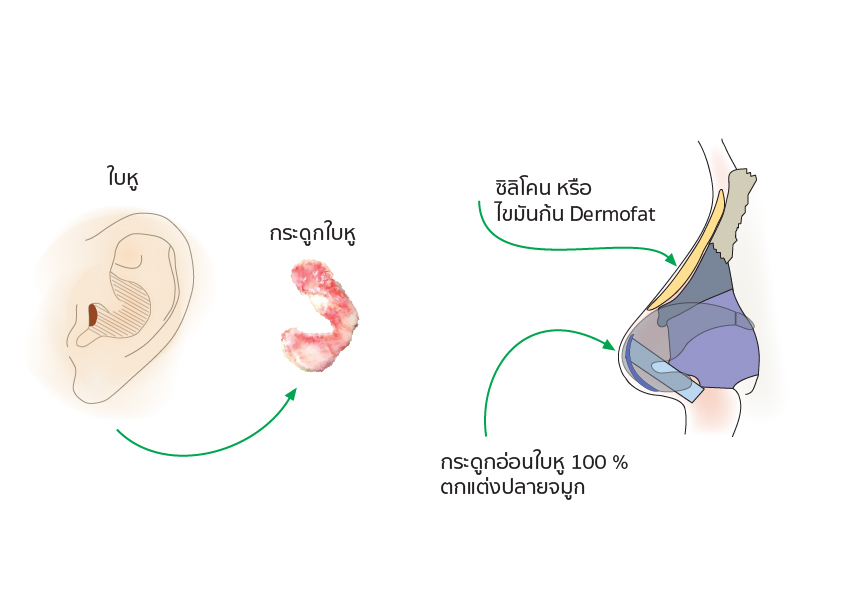
This approach may suit patients whose nose is not extremely short, whose bridge is not significantly deviated, and who want to lengthen the nasal tip by no more than 5 millimeters without placing silicone in the tip. The surgeon uses ear cartilage to reshape the tip, which may reduce the risk of silicone extrusion at the tip in patients with very thin nasal tissue.
For the bridge, a short boat shaped silicone implant may be used only along the nasal dorsum. Alternatively, a dermofat graft from the buttock area can be used instead of silicone. When the latter option is selected, the augmentation uses the patient's own tissue without a silicone implant.
Patients who do not want an incision at the nasal tip may also consider nonsurgical bridge augmentation, such as filler injections or thread lifting. However, hyaluronic acid fillers and threads do not adequately address underlying structural concerns such as:
- A large or wide nasal bridge (Wide Dorsum)
- A deviated nose
- Insufficient nasal tip projection
- Thick skin and abundant fatty tissue at the nasal tip (Thick Oily Skin / Bulbous Tip)
These treatments may sometimes produce unwanted effects or unsatisfactory results. For example, adding volume to an already wide bridge may make the nose appear larger. Likewise, fillers or threads in a bulbous tip with thick skin may make the tip look thicker and larger.
Rhinoplasty Without Any Silicone (No Silicone)
- This approach uses open rhinoplasty to reconstruct the nasal framework without any silicone. Advanced nasal reconstruction techniques can address both the nasal tip and the bridge.
For tip surgery, an extension graft is used to lengthen the tip, while a columellar strut supports greater projection and a more refined shape. Septal cartilage or costal cartilage may be used, together with ear cartilage for additional tip refinement.
If the patient's septal cartilage is not strong enough and rib cartilage harvesting is not a suitable option, the surgeon may consider synthetic materials such as polycaprolactone mesh or porous polyethylene implants to support the tip.
Procedures for augmenting and correcting the nasal bridge (Dorsal Augmentation and Osteotomy) have two main objectives:
- Increasing nasal bridge height
Options include the patient's own dermofat from the buttock area, costal cartilage, deep temporal fascia from the temple area, or a combination of tissues. Rib cartilage may be harvested from the patient or obtained as irradiated homologous costal cartilage (IHCC). - Correcting a wide or deviated bony nasal bridge
Osteotomy or appropriately limited nasal hump reduction (Humpectomy) may be used to create a straighter, more defined bridge.
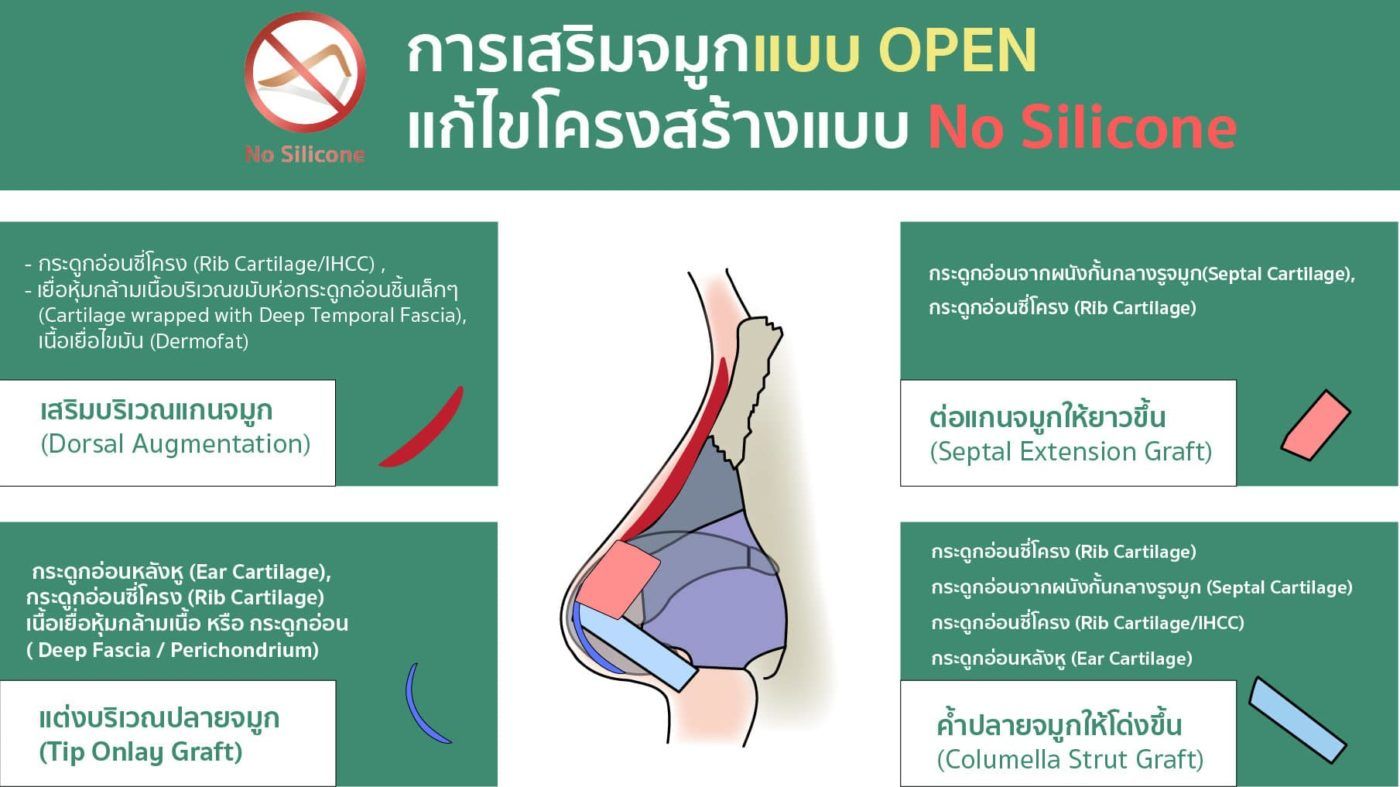
Examples of Structural Corrections Commonly Performed in Thai Patients
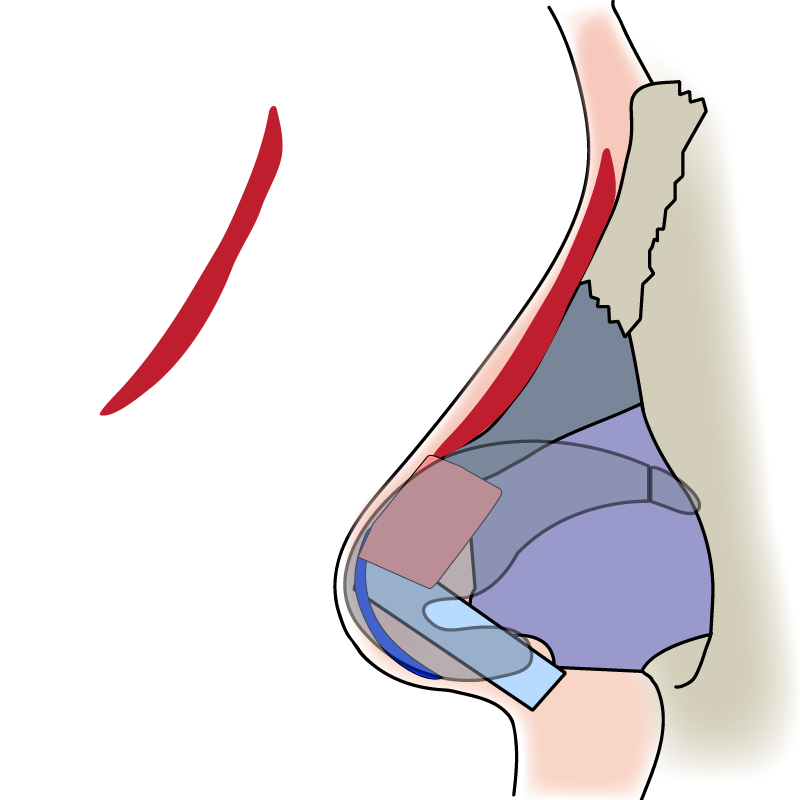
1. Increasing Nasal Bridge Height
(Dorsal Augmentation)
For a low or depressed nasal bridge
(Low Dorsum / Saddle Nose)
Note
In selected patients who want a more defined bridge and have no medical contraindications, a boat shaped silicone implant may be considered for the bridge, as illustrated. The tip and other reconstructed areas use the patient's own cartilage.
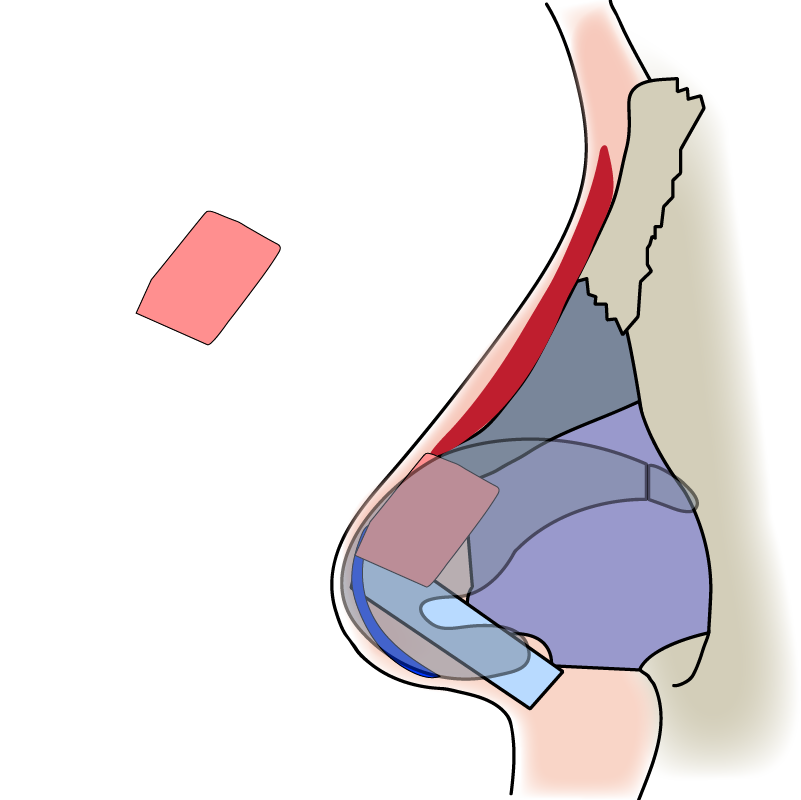
2. Lengthening the Nasal Framework
(Septal Extension Graft)
For a short nose
(Short Nose)
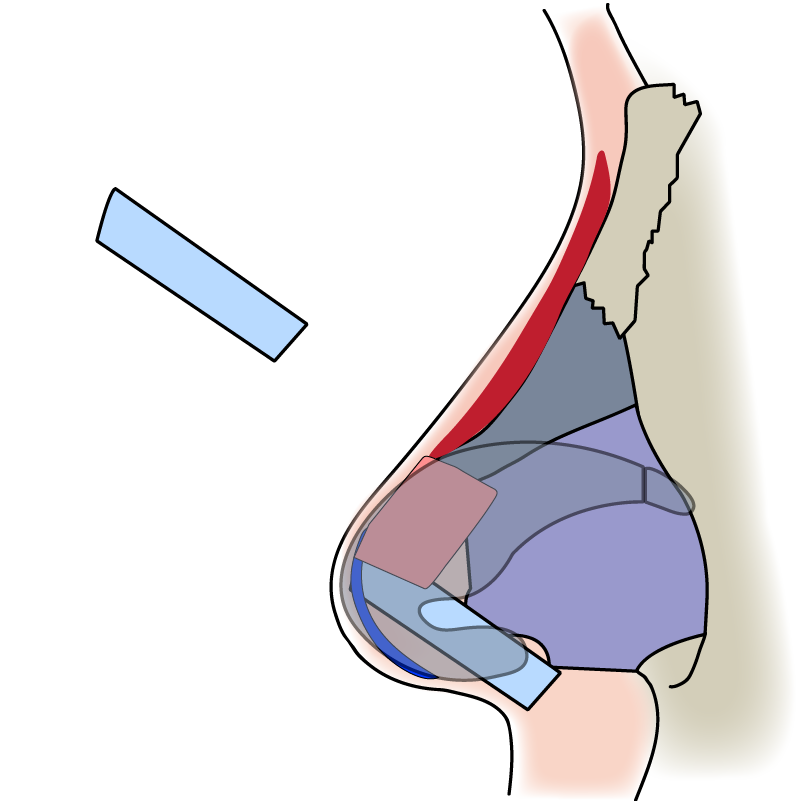
3. Supporting Greater Nasal Tip Projection (Columellar Strut Graft)
For insufficient nasal tip projection
(Tip Deprojection)
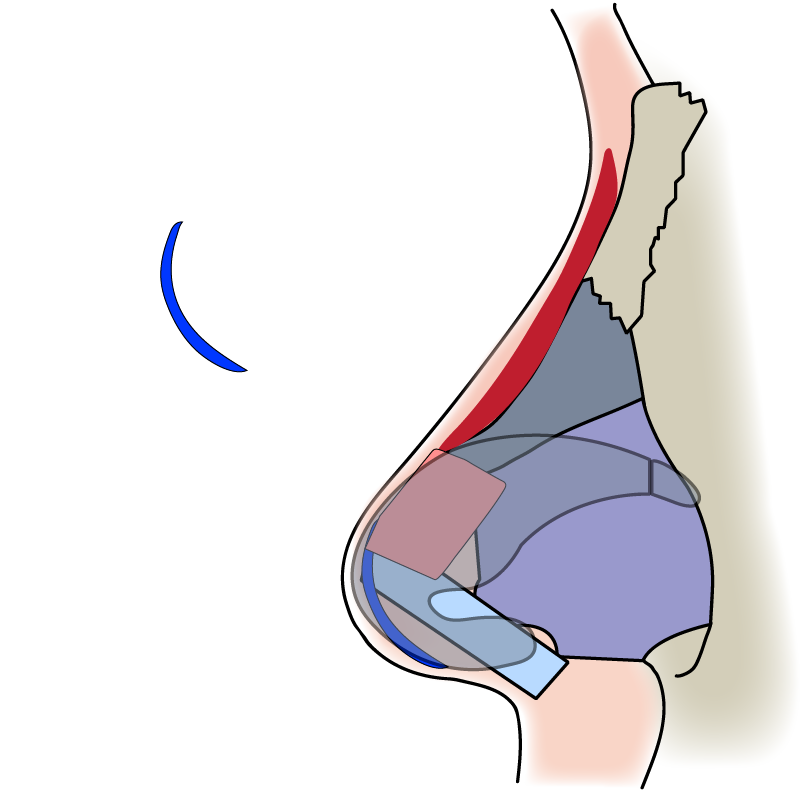
4. Refining the Nasal Tip
(Tip Onlay Graft)
For an irregular nasal tip shape
(Tip Deformity)
5. Narrowing the Bony Nasal Framework Along Two Osteotomy Lines
Using Dr. Gorn's Technique
(Double Osteotomy)
For a large or wide nasal bridge (Wide/Broad Dorsum)

Examples of Tissue and Cartilage Used in Rhinoplasty Without Silicone

Cartilage from the Nasal Septum
Septal Cartilage
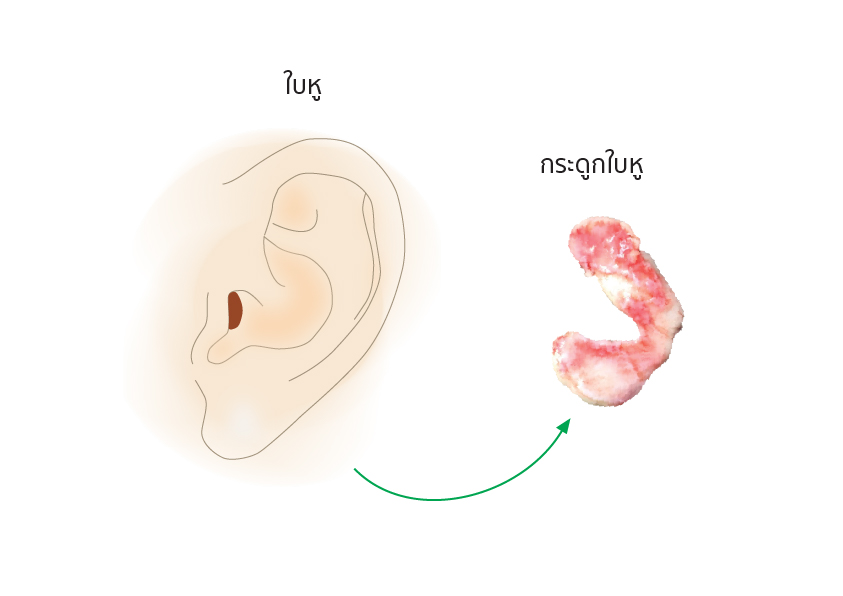
Cartilage from the Ear
Ear Cartilage

Cartilage from the Rib
Rib Cartilage

Donor Rib Cartilage
Irradiated Homologous Costal Cartilage (IHCC) * Considered when the patient's own rib cartilage cannot be used.
Who May Be Suitable for Open Structural Rhinoplasty Without Silicone?
- Patients seeking revision of previous rhinoplasty (Revision Cases)
- Patients with substantial structural problems, such as previous excessive hump rasping, a deviated bridge or a deviated nasal septum
- Patients with a short nose or an excessively upturned tip
- Patients seeking a naturally elevated nasal bridge with a gentle slope
- Patients at increased risk of complications from silicone augmentation, including:
- Revision cases
- Patients who have previously had liquid substances injected into the nose
- Patients with previous nasal inflammation or infection
- Patients with previous implant extrusion and/or very thin nasal skin
- Patients with a very wide nasal dorsum who require both lateral and medial osteotomies alongside augmentation
Benefits and Limitations of Rhinoplasty Without Silicone
Using Rib Cartilage for Structural Reconstruction
Benefits of Rhinoplasty Without Silicone Using Rib Cartilage
- Structural reconstruction can help improve nasal obstruction associated with narrowing of the internal nasal valve.
- Using the patient's own tissue minimizes concerns about allergic reactions to the graft material.
- It may be an option for patients with a very short nose or thin nasal tissue, depending on an individual assessment.
- Without a silicone implant, silicone specific problems such as silicone extrusion or visible implant edges are avoided.
Limitations of Rhinoplasty Without Silicone Using Rib Cartilage
- In older patients, cartilage calcification may make the patient's own rib cartilage difficult or unsuitable to use.
- Cartilage resorption may occur over time. The source article describes a range of 3% to 10% at five years, which may affect nasal symmetry. Depending on the problem, techniques such as diced costal cartilage may be considered.
Overview of Rhinoplasty Without Silicone
Rhinoplasty without silicone is an option for patients who want a natural appearance without a silicone implant, or who have limitations affecting silicone use, including previous adverse reactions or prior rhinoplasty. Through an open approach, the surgeon reshapes the nasal framework using techniques such as osteotomy and hump reduction, and uses tissue or cartilage from other parts of the body to increase height and support. When reconstruction uses only the patient's own tissue, no silicone implant is required.
Have Questions About Rhinoplasty Without Silicone?
If you are interested in rhinoplasty without silicone, read more and explore an initial cost estimate here, or contact the aesthetic consultants at Dr.Gorn Aesthetique through LINE @dr.gornaesthetique. A free online assessment with a doctor is available. Services are offered at our three branches in Bangkok, Nan and Phitsanulok, with care provided by a medical team specializing in facial plastic surgery with more than 20 years of experience.


