
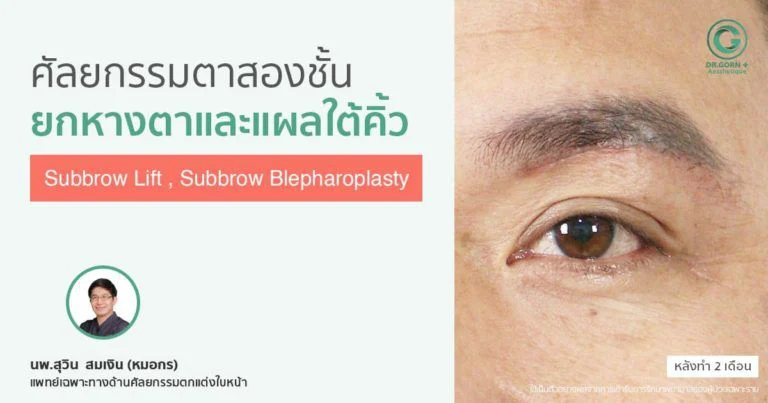
Refresh your appearance with a more youthful, brighter look while achieving natural-looking double eyelids—without excessively deep hollows or overly large eyelid creases.
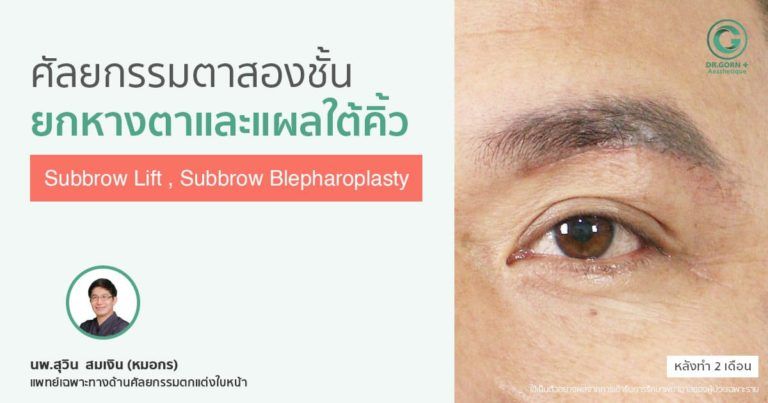
What Is Double Eyelid Surgery with a Subbrow Incision and Lateral Brow Lift?
This technique involves surgical correction of the upper eyelids (Blepharoplasty) and/or adjustment of the eyelid and eyebrow muscles (Browplasty) to elevate the outer eye area and secure the lateral eyebrow in an appropriate position through a procedure known as Browpexy. The goal is to improve upper eyelid hooding, support the lateral eyebrow, and reduce the appearance of drooping around the outer eyes.
Subbrow Lift has become a recognized surgical option among Asian patients, including patients in Thailand, because it can be suitable for certain upper eyelid and eyebrow anatomical characteristics. The technique is particularly useful for correcting lateral upper eyelid hooding (Lateral Hooding), which occurs when excess upper eyelid skin covers the outer portion of the eye. The patient's suitability depends on individual anatomy and the degree of eyelid and brow descent.
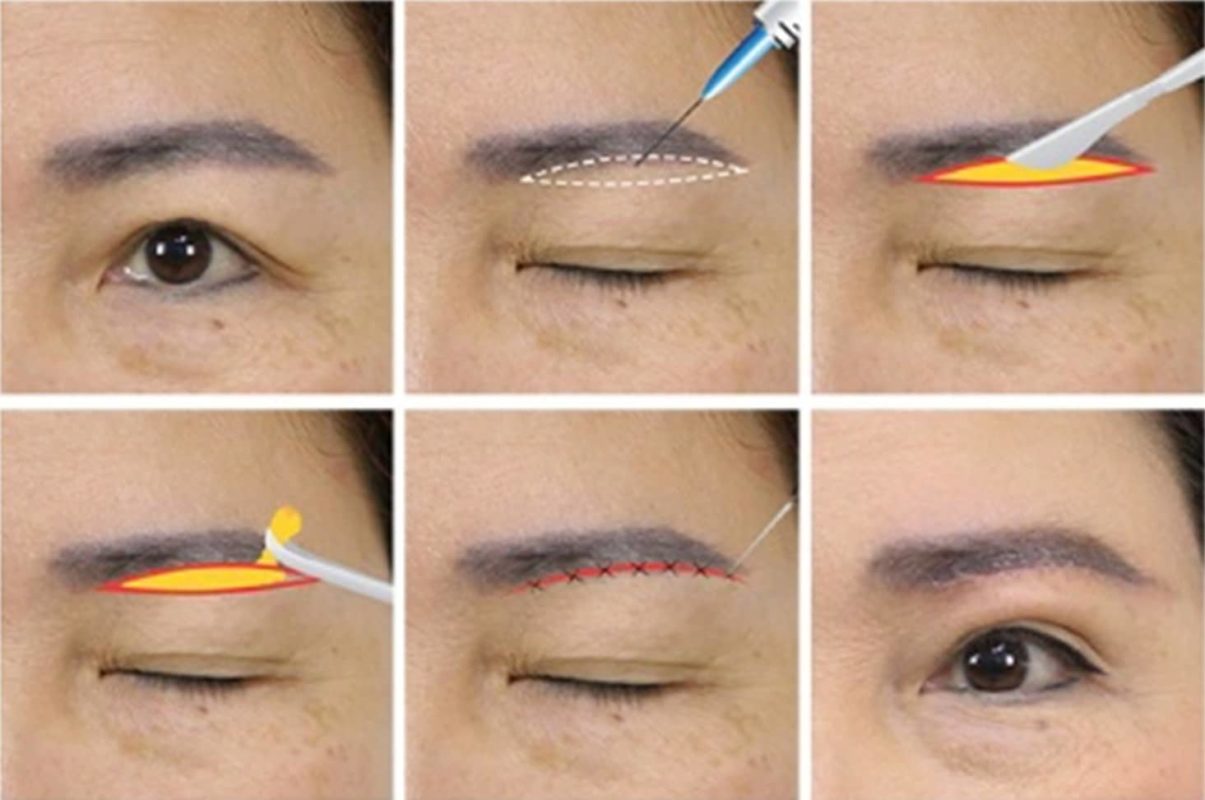
Subbrow Lift and Blepharoplasty: Surgical Procedure
- Individual Surgical Design: The surgeon plans the incision and lifting direction according to the patient's upper eyelid anatomy, degree of lateral hooding, eyebrow position, and preferred eyelid crease.
- Local Anesthesia: Before surgery, a local nerve block may be administered to help control discomfort during the procedure. General anesthesia is not necessarily required, although the appropriate anesthesia method depends on the patient's medical condition and the complexity of surgery.
- Lateral Eyelid Muscle Adjustment: In selected cases, the surgeon may adjust the muscles around the outer eyelid and eyebrow to modify the downward pull on the lateral brow. The original technique also aims to reduce the appearance of dynamic crow's feet, potentially reducing the need for botulinum toxin treatments in some patients. However, these additional effects are not guaranteed.
- Correction of Unwanted Eyebrow Tattoos: If the patient has previously undergone eyebrow tattooing and is dissatisfied with the shape, size, or position, the surgeon may consider combining the procedure with browplasty to adjust the eyebrow contour. In certain cases, this may reduce the need for separate laser tattoo removal. However, not all tattoo pigment can necessarily be removed or concealed through surgery.
- Reduction of Excess ROOF Fat: Patients with particularly puffy upper eyelids may have excessive Retro-Orbicularis Oculi Fat (ROOF), which can contribute to lateral hooding. In selected cases, the surgeon may reduce this fat compartment to improve upper eyelid contour and create a softer eyelid appearance.
- Lateral Brow Fixation (Browpexy): Before closing the incision, the surgeon may secure the lateral brow tissues to the underlying periosteum using suitable sutures to help maintain brow position and reduce the likelihood of recurrent descent. The duration of the effect varies between patients.
- Two-Layer Wound Closure: The incision is closed in two layers. The deeper layer uses absorbable sutures, while the outer layer uses nonabsorbable sutures that are generally removed approximately 7–10 days after surgery, depending on wound healing.
Surgery Duration
The procedure generally takes approximately 1–3 hours, depending on the surgical technique and whether additional procedures are required.
Type of Anesthesia
The original technique uses local anesthesia with a local nerve block. Additional sedation or another anesthesia approach may be considered according to the patient's needs and the surgeon's assessment.
Who Is a Suitable Candidate for Subbrow Lift Surgery?
- Adults in Their 30s and Above: The procedure may be considered for patients experiencing age-related upper eyelid hooding. For patients over 50 or those with substantial skin laxity around the temples and forehead, the surgeon may consider combining it with a temporal lift, brow lift, or facelift when appropriate.
- Patients with Mild to Moderate Brow Drooping: Suitable patients generally have a reasonable distance between the eyebrow and upper eyelid, without severe brow ptosis. Patients with substantial eyebrow descent may achieve more appropriate correction through a forehead or brow lifting procedure instead.
- Patients with Lateral Upper Eyelid Hooding: Excess skin over the outer upper eyelid may create a tired, heavy, or sad appearance. Subbrow lifting may be considered for patients undergoing their first eyelid procedure (Primary Surgery) or those who have previously undergone double eyelid surgery (Secondary Surgery).
- Patients Seeking Natural-Looking Double Eyelids: The technique may be appropriate for individuals who prefer a subtle, natural upper eyelid crease or who already have a satisfactory eyelid crease and simply wish to reduce upper eyelid hooding without dramatically changing their existing eye shape.
- Patients with Unwanted Eyebrow Tattoo Shapes: The procedure may be considered in selected patients with excessively thick, high, asymmetrical, or poorly positioned eyebrow tattoos, whether temporary or permanent. The original article notes that overly high eyebrow tattoos may complicate conventional brow lifting, as further elevation could create an unnatural eyebrow position. In suitable cases, browplasty may help adjust the eyebrow contour while correcting upper eyelid hooding.
5 Reasons to Consider Dr. Gorn's Lateral Brow Lifting Technique
- Defined Outer Eye and Brow Contours: The lifting direction is designed to create a more elevated lateral eye and brow appearance while preserving the natural width and shape of the eye, rather than producing an excessively narrow appearance associated with certain Foxy Eyes designs.
- Personalized Eyelid and Eyebrow Design: The surgical plan takes into account each patient's eyebrow shape, eyelid crease, and surrounding facial anatomy.
- Potential Eyebrow Contour Correction: In selected cases, the surgeon may correct an existing eyebrow contour or improve an unwanted tattooed eyebrow shape during the same operation, potentially avoiding separate tattoo removal procedures.
- Adjustment of Muscles Around the Lateral Brow: Selected muscle modification may support the lateral brow lifting effect and potentially soften some crow's feet. The extent of improvement and any reduction in future botulinum toxin treatments varies.
- Preservation of a Natural Eyelid Crease: A subbrow lift may improve upper eyelid hooding while maintaining the patient's existing natural double eyelid shape. In some patients, a previously obscured eyelid crease may become more visible.
Advantages of the Subbrow Lift Technique
- Incision Positioned Beneath the Eyebrow: The surgical scar is placed close to the lower eyebrow margin, where it may become less noticeable after healing. However, scar visibility varies by patient.
- Possible Correction of Unwanted Eyebrow Tattoos: In selected patients, simultaneous brow contour adjustment may improve an undesirable tattoo shape or thickness without requiring a separate laser tattoo removal procedure.
- Natural-Looking Double Eyelid Appearance: The technique aims to improve eyelid hooding while preserving or revealing a natural upper eyelid crease.
- Improved Lateral Brow Position: The surgeon may adjust the outer eyebrow to achieve a balanced appearance that complements the face.
- Additional Lateral Brow Support: Brow fixation may help maintain the eyebrow position and reduce the likelihood of subsequent drooping, although it cannot permanently prevent age-related changes.
- Can Be Combined with Fat Grafting: For selected patients with hollow upper eyelids, autologous fat grafting may be considered as an additional procedure to restore volume.
Is Subbrow Lift Suitable for Both Men and Women?
- Yes. Subbrow Lift may be performed in both male and female patients when their eyelid anatomy and clinical concerns are appropriate for the technique.


Why May Subbrow Lift Be Suitable for East Asian Patients?
Differences in upper eyelid, orbital, and eyebrow anatomy may influence the suitability of a subbrow lift. The original article highlights this technique as particularly relevant to East Asian patients, including those in Thailand, because certain patterns of upper eyelid skin excess and lateral hooding can be addressed while preserving the existing eyelid crease. However, anatomical characteristics vary widely between individuals, and ethnicity alone does not determine whether a patient is suitable for the procedure.
Should You Have a Subbrow Lift Before or After Eyebrow Tattooing?
A subbrow lift may be performed either before or after eyebrow tattooing. The most appropriate sequence depends on the patient's eyebrow position, skin condition, tattoo design, and surgical goals.
- Subbrow Lift Before Eyebrow Tattooing: If you plan to have eyebrow tattooing after surgery, choose an experienced practitioner who understands eyebrow anatomy and the position of the superior orbital rim. The tattoo design should take into account the final healed eyebrow position following surgery.
- Subbrow Lift After Eyebrow Tattooing: Patients with existing eyebrow tattoos may still be candidates for a subbrow lift without necessarily undergoing laser tattoo removal beforehand. In selected cases, the surgeon may combine the lift with browplasty to improve an unwanted eyebrow shape. Whether this is possible depends on the tattoo's position, pigment distribution, and the amount of tissue that can safely be modified.
Postoperative Care After Subbrow Lift Surgery
- Oral Medications: Take all prescribed medications according to your surgeon's instructions. The original clinic protocol mentions medication for inflammation or infection prevention and pain relief using acetaminophen (Tylenol 500 mg), as well as medications intended to reduce swelling. However, the appropriate dose and timing must be confirmed with the treating clinician, particularly because acetaminophen is present in many combination medicines and excessive doses can cause serious liver injury. Do not independently follow a medication schedule from an online article.
- Topical Wound Ointment: The original clinic protocol describes using an ophthalmic-compatible ointment on the incision area to support postoperative wound care and reduce infection risk when clinically indicated. Use only the ointment prescribed or approved by the surgical team.
- Incision Cleaning: The original instructions recommend using a cotton swab with normal saline to gently remove dried blood or wound discharge, followed by the prescribed ointment. The described schedule is approximately 4–6 applications daily during the first three days, then 3–4 times daily until suture removal, followed by twice daily for another week. Actual cleaning frequency should follow the surgeon's individualized instructions to avoid unnecessary irritation.
- Temporary Incomplete Eyelid Closure or Eye Irritation: During the first one to two weeks, some patients may experience difficulty closing the eyes completely or a sensation of eye irritation due to postoperative swelling, particularly after more extensive correction of drooping eyelids. These symptoms may gradually improve as swelling subsides. However, persistent inability to close the eye, significant pain, visual changes, or increasing redness require prompt medical assessment because the surface of the eye may be at risk.


